
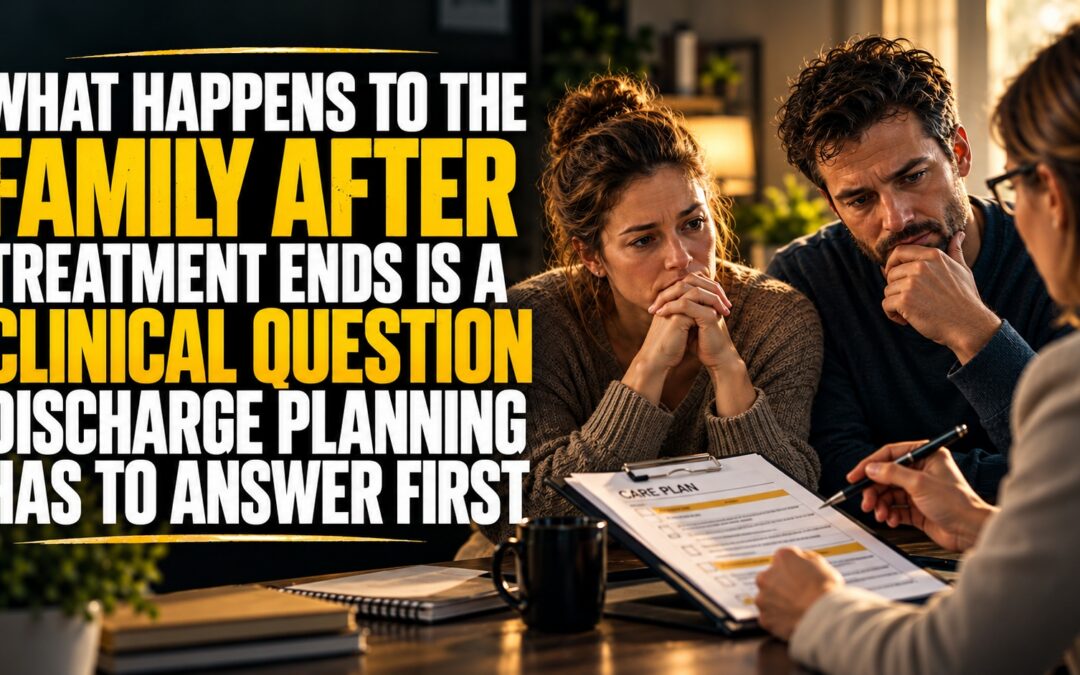
What happens to the family after treatment ends is one of the most overlooked questions in recovery, and it deserves a clear answer long before discharge day arrives. If someone you love is finishing a program, you may feel relief and fear at the same time. You have waited, worried and hoped, and now your loved one is coming home.
You might wonder what to say at dinner, whether to keep alcohol in the house or how to tell if something is wrong. Those questions are normal, and you are not alone in asking them.
These questions have real answers. Strong discharge planning treats the family after treatment as part of the clinical picture, not an afterthought. When that planning starts early, everyone walks into the next chapter with a clearer map.
Why Is the Family After Treatment a Clinical Question?
The family after treatment is a clinical question because the home environment directly shapes how early recovery unfolds. Your loved one returns to the same relationships, routines and stressors that existed before care began. If those patterns haven’t shifted, old pressures can return quickly.
Addiction affects the whole household. Partners, parents, children and siblings often adapt in ways that made sense during a crisis, like covering for missed work or avoiding hard conversations.
Those habits don’t disappear on discharge day. Treating them as part of the care plan helps the whole family move forward together.
How Does Addiction Change the Way a Family Functions?
Addiction often changes roles, trust and communication inside a family. One person may become the caretaker while another pulls away. Children may take on adult worries far too early.
These changes are understandable responses to stress. They still need attention so the family after treatment doesn’t slide back into crisis mode out of habit.
What Should Discharge Planning Include for the Family After Treatment?
Discharge planning for the family after treatment should include education, clear communication agreements, a relapse prevention plan and connection to ongoing support. These pieces work best when they are built before your loved one leaves care. Waiting until after discharge leaves families guessing during some of the most delicate weeks.
A strong plan also names who to call, what to watch for and how the next level of care fits into daily life. Clarity lowers stress for everyone.
Why Should Planning Start Before Discharge Day?
Planning should start before discharge day because the first weeks at home are often a vulnerable stretch of early recovery. Starting early gives families time to ask questions, practice new skills and prepare the home.
It also lets the clinical team see where support is strong and where gaps remain. Those gaps can be addressed while your loved one is still in a structured setting.
What Does Family Education Cover?
Family education covers how addiction affects the brain, what early recovery looks like and how to respond to warning signs. Many families also learn about boundaries, enabling and the difference between support and control.
Understanding these ideas helps the family after treatment respond with patience instead of panic. Knowledge eases fear for everyone in the home.
How Does Family Therapy Support Recovery at Home?
Family therapy supports recovery at home by giving everyone a safe space to rebuild trust and practice healthier communication. A trained therapist helps family members share their hurt without blame. The therapist also helps the person in recovery listen without becoming defensive.
Sessions often focus on real situations the household will face. That might mean planning holidays, setting rules about substances in the home or deciding how to talk about the past.
Through family-centered care at Impact Wellness Network, loved ones are included in the process rather than added at the end. This helps prepare the family after treatment for the changes ahead.
What If the Family Is Hurting Too?
If the family is hurting too, their healing deserves care of its own. Years of worry can leave partners and parents exhausted, anxious or depressed.
Peer groups like Al-Anon and Nar-Anon offer understanding from people who have walked a similar road. Individual therapy can help as well, because caring for the family after treatment means caring for each person in it.
What Challenges Does the Family After Treatment Commonly Face?
The family after treatment commonly faces challenges like rebuilding trust, adjusting to new roles and managing the fear of relapse. These struggles are a normal part of change. They are not proof that something is broken.
Naming these challenges early makes them easier to handle. Families who expect bumps in the road often respond to them more calmly.
Why Does Trust Take Time to Rebuild?
Trust takes time to rebuild because it grows through consistent actions over weeks and months. A family may want to believe right away while still feeling guarded. Both feelings can exist at once.
Small, steady steps matter most. Keeping commitments and being honest about hard days rebuild trust more than big promises ever could.
How Can Families Recognize Early Warning Signs?
Families can recognize early warning signs by noticing changes in mood, sleep, routine and openness. Skipping therapy, reconnecting with friends tied to past use or growing secrecy may signal rising risk.
A warning sign is not a verdict. It is a cue to talk with the care team and adjust support early.
How Do Levels of Care Connect to Family Planning?
Each level of care after discharge shapes how much daily structure your loved one has and how much the family carries at home. Choosing the right step down protects both the person in recovery and the household.
- Partial hospitalization program (PHP). Your loved one attends treatment most of the day while living at home, which gives the family steady clinical backup.
- Intensive outpatient program (IOP). Structured sessions happen several days a week while work and family life continue.
- Standard outpatient care. Regular therapy and check-ins support those who are further along in recovery.
- Sober living. A substance-free residence can ease pressure on the home while independence grows.
Stepping down gradually gives the family after treatment time to adjust alongside their loved one. No one has to absorb every change at once.
How Can You Tell If a Discharge Plan Truly Includes the Family?
You can tell a discharge plan truly includes the family by asking direct questions before your loved one leaves care. The answers show whether family support is built into the plan or left to chance.
- Ask whether family members are invited to a planning meeting before discharge.
- Ask what family education or therapy the program offers during and after treatment.
- Ask who the family should contact if they notice warning signs at home.
- Ask how the next level of care has been arranged and when it begins.
- Ask whether the plan includes support resources for parents, partners and children.
- Ask how relapse would be handled and how the family would be involved.
Clear, confident answers suggest the program sees the family after treatment as part of the care plan. Vague replies may mean the household is expected to figure things out alone.
What Families Often Ask
Should we remove alcohol from the house?
Removing alcohol and other substances from the home is often a helpful step in early recovery. It lowers easy access during a vulnerable time. Your care team can help you decide what makes sense for your household.
How often should we check in with our loved one?
Regular, calm check-ins usually work better than constant monitoring. Agree on a rhythm together before discharge so expectations feel fair. This keeps support caring rather than controlling.
What if our loved one relapses?
A relapse is a signal that the plan needs to change, not a sign of failure. Reach out to the care team quickly so support can be adjusted. Many people return to steady recovery after a setback.
Do we still need support for the family after treatment if things seem fine?
Yes, ongoing support helps protect progress even during calm stretches. Family therapy and peer groups give you tools before stress builds. Healing works best when everyone keeps growing.
Taking the Next Step Together
Planning for the family after treatment is not an extra step at the end of care. It is a clinical question that shapes how safely and steadily recovery continues at home.
When families are prepared, informed and supported, everyone has a better chance to heal together. You don’t have to guess your way through the first weeks alone. If your loved one is nearing discharge or just beginning care, talk with the compassionate admissions team at Impact Wellness Network to learn how family-focused planning can support your next step.