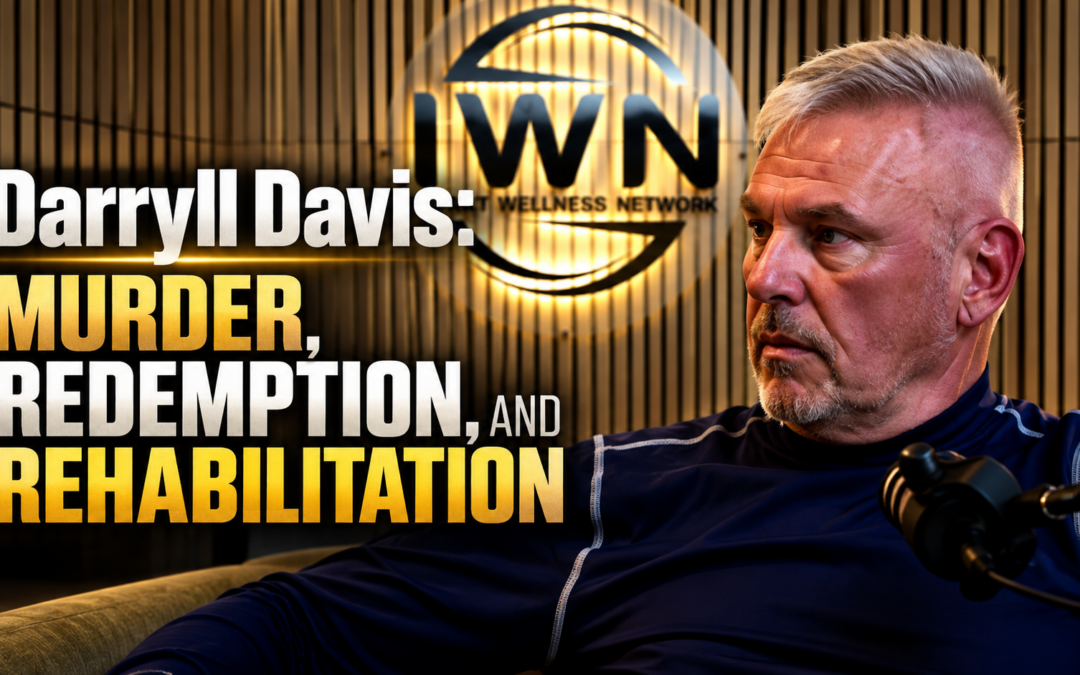
Darryll Davis: From Addiction and Incarceration to Recovery, Accountability, and a Second Chance
SPEAKER_01 0:04
So we're here with my friend, uh a co-worker. We work together in the community a lot. This is Daryl Davis, founder of The Prisoner's Hope. That's the prisonershope.life, right? Okay, so just if you don't mind, just give me a breakdown. Go back to the beginning. Uh, what happened or what caused you to want to start the prisoner's hope, and then we'll get into what it is.
SPEAKER_00 0:27
Thanks, James. I'm glad to be here. That's a good question. And I share this answer a lot. Um, and so we're probably one of the most multifaceted organizations in Kentucky working with those on their way to prison, in prison, coming out of prison, working with families left behind, and providing professional counseling for the children. Um, the way this organization was forged was from my own 22 and a half years of incarceration. I had a 35-year sentence for murder. Um, I got that charge in 1988, uh, a drug deal gone bad. I was running a moving company, grew up in the West End Louisville out of Portland, um, rough life. And if you want to talk about some of that, I'm certainly transparent. Um, but it kind of set the path, it set the uh the direction for my life uh awry. And so um I ended up running a moving company. I thought I had all the toys that would make me happy, uh, but was a functioning drug addict, and so I operated that business every single day as an addict and um got involved inadvertently with a drug deal um in uh 1988 and it went bad really fast. And so I took his life, took my victim's life, and flee the scene of the crime. I uh hid my weapon, I cleaned out my car, went to the hospital because I'd been stabbed a couple times in the commission of that fight, and returned home a few hours later up in the night, and ETU's had ETU evidence technician unit had already dusted the place for Prince and figure out who it was. Uh an arrest warrant was issued and I was I was arrested. I was in jail for 10 days uh and come up under Judge Jackie Shoring, who cut my bond for 50,000 full cash. So I got out and um at that time and remained free for two years and then I went to trial in 1990, found guilty of wanton murder. And I feel pretty fortunate that I was I was charged with wanton murder because it really wasn't that. It was much worse. It was premeditated murder. And um, and so yeah, I realized that uh I was super lucky to come off with what I got. What is wanton murder? What does that mean? It's an interesting term. It's spelt not W-A-N-T-I-N-G, but W-A-E-N-T-O-N, which means that uh you went somewhere with malice in your heart and with intentionality, you executed the plan. Um it and it sounds very similar to premeditated, but premeditated is just like it sounds that you thought it out, then you went there and you, with malice in your heart, executed the plan. Uh wanton murder could have happened in the middle of a situation, as opposed to thinking it out and going there. Does that make sense?
SPEAKER_01 3:00
Yeah. And you said rough life coming up. Do you mind to elaborate on what led up to this? Yeah, not at all.
SPEAKER_00 3:05
And so I grew up in Portland and uh like most Portland kids, you know, we cut our teeth on on drugs and crime and promiscuity and uh just a lot of dysfunction in the neighborhood. We early age we were stealing cars and breaking in houses and doing all the rambunctious stuff that kids do in there in that area. Um the biggest issue, I think, for me, James, was that my dad was mentally ill and um he was he was classified as a paranoid schizophrenic. And so he was a great dad until he wasn't. And so when things went awry, it they went really fast. And so he was violent. When his when things changed inside of our home, uh there was lots of things happening. There was incest, there was uh molestation, there was violence, there was guns. Um we were snatched from dad's sleep in the middle of the night more times I could count, just to get out of the house because things were getting really bad. Uh by 15, I was the youngest of five kids. By by 15, um, my mom and dad had divorced, and I chose to stay with my dad. Um he uh derailed pretty bad, quit his job, uh, started prostituting women out of our home. And so we had a 780 square foot house. And if you can imagine, you know, a lot of things happening in a small little confined space like that, that's what what my life looked like at 15. By that time, I was already out in the streets doing drugs. I was pretty promiscuous, I was pretty wild. Um, by 16, I got into an altercation with one of the girls at the house and he threw me out. And so I hit the ground running at 16 years old, living in a parking garage on third and chestnut in a car one floor away from the top of that uh parking garage because it was snowing sideways and it was super cold outside. And so I had nowhere to go. I had none of my other siblings or my other family members would allow me to come to their place because I chose to stay with my dad. My mom lost her little part of the house. So it was kind of a severely stacked deck against me from early on.
SPEAKER_01 4:59
That's tough. So that led up to that I've been through similar, not uh similar as far as uh drug and alcohol abuse, right? And that led into this situation where you were selling drugs. You said a drug deal gone bad. Do you mind to bring us to that night or what the you said there was a plan or something? You said it was worse than they charge you with. Yeah.
SPEAKER_00 5:18
Is that right? Yeah, that's right. So what happened there? That's correct. So um, you know, as an addict, here's, it's the law of increased appetite and diminished return. Here, here's what happens. We placate, we jump through hoops, uh, we do whatever it takes to keep the facade on and to keep uh people hot off our trail. And so the person that was hot on my trail was my own wife. You know, she she was a very functioning girl. She didn't drink, she didn't do drugs, and but she's married now for many years to an addict. And so, you know, she did everything she could to try to talk sense into me and uh to no avail. But uh it got to the point where my law of increased appetite and diminished return cost me was costing me so much money. I had a moving company, and by most uh people's uh concepts uh would have been deemed successful. I did pretty good monetarily. I had had a lot of toys and things I thought would make me happy. But she came to me one day and she said, Look, she said, if you want to keep all this junk, she said, here's what's gonna have to happen. I know your drug increase has increased, your drugs have increased, and the cost has as well. You're gonna have to start bringing more money out of those contracts home if we're gonna keep all this stuff. And so I placated and did exactly what I thought an addict does, right? I figured out a plan B. And so my plan B was, okay, I'll just go back to the streets. I've got all the right friends in the wrong places, right? And so I'll just get drugs moved. I'll I justify that very well by saying, I don't have to touch them, I'm just gonna connect. And so I did that. And being a hardwired entrepreneur, I was pretty good at it, uh, to my shame. Um but I was doing pretty well bringing in enough money to cover my own drug consumption uh and everything that we needed for the household and all the toys we was able to keep until it ended. And that was on the night of April 26, 1988, uh, when I when I was involved in this situation. Um I took my victim's life. Slayed him, uh stabbed several times um and uh left him for dead, and he stabbed me four times in commission of that crime.
SPEAKER_01 7:14
Right. And then you said that you were you were bailed out, bonded out, however you word that. And then you spent two years doing what, waiting for trial.
SPEAKER_00 7:23
So uh final chapter 13. I sold my fleet of trucks, I sold my contracts, sold my home, sold my toys to pay two really high dollar lawyers who said you won't go to prison because that's how I thought it worked, right? And so um I bought an independent taxi cab and it was doing that for two years. I was making a little bit of money here and there. I had so many court appointments, uh, you know, appearances and lawyer appointments. It's hard to keep a functional job, and so I needed something entrepreneurially to where I could show up when I wanted to show up. And it also provided for me the perfect uh platform to be able to stay high. Like I was I'm a cab driver. I own my cab. It's it's an independent taxi. And so I'm doing this high. I'm transporting functional, responsible people around the city completely just out of my mind.
SPEAKER_01 8:10
Yeah, you know, I noticed something. Um I went to make a video not too long ago and I signed up to be an Uber driver just to do it, just to see if I could make some funny videos. And I noticed on there, they and not saying anything bad about Uber or their drivers, I'm just saying I noticed that they get they can click the button to collect payments five times a day, five payouts a day. And I just thought I was like, that would be if I had that when I was in my addiction where I could just go run a route real quick and make I don't know what, 10, 20 bucks, something like that, then I could go use again and then go back and get just keep it going all day long.
SPEAKER_00 8:43
Is that pretty much yeah, that's exactly what and what you'll find, I hate to say this, but this is true, and especially back in those days, is what you would find is cab cabbies were usually addicts.
SPEAKER_01 8:52
Okay. And dealing at the same time? Yeah. Because they're running around in a cab. Yeah. So you did that, and then you said uh you paid these high-power lawyers, told you you wouldn't go to prison. Uh I've been down that road with lawyers before. But uh, so you go to trial, what happens?
SPEAKER_00 9:08
So I was I was three weeks of grand jury trial, um, and it was interesting how the trial started out, not that I want to get too far into details, but but what's interesting was uh Judge Ernie Jasmine at the time pushed out a video cart of VCR. That was by old guys, video was the thing in those days. So he pushed a cart out and it had a video a VCR there, and they turned the lights out, and after opening arguments, he showed the autopsy. And I stabbed my victim 22 times. And so uh that from that point on, no matter what would have happened in the next three weeks of grand jury, I was found guilty. I mean, the jurors, James, are just blown away. It took a while to retain their composure after they turned the lights back on. It was it was interesting. Um no matter what I and it wasn't that I showed up and said I'm not guilty. I simply said there's extenuating circumstances around it. Like he attacked me too. There was a fight, by the way. Um, and again, there's no justification in it. I took a life. But at the end of the day, I was found guilty of the one murder after they came back from deliberation and gave me 35 years. Now, thankfully, for our our great state of Kentucky, in the judicial system, you can accrue meritorious vocational and educational good time, which whittles away at the back of that sentence and can bring it way down. I did not make pro, I saw the pro board two times. Um, but because I took uh I seized every opportunity and that DLC ever offered, and some outside of that, I was able to move my out date way back for 22 and a half years. I was pretty blessed to walk out of there.
SPEAKER_01 10:37
Right. Then you know I noticed something, and uh you've said it a couple times since we've been sitting here. You say my victim. Like you're taking accountability in that. Is that something that you had to program into yourself or something you learned over time?
SPEAKER_00 10:48
I did. I you know, I grew up, and growing up requires extreme introspection. And so beginning to look in and identify and assess the things that I've told myself all of my all of my life, James, has has been the most important thing ever.
SPEAKER_01 11:05
The inner conversation you have with yourself same way. It really is, yeah.
SPEAKER_00 11:08
It really is. We have narratives and we follow those narratives. Inside of those narratives, narratives are stories we tell ourselves, and they have drivers connected to them, and they drive us into the arms of unhealthy community, women, places, things. And so I had all of those drivers and those narratives. And you have to get back in and unpack this. And alongside of those narratives are uh unhealthy inner dialogues, things we tell ourselves about those stories. And so those drivers drive us in in places to where, and it becomes tacit. We get to the place where we don't even realize that we're being driven. We don't even realize it's a term I love to use, neuroplasticity. It's where the brain gets re-rewired to the point where normalcy is, if I told you at that point in time what was normal to me, it would blow your mind. I'll give you an example. I remember meeting my first wife and being from Portland. She was from the East End, she lived off Heights Lane, and her she had a very functional family. She didn't do drugs, she didn't drink, she never had a moving violation. And so I remember going out to their hair house the first time, and I was sitting there and I was thinking to myself, I think they went to get me a glass of ice water. I was alone in the in a living room for a few minutes after I met the family, and I thought to myself, no one in this house has a warrant, nothing's stolen in this house, there's no dope in this house, and I bet you there's no gun. Right. And that felt uncomfortable. How crazy is that? So there's security and familiarity. So I had become secure in a broken world of familiarity. And so that's what I was used to. So you take me out of that environment and things begin to be inverted. They feel strange now.
SPEAKER_01 12:46
Yes.
SPEAKER_00 12:46
Today I sit here, and it's really cool. Today I get to sit here, and I can identify what's dysfunctional.
SPEAKER_01 12:52
Yeah.
SPEAKER_00 12:53
I don't have a broken equilibrium.
SPEAKER_01 12:54
The uh the big book talks about that. It says there's a certain sense of security in the familiar. And we I deal with that myself, and I was your neuroplasticity, okay. Not a word that I use a lot, but now it's starting to make sense. But I'll talk to a lot of folks sometimes that are strung out, they're drinking, using heroin, Xanax mixed together, whatever that looks like. But they have maybe uh a husband or a wife, kids, a job, a car, insurance payments, mortgage payment, things of that, right? So we get on the phone and start discussing how are we gonna get off the heroin, how are we gonna get off the benzos, you need a medical detox, and it's like I can't. Why? Because I'm going to lose everything. See, that's being comfortable, that's being in the familiar, right? They people will actually think like, if I go to treatment and get help, I'm going to lose the family, the car, the job, the whatever, because their security in that familiar, they know how to work that. Then I show them over here something that's obviously a better option. They don't know how to work it, and their brain, that neuroplasticity, tells them if you go do this, we're turning off all these other switches over here. Yes. And it the delusion in I will lose my kids if I get off heroin. Yeah. I hear that regularly. And I have to point that out to them on the phone. I'd like, do you hear what you just said to me? They'll say in the same sentence, I'm going to die if I don't stop. Okay, let's go to detox. I can't because I'll lose my kids.
SPEAKER_00 14:17
Right.
SPEAKER_01 14:18
Right? I tell people too, like, you need to replace the word can't with won't. Yeah. Right. Instead of saying I can't go get help, I can't get away from work, I can't be away from my kids for 30 days while I go to treatment, say, I won't go get help. I won't be away from my kids. Then you start to take some accountability over it. Right.
SPEAKER_00 14:35
That's that's exactly right, James. So neuroplasticity is an interesting concept. Uh I'm a trauma therapist and I'm a sex addiction therapist, and so I've I've got the uh the opportunity to delve into that world and begin to educate and learn some things. And I love the fact that as I've learned and grown in those things, like they were never for me to give away. They were for me. And then as I owned those, I got the chance to give those away. And so that feels really good. But but I talked about we frame up narrative stories from childhood all throughout life. But to your point, we are always framing up narratives. And so obviously, before you heard those words, I can't. They've already framed up the narrative. They believed that, they believed something was not true, they bought into it, it's a lie, and the narrative also has dialogue around it. And so you heard the dialogue, obviously, like I can.
SPEAKER_01 15:28
I it seems to me the narrative that I was drumming up, even in recent years, right? This is not gonna work, that's not gonna happen, waking up every morning with anxiety, right? What it was, that was other people's narrative. I was believing information that other people were telling me, be it on the internet, being it very important family members to me, looking at me saying, This is not gonna work. You know, this right here is not gonna work. You need to go get a real job, you need to do it this way. So I believe their narrative because of some type of influence they have on me, whether it's ego, like influence, you can have influence on me, you could, not so much anymore, on the internet by going to my comments and telling me what to do, right? And because that came from somebody else, it builds into my narrative, right? In the story that I believe about myself, right? So, you know, in my in my program, step two came to believe that a power greater than myself could restore me to sanity. That step guided me to, I don't care what the comments say, and this is a tough one, I don't care what that family member says, whether it's my father or whomever, somebody that I really respect, I don't care what you say. Uh something greater than myself can restore me to sanity. That's for myself, and I can stop believing that outside narrative. Yeah.
SPEAKER_00 16:41
And you know, I love that. I love this kind of conversation. I appreciate that. The synapses that fire together, wire together. We know that concept. And so what happens over time, neuroplasticity over time, as we continue to tell ourselves stories like this, and we believe them, and most of the times they're not true. They're not true. But as we rewire the brain, it only takes 45 days to 60 days, and it's rewired. And so, but here's the beauty of it, it can be rewired. It can be rewired. And so new neural pathways can be cut by telling ourselves truths and different stories.
SPEAKER_01 17:19
You ever uh mess with neurofeedback in any way? So we were doing that at the still do at the facility, and I remember my first introduction to it rewiring neuropathways around damaged areas is the way I was taught, right? Because you've you believe this, you have the neuroplasticity. There's this damaged area where you run all your thoughts through. Well, we can build a new pathway. And one of the ways they were doing that is on this laptop, okay? Then you sit the patient down, they put a laptop in front of them and put headphones on. Now they pick a movie, any movie they want, doesn't matter, and they start watching it on the screen. They're hooked up to an EEG machine reading their brainwaves. So when trauma, PTSD, depression, something like that kicks in while you're watching this film, the machine will catch it. The screen will begin to shrink and come down, and the volume will go down in your ears. And what happens is your brain goes, wait a minute, I don't like this. I want the volume up and I want the screen to be normal size. So by controlling your own thoughts, controlling your breathing, and developing a new neural pathway, it's amazing. They can sit there and make with their thoughts the screen get bigger and the volume come back up by building so you know, 12 sessions of neurofeedback will change any person's life. To your point about it take, you know, in 45 days. You know, and then I've got folks out here telling me I can't be, there's that word again, away from my kids for that long. It's like, I don't know. I wish I could, I wish I could experience this or a dose of it ahead of time, right? To understand where you're going uh if you surrender and listen to successful people.
SPEAKER_00 18:49
You know, this is also what's really cool, and again, into the bane of what you're talking about, is that trauma. Trauma causes dissociation, obviously. We understand that concept, but in our dissociation, what ends up happening, so the brain is made to work in conjunction. You you've got major facets of the brain. You've got the PFC, your prefrontal cortex, which is your administrative office, your intelligence, all your decision-making process. You've got a striatum that locks down stories, you've got an amygdala, which is your fight or flight emotional place, which is your your uh um, which is most of us are led by the amygdala. Like we are emotionally led, or where we get emotionally hyped, we get triggered with certain things and we follow our emotions, the things we want to do. And then you've got a limbic system. Limbic system is the one I want to talk about for a second. So that's where our addiction comes from. So when these major facets of the brain stop communicating, when they stop interfacing, what ends up happening is we begin to have isolated areas of our brain we operate out of. So I couldn't tell you, James, and like you, you know, I have been with so many uh people involved in addiction over in my lifetime and in the last these 15 years, where I have even stood in front of a judge, and the girl says to the judge, I will never do this again, Your Honor. And he says, Miss, if you do, you will lose your children. And I believe with everything in me that when she said, out of the earnestness of her heart, I won't, I believe she meant it. 100%. Yep. She just didn't know how to rewire after that. And so what do you think happened? She lost kids. Over and over again. And so what happens is the PFC, the prefrontal cortex, stops communicating with the limbic. And the so the amygdala, which is your emotions and your limbic system, which is your pleasure center, work in conjunction really well. And so you keep you get in on this train, this crazy train, and you drive as hard as you can and you live out for pleasure. Like, I love chocolate cake. Dude, get a piece of chocolate cake and you leave me anywhere. Right. Roller coasters, cool, all the cool stuff that drops dopamine, right? Euphoria, ooh, it's fun. Can I live there? Can I eat chocolate cake all day? Come on, man. Probably not. Of course not. Right. I can't ride roller coasters all day. So, but that's what happens to an addict. Like they begin to live out of these facets of the brain. And guess what? Just like to the concl to the exclusion of your PFC. So all your front office administrative facets like intelligence and things like the consequences of your actions.
SPEAKER_01 21:15
What's going to happen if I do this? Exactly right. That makes sense.
SPEAKER_00 21:18
It's like muscle atrophy. You don't use it, you lose it. And so they stop communicating interfacing, they stop communicating, and so you don't even think about the consequences of it. You just keep driving on the crazy train and being led into addiction, into your limbic and out of your amygdala.
SPEAKER_01 21:33
Right. And to your point where you said uh the young lady's in front of the judge, I swear I will never do this again, right? We have similar conversations right on the other side of this wall. And I always tell people like when you're on the jail payphone and you've been arrested for TUI or whatever stupid thing, whatever, you will pass a lie detector test. If you're on that phone and you say, Mom, dad, I promise I will never drink again, I'm never gonna they will pass a lie detector test in that moment, right? And that's where and Like we don't have to go down the enabling rabbit hole. But then somebody pays your bail, gets you out. Now you're back on your feet, you're standing up. And to your point, uh the brain's not communicating properly. And most uh I diagnose myself this way, but I know a lot of other addicts this way. They say we're low on dopamine in the brain. That's what Dr. Brady taught me. He said, if you remember anything before he passed, he said, uh, if if you remember anything, remember that you're a court low. He told me that. A court low on dopamine. So when I wake up in the morning, dude, to this day at uh almost 14 years sober, my brain's misfiring a little bit. I need time in the morning to pray, meditate, line myself up, and you know, set my day up. Think about the 24 hours ahead. And then so I start programming that. And then I know that nonsense is coming throughout the day, and I can put myself in contact with my higher power and say, how am I gonna handle? It says think about the 24 hours ahead, all the way till the next morning. So what's gonna happen when I pick the kids up today and they're not in a good mood, or maybe the wife and I disagree on something, or some business thing goes wrong. Now I'm in a position and I'm prepared, but I spike, so all drugs of reward spike dopamine, okay? Except for Xanax, they do something a little different in the GABA, but heroin, alcohol, methamphetamine, cocaine, all the you know, the normal offenders there, they do one thing. Alga, they spike dopamine. So if you're a cordlow, feeling restless, irritable, and discontent from the moment you wake up and you don't do anything about it, it's like now now we're headed out into the world to handle our day. And I liken it to a computer, right? Think about this. If you have a computer, what happens if you just yank the cord out and it goes off? Okay. When you restart it the next time, what happens? It has to mess with all the junk files. It's not all the way there. It takes it a while to boot up. So prayer and meditation at night, you have to hit the shutdown button, do the process, then the next morning you hit the button again. It goes through a much more simple process because all the junk files have been cleaned out, and then it'll light back up. But that that low dopamine and what you're talking about, I never even thought, honestly, I appreciate you telling me that. That's the first time I've thought about the different centers of the brain not communicating properly.
SPEAKER_00 24:10
And you the term psychologically that you're talking about, I love that, James, is down regulating. So what you're doing in the morning is you're down regulating. You're preparing for your day. You are and so I teach techniques with our people uh when I counsel with our guys. Um at my transition house, Pathways to Hope, over on Jenny's Lane. We have the 27-room facility over there. We have a lot of amenities in-house. One of those is sex addiction therapy classes, therapy counseling, and so I moved my office over there, so I'll do all my own counseling over there. And so when I help my guys to start down regulating and figure this out, some of the techniques I use is this when you approach a situation, when you feel like, when you can learn to start identifying the situation, that is a good sign of an of growth. From there, okay, you don't know how to handle it, so here's what I want you to do: sit straight, feet flat on the floor, breathing technique. And so you know what one of the major causes for headaches is, James, what's that? Uh lack of oxygen to your brain. Okay. So here's what down regulating looks like. Breathe. Breathe deep through your nose, exhale through your mouth. Close your eyes, breathe deep, exhale to your mouth. And so what that does is it exasperates or it brings online, if you will, the PFC. And so just in a few seconds, I'm able to bring my PFC, my intelligence, to the game.
SPEAKER_01 25:30
Yeah.
SPEAKER_00 25:30
And not be led by limbic or my amygdala, my emotions. I can start putting back in conjunction the facets that are going to be the most important. It says, Don't hit that guy in the mouth, don't stab that guy, don't steal his car stereo, don't, don't try to get a bump. Even don't say that right now. Don't even.
SPEAKER_01 25:45
You know, that that's something that happens to me. I'll uh I'll be having a conversation with someone, they'll say something maybe I disagree with or whatever. And ever since I got into recovery and started regulating better, I'll in my brain will fire off a very smart ass comment. Yes, right? And then I'll go, never mind. You win. Yeah. I just, you're right. And then I'm out because it just causes problems for me. But I wake up uh uh just to tell you how my process works, so I wake up in the morning and years ago I was at an apartment with Elena, my wife, and we had two little babies, and I don't know, man, I wasn't regulating or downregulating properly, and I wake up in the morning and I wasn't feeling it. I wasn't in a good mood, low dopamine, no process about me. Well, I had process that I've been taught I wasn't using it properly. And I was like, you know what? I'm not going to work. I text them, said something, I can't come in today. I don't feel well. I'm sick, right? Okay. About 30 minutes go by. Kids go to daycare. Elena's off to work. I'm by myself. I can't post anything on social media because I just told them I'm sick. I can't post from the Louisville game tonight or anything like that. They're gonna be like, I thought you were sick, right? And I was pacing back and forth in the apartment by myself with nothing to do, mad, because I was losing money at the moment. I'm not making money today, and I can't go out to I can't be seen at that game tonight. I can't post anything funny on social media. I was upset and all three of those fingers pointed back at me because I didn't regulate that morning. So I call my sponsor at the moment. He leads me to page 86 of the big book, and it says in there, it says, Upon awakening, we think about the 24 hours ahead. Before we begin our day, we ask God to direct our thinking, especially asking that it be divorced of self-pity, dishonest, and self-seeking motives. All right. So I read I read that, and then I tell him, call him back. I said, Okay, I read it. He said, now I want you to read it again. But after you read it, I want you to scoot it aside and do it. He said, that's an instruction manual. So instead of just reading that, I do it every day now, right? Have for years. Instead of just reading that, I read the instructions. Upon awakening, we think about the 24 hours ahead. Now I'm gonna stop, I'm gonna scoot it over. I look at my calendar, I set alarms. Daryl's gonna be here at one o'clock today. So-and-so is gonna happen at this today. So I'm thinking about this, this might not go well, that might not go well, whatever. And then uh I ask God to direct my thinking. I say, please divorce my thinking of self-pity, dishonest, and self-seeking motives. Dishonesty being I lied and said that I was sick just because I didn't want to go to work, right? And then after I do that process, I actually do what it says, put my head down and pray about it. Then I pull out a pen and I simply make a gratitude list. And I tell you, I used to struggle to get three things out. I'm like, I can't think of nothing, whatever. And now, dude, like I can knock out, I can knock out a legal, yeah, I can knock out a whole legal pad page. I'm grateful for life. I'm grateful for that breath I just took. I'm grateful for my wife and my kids' smile before they walked out of the house today. There's food in my pantry. You know what I mean? Yeah, I have a garage. I used to complain about that. My garage is too hot, and somebody looked at me and said, You have a garage? And I was like, Oh, my bad. I love it, you know. So, but this is all very fascinating. Um, I'm I just learned today, even though I've known you for years, that you were into therapy and all that. But I if you don't mind, I want to take one step back. You went to prison for 22 years, and you mentioned that you were able to get time knocked off of that uh for doing kind of using your entrepreneurial mind, if you will, while you were in there. And that kind of segued into you starting the prisoners hope. Like what happened in there? What was that like?
SPEAKER_00 29:26
And what did you do when you came out? That's uh thanks for that question. It's good and that's a good uh segue to kind of get back where we I forgot to get. So um in in prison, they offer vocations, and so I seized their two-year vocations most of the time, and so I seized five of those. I did carpentry, masonry dry, masonry, fiber optics, ocean service. So I spent 10 years doing that. I got I came in with a G GED, I got a 10th, I came in with a 10th grade education, I got a GED, associates, and bachelor's uh in theology, and it just continued. I had distance learning, I had people proctoring me inside of the prisons, and I have some support outside of the prisons. And so, but I began to grow up there, James. Uh um my life changed a lot. I and I developed a lens to be able to see things differently, you know, and here's another thing, and I want to say this is a really important place to camp out for a second. I once again connected to my heart. Here's what addicts do, inevitably, and almost always. They disconnect from their heart. Because addiction has a lot to do with trauma, and trauma has everything to do with dissociation. So we numb out, we stop feeling. And it's not long, you have divorced your heart, and so you are living by emotions only. You've been driven by by facets of your brain, and you're not connected to that passion plant that God has placed within each one of us. And so I begin to connect my heart, and that develops empathy. And so I begin to look around me, and I and I begin to be broken over the world I was living in, you know, behind the walls of the world.
SPEAKER_01 30:55
It's like foresight coming back. Yeah, yeah. Like you can see the consequences of your actions or what you've done and what you're doing now, how that's gonna affect you later.
SPEAKER_00 31:04
And how other people are suffering consequences. It's like, man, I mean, we have to suffer these, right? We did this, but man, how do we get beyond this? And so I began to think differently, begin to see things differently. And also got began to get involved with men's lives. And so I couldn't tell you the times that I have set across from men who said to me with every bit of their earnestness, man, I can't wait to get out there and get back uh with my kids. I want to get a job, I want to, I can't wait to have a car, I just want to be out there and do right. And I'm like, man, that's great, that's good, I that's good stuff. And doggone it, all the times that they become rich recidivists right back in. It's this proverbial revolving door in on all the prisons I was in over those years, and I was moved a lot. I saw the same guys come and go, come and go, come and go. And I started asking them the most important question what happened? And I started hearing redundant same stories, different names. Stories like, man, I couldn't get a job, I couldn't, I didn't I couldn't even I couldn't even afford a phone, I didn't have clothes, I had nowhere to go. I burned up all of my support. Like I burned bridges everywhere, I didn't have family, and so inevitably they came back. They couldn't make it. And so I thought to myself, this is not that big of a hurdle. It's not that hard. Why aren't we doing this? Why isn't someone in community, society, changing this game? And so I didn't think for a minute, and I didn't opt to be that guy. I didn't opt into that. I didn't sign up, but I ended up. It was given to you. It really was. I it I was led in it. I really believe that with all my heart. Uh I was led with my empathy and compassion of wanting to change the game right into where I was supposed to be, and it's where I operate the best.
SPEAKER_01 32:42
Yeah. Yeah. So do you f were you on a you mentioned you did five different vocations, they were two years each and all that, so you did 10 years of it. Were you were you just biting time or were you on a mission?
SPEAKER_00 32:53
I was on a mission. I you know, I was the geek in the street. It sounds crazy. I know you never knew that about me. But I was, I was the geek in the street. I succumbed to peer pressure, not because I was scared of ridicule, but I want to tell you, listen closely. I was scared of being thrown away one more time. I'd been thrown away all my life, and I didn't want to be thrown away again. And I think that's what happens with with gangs. You know what I mean? You look for you find that acceptance, that camaraderie, that community. And so I succumbed to that foolishness because of that. You know, but um in the streets, I remember cutting school as a young boy, and I remember the first car we broke into, the first car we stole. And I was the one who wished all the time I was back in school. I enjoyed school. And if I could have been, if I maybe if I grew up in the right home, I'd probably been a doctor or something. I don't know. But I did enjoy school. I but I didn't get a chance to have that opportunity. I didn't get to finish that. As you heard my story, 16, I was living a car, started my life. And so when I got to prison, I had this insatiable appetite inside of me to like, I want to get it all. And I did. But here's the other thing I identified while I was there with a different lens. I'm watching these guys, James, do nothing with their time. They're walking a loop, they're lifting weights, they're looking at freak books, they're watching TV, they're extorting families and people in prison, they're pimping out guys in prison, they're raping guys, they're shanking guys. There's all this foolishness. I'm and I try to speak to them, like, dude, what are you doing? Do you ever want out of here? I try to talk to these guys as much as it was as the opportunity presented itself to me. Um, but that's why, and part of our program is if we start working with you in that two-year period of time, because we do start two years before they get out, we require them to do GED life skills, MRT, two-year vocation. We require them to do those things because these are the things that's going to address them for success. Otherwise, they're already set for failure. And I can't, I'm not a miracle maker. I can't change your life if you walk out the door and you've done nothing with 10, 15, 20 years and you come out into community. As a liaison for you, you have nothing to put in my hands. Like you don't even have a vocation where I can get you a job. And we have a hundred percent success rate at getting our people jobs. Why? Because we require this, all this back here.
SPEAKER_01 35:00
Yeah, the skills training. Yeah. You know, uh, my wife and I were watching a show. Y'all may have seen it. It was called, I think it's called Love After Lockup. Have you ever seen that? So where these women are finding men in prison, or or or vice versa, it wasn't just women. But uh, they're finding someone in prison, they're meeting them on some type of website where they can see inside, talk, this and that, and the other. And a guy, there was a lady in, I think, Utah, and a guy was coming out. He'd been in there for 25 years, something like that. And her friends are worried, like, you know, rightfully so. Sure. Like, what are we getting into here? So when they came out, uh Lane and I are watching this, and this is an old show. We just happen to stumble across it, but we're watching this, and as they come out, the lady that was on the outside was in Utah. He was going on parole in Los Angeles, and she said, Well, you're gonna take all of your stuff from Los Angeles and come live here in Utah with me. And he said, I'm not allowed to leave LA County or whatever. And she was on board with him doing it. Said, just come, and if your PO wants to see you, we'll drive you back over. And this was being considered by him. One of his friends talked him out of it. And the show said, Wait a minute, man, if you're gonna stay in my house and you disappear, that means the feds are gonna be at my house looking for you. We're not having that. So he didn't go. But then sure enough, next episode, uh, she's on a Zoom call with her old friends from Utah crying. He's back in prison. And they said, Well, what happened? They said, Well, when you're a felon, you're not allowed to hang out with another felon. And then you're certainly not allowed to have a weapon. And that's all kind of I got out of it. It was like, dude, in no time, the plan was to completely break all the rules of your parole, your probation, or whatever, and just go live in another state. And then when that plan didn't work out, it's like maybe carrying a firearm and hanging out back in those old places. And this guy went back. I don't know, I don't know any further details of it, but we were talking about that the other night. So you did all of these vocations, right? Uh you did 10 years of it, and you were in there 22? 22. Was there other stuff to do in that 12? Sure.
SPEAKER_00 36:59
Was it so uh I learned to play bass, I was in a 80s band, had a lot of fun with that. I did find some some extra things to do. Uh, but I did a four-year degree through American Association of Christian Counseling. I become a got a counseling certification. Um, I study Greek. I'm a geek, I'm a studier. Um, read a lot of books. Um I worked uh amongst a community a lot. I was hospice caregiver. I was one of the first four people in Kentucky to ever be certified behind the walls as a hospice caregiver at the nursing facility at Kentucky State Reformatory. Um here's an interesting place.
SPEAKER_01 37:31
That's other inmates that would be passing, and you were helping them out.
SPEAKER_00 37:34
Yeah. And so what had happened was there was such a large population of judicially involved people in Kentucky, right? And so obviously, if you're there 15, 20 years, people develop cancer and other sicknesses. And so they be they built a nursing facility at the facility I was at in LaGrange, and they started migrating all these guys to that place. And so they needed hospice caregivers. And so here's something interesting. This is part of the new heart that I had when I got there, man. Just an insatiable appetite for life again, something I had lost. And so I was sitting with my cancer patient, and I'm showing up every day with him, and in the back of my mind, and that was early on in my sentence, in the back of my mind, all I could think about was moving forward 12 years or however many years was left to my first parole hearing, and maybe going home. But when I sat with my terminal cancer patient long enough, what ended up happening was um watching them wish they had more minutes left in the day, more hours left, more days left at the end of their lives.
SPEAKER_01 38:37
They weren't even thinking about the prison. They just wanted more days to wake up and walk around the yard or whatever that was.
SPEAKER_00 38:43
Yep. It really changed something in me. I was like, man, I'm sitting here wishing my ways days away, and they're sitting here in the prison wishing they had more days. Yeah. Uh what's that? Oh. It's alarm. I'm sorry. So don't worry about it. What I just did, James, was I swiped away alarm. I swiped away an alarm that went off on my phone. Um, and so I want to tell you why that alarm is on my phone. It's on there eight times a day. Um, the world I come from, very similar worlds, yours and mine. The world I come from of dissociation and um divorcing my heart, I stopped feeling for so long. Um, and when I got out of prison, I went into counseling because I realized like I was able to get a lot while I was there, but man, there was a whole lot of things I wasn't able to get. And so I got involved in counseling, not me counseling, but as a counselee for eight years. And so, and I've been part of a small group for nine years, the same guys that have helped me get into that counseling. And so I have eight alarms on my phone, and about every two hours in the day the alarm goes off. And it's a prompting for me, if I can do it, and I usually can, to ask two questions. One, am I feeling? Two, what am I feeling? And so I've learned to do self-check-ins because these help down regulate me. These these are the things that bring me back to the center of myself and get to a place where I can start feeling because I can drive like you. We can drive very well. We can get in the fast lane with our work, you know, with all the responsibilities in a day. And man, before I know it, I've disconnected from my feelings. And I'm just I'm in beast mode now. I'm like, I just want to get it done. I'm killing it. But I want to be able to kill it and feel it along the way. I want to stay connected, tethered to my heart, tethered to my emotion, tethered to all the conjunct conjunctional parts of my brain working together, because I want to be integrated. I want to work in a way to where I'm connected to myself. It's so easy for people like us who've come out of addiction to become untethered from the core of who you are.
SPEAKER_01 40:46
Does that make sense? When the body heals, the liar returns. Yes, yes. Yeah. So you're that that that feeling it thing. I work on that myself. Uh, so where I'm not, uh, because uh let's see, almost 14 years sober now, and maybe 10 years sober, I went on full business autopilot. Yeah. I'm gonna, you know, uh letting my example, letting my calendar fill up with I'll take that appointment, I'll take that one, I'll be at this meeting, I'll go to that, whatever, golf scramble, whatever it looks like, I'll be there. And then just on autopilot, like burnt out, but still going with plenty of gas left, but burnt out. Does that make sense? Yeah, plenty. You know, and the entrepreneurial thing and burning through it. And uh when you told me that just now about you were sitting there with a terminal ill cancer patient that was in prison that was just begging for more days in prison, right? Then I look at my life and I look at other people that I know or whatever, and I look at this beautiful home, this beautiful wife, this beautiful kids, nice car in the garage. I'm happy with my bank account. I always wanted to be better, right? But I'm happy. And then to think to just get livid about a neighbor saying or doing something or traffic or something like that. That's so protecting my peace is something that I've been working on for the past few years. You know what I mean? Maybe I don't need to be at every appointment. Maybe I don't need to take every because my brain tells me I'm going to miss something. Maybe that's my AD, you know more about it than I do, my ADHD or something like that. Uh my FOMO, fear of missing out. Like if I don't go do all of these right now, I'm gonna be behind when I start tomorrow. Does that make sense? Yep, yep.
SPEAKER_00 42:23
You feel I'll tell you it I love that. Yes, I hear exactly what you're saying. And I'll tell you another thing that's been connected to me in my life, and I've had to do that that um introspective work that looks in and says, Why am I doing this? Uh many times I'm driven, I'm using that word intentionally, I'm driven to show up in a lot of places because I'm performing well. And so a performance equates with acceptance and accolades, right? People give you accolades when you perform well. That's right. And so this is attributes from my old uh lifestyle, carried over into my modern style.
SPEAKER_01 43:00
You just backpedaled into ego right there. Yeah, the ego of the performance and getting accolades for it, which gives us what, a dopamine hit. It does, it does, right? Right, same as an Amazon package showing up or a slot machine dinging or something like that. It gives us a dopamine hit. So, all right. I'm learning a lot right now. You actually kind of twisted my mind here. I just want to know though, um, or I want you to tell everybody. So we've been through the earlier of the life, we went through uh prison. You were uh I did have one other question about that. Uh 35-year sentence. That's a lot to stare down. That's a lot to look at and be like, oh, I can see somebody going my life's over. Yeah, that's not true though. And you didn't take it that way? I didn't.
SPEAKER_00 43:45
You saw it as a challenge that to fix this? I don't know if I at that time saw it as a challenge, but I will tell you this because you are aware that I'm we have a faith based organization and I am a Christian. Um I my life changed radically in. Spiritually in 1989, and by the time I approached trial date and was sitting at the grand juror's hands when they came back after after um uh deliberating and they pronounced that sentence, I was sitting between my two or two attorneys, and I was 29 years old, by the way. I mean, that's that's a long time ago, and that's a very young age. And so um when they said 35 years, my heart sank. But in my head, I had this crazy feelings of uh release, like I just made pro, like I'm finally free, because I couldn't get loose from drugs. I couldn't get loose from the daily grind. I couldn't, I was on a hamster wheel, a rat race. I'm trying to keep all this stuff because stuff causes people to like me. They love to come hang out with my I got a show truck, like I got the best dope, I've got I got all the stuff. And so coming from where I come from, being broken and thrown away, what do you think I need? It's the antithesis of that. I need people to be around me. I want people to want me. And so I'll do anything I can to make them continue to want me. The problem with that is it gets old really quick, and then you have to raise the stakes to keep them wanting you and chasing after you. And so what I realized was it was a dog and pony show. Like I'm running a rat race in vain. And so when I got to prison, it was interesting, when I got to prison and I thought I had all these friends, man, and they were high rollers. Like they got money, they got places, they got dope. You know, these are the guys I've been with most of my life. Um I began to write them and say, hey man, like I've expired all my expenses with these lawyers. I'm sitting in here, I need a few things. I didn't even get letters back. So I realized I had to redefine what a friend was versus an acquaintance. And so I again, it is I started growing up, but I had that that excitement about I'm finally gonna get to a place where I'm released from all the entrapments of this world, and I'm just gonna be able to get to find out who I really am. That was the excitement I had.
SPEAKER_01 45:55
Unbelievable. It reminds me of just a minute ago we were talking about some of the folks on the phone here that I talk to. They have the wife, the kids, the this, the that, the job, the dope, the this and that, or whatever. And I promise you, you see, we see the same thing. It's like sometimes you bring a patient in and get them away from a dysfunctional environment, not blaming anybody else. I'm just saying you bring them in and then you see an instant sense of relief. And it can be a matter of a couple days for they'll be like, some people, not all, but they'll say, you know what? Maybe I don't need to live at my parents' house anymore. Are there any other options? We're like, yes, that's actually part of the plan here. Yeah. Don't get me wrong, there's plenty that say, Oh, yeah, I'm gonna do my time here, my 30 days, and I'm going straight back to my parents' basement. And we're like, no. It sounds like the both of these things are existing in my world and we're existing in yours at the same time. We're really dealing with the same thing, are we? Disassociation in the brain, low dopamine, trauma. Yeah, amazing.
SPEAKER_00 46:49
Well, oh, go ahead. Yeah, I was I was gonna share one more facet of our work. Please uh you and I talked a little bit before we get came on air today, was uh, and you were asking the extent of what we do. I know you know most of those, but but one of the things we are just getting involved in and just for the last six months is uh we're forming a coalition with two other organizations that are super important. And so we're working in anti-sex trafficking. And you might think, uh listener, that you're you've heard my story and you're like, well, he's a prison uh-oriented type of guy. He's working with prisoners, they're working with families and their children. Yes. And so uh let me just kind of explain to you the trio here. Out of New York is an organization that we're working with that has FBI agents and people all throughout the states that are working fleshing out perpetrators of of the trafficked.
SPEAKER_01 47:36
And so that's kind of like one of these shows to catch a predator kind of thing. Yeah. So they're sitting out the they're sending people out online and trying to get people to agree to come meet yeah.
SPEAKER_00 47:45
Kids? Yeah, uh or whatever. Yeah, both in. And so however they do that, um, they you know, they have various ways of getting into these these perpetrators' lives and pulling them into arenas where they can be arrested. And so they're always looking for the trafficked. Um, and then the other organization, and by the way, uh that particular organization was responsible uh about two and a half months ago here in Louisville, there was a big bust and was a major trafficker here in Kentucky, um, and he's arrested now. And he was running a lot of the massage parlors uh throughout the Louisville area, and so that's what they do. And then there's another part of this or this coalition, um, and this particular organization works with the trafficked. Um they provide safe passages to different areas uh to get them away from the trafficker, and then they also provide counseling and a new opportunity for a new lease on life, education, all kinds of things. And then so our role in that is exactly what we've already been doing. We're working with the perpetrator. Uh our our one of our our um mottos, if you will, uh at our organization is that in God's economy there's no throwaways. We don't believe that God has created people to be thrown away. We want to work with anybody and everyone if we can. Uh, I wish we could replicate what we do because what we do works. But um so the trafficker is obviously arrested and judicially involved now. And so this is a great opportunity for us to come in and begin to help change the lives of this these folks. Because it's just as so I want to say this, and I say this a lot to people. If you don't get involved with what's happening, happening in incarceration in the judicial system, you really don't have a voice. If you're not involved in somehow forcing some accountability on that platform, you really don't have a right to say much about it. If you just turn a blind eye to it and deaf ear. And what I mean by that is most people will walk out of incarceration. So a lot of people won't fund an organization like us because the basic general consensus is this those fools got themselves locked up, let them get themselves out. So, but here's what I need the listener to know. Most of these folks will come out. And the question I ask people that don't want to get involved with us or help us, this question is this how do you want them to come out? They're gonna live somewhere, James. They're gonna line they live next to you 100%. Like they may need to live next to you, they may park to you at Kohl's, they may date your daughter at some point. How do you want these folks to come out?
SPEAKER_01 50:09
That's a reality, and that's uh so I didn't tell anybody this when before you started into that, but when we first met, or uh your niece, I guess, my friend Selena, my wife's friend, says y'all gotta see this place. We go over and it's in the strip center there, I guess you would call it, with computers to build resumes, job skills, life training, a continuation of what you're doing behind the wall. And you've got this lovely, this beautiful location there. Now you have housing, is that right? Yeah, we have a 20 subroom transition house. Helping because uh one thing my wife works on, and I agree with you 100% on this, is some of these folks are coming out, and my wife, you'll hear my wife say this 10 times a week. They can't even get an ID. Can't get an identification. So you're walking out of that environment into this one that we live in now, you no ID, but you're expected to go get housing, you're expected to have a job, and you're expected to show up at these uh uh probation or uh parole officer appointments with your check stuff. And we need to, but you don't have the one thing that's gonna get you all of that. You need an ID to have any of that stuff, right? So she her and Selena have both been trying to push this that we need to get these people IDs. I agree with you 100%. Like these folks are coming out, and what do you want them to do when they come out? I agree with, but it sounds to me like, correct me if I'm wrong, some people think I don't believe in consequences, right? And I tell people, I'm like, listen, man, if you're it you get get arrested, misdemeanor, public intoxication, go a night in the tank, whatever, okay, let's try to do better, move on. If you get caught with a kilo of heroin, you're going to prison. And I'm okay with that. Rightly so. You're rightly so, right? So you're not against consequences.
SPEAKER_00 51:54
You're just so it's funny because uh again, you know, I deal with a lot of business owners and community members, um, and we get these kind of conversations moving, and I love that. Uh, but they'll say, so, you know, are you not just like just trying to get them out? I'm like, are you kidding me? I did enough time to know that there's some people in there, unless something drastically changes in their lives, I hope never get out. Like, I wouldn't want to see in the community because they're going to kill someone or hurt someone or rape someone. And so there's a lot of folks I know need to be in there. But I think probably if I drilled drilled down, I would be more about or as much about diverse uh diversity programs uh of you know, something different than always just doing incarceration. A lot of guys that do that show up in in judicially involved situations can be helped with diversionary programs. There's lots of things they need and not just punitive measures thrown into an institution because it is about business. It is big business.
SPEAKER_01 52:50
It is private prisons, all that uh uh it's not about rehabilitation. Right. Buying uh ordering food, outside people ordering food, putting money on the books, the phone calls. Yeah, that's a multi-billion dollar business, right? Phone calls, yeah, just talking to a loved one, something like that.
SPEAKER_00 53:05
Yeah, we tell people all the time if you've got someone incarcerated, you're taking hostage into that world. You just are.
SPEAKER_01 53:09
Yeah, that makes sense. Well, I'm glad I'm glad we laid that out right here because I'm not against consequences. I use them to my advantage. Give you an example. If uh if someone calls me and they have their son, daughter, whatever living in their basement, okay, doing heroin, and they just don't have the strength to push them out the door, send them to me, or say, hey, I'm gonna drop you off the closest homeless shelter because you're not doing this in my basement. Then they won't do it. I get a little frustrated, like, we could help this kid right now if you would push them out the door. And then a week later I get a phone call. This happened last month, actually, and says, Hey, she just plowed her car into a gas station and got arrested. And I go, Good. Not that I want anybody to get hurt or I'm their car. I say, because now, guess what? Remember the jail pay phone I was telling you about? I swear I'll do anything you all say. I promise, please get me out of here. And then we can start to do the work. Sounds like you're for all the same things there. Exactly for the same thing. And there's some so uh man, thank you so much for being here. I wanted to ask one thing. If by chance, I'm sure it will, uh, some of the folks in your program or somebody in a prison or on parole or right now was to watch this and see this. Is there anything particular you want to tell them?
SPEAKER_00 54:20
Yeah, absolutely. Because on my drive out here, James, I was thinking about how I value you and your work and what you have done with your life. And you've heard me say this before. I've brought at least one person, not one of my strategic admin, uh, brought him out to your your space at one point a few months back, and I couldn't wait for him to hear your story. Because it's so it's so powerful. But I want to as as on my drive out here, I started thinking, man, I want to make sure I say this because this is important. I don't believe in giving roses when somebody dies. Let's give it to them now. Let's give them accolades now. If it got accolades, come and give it to them right now.
SPEAKER_01 54:56
Amen.
SPEAKER_00 54:57
And so I want to give you some accolades, brother. I you are the one person I most enjoy working with because I've never seen a time I didn't call you with an emergency situation situation with a family member or someone needing in addiction, in the throes of addiction, that needed help emergency. You've been on vacation. I remember a time when I contacted you at Disneyland and you took the call. My wife said, Are you kidding me? He took the call. I said, Yeah. I said, He's that guy. I said, he takes this very seriously. He understands the urgency of the matter. And I said, if he can't get it done, he will get it done through somebody else. So I just want to say thank you here, publicly, brother. I appreciate you and uh I appreciate that, man.
SPEAKER_01 55:33
Addiction never sleeps. You know what I mean? And I kind of um I knew what I was signing up for when I said I'm gonna go do this, kind of like you saw a challenge. Yeah, I knew what I was signing up for. So someone did it for me. You know, my mother put up with a lot of stuff. People answer the phone for her all hours of the night. She took the jail phone calls at three o'clock in the morning, and here I sit. So if I can do it for someone else, and you call me anytime. Yeah, you do it well, brother. All right. Thank you for being here, man. Appreciate your brother. Thanks for inviting me. Yes, sir.
Addiction can change the direction of a person’s life in ways that are difficult to understand from the outside. What may begin with substance use can progress into broken relationships, financial instability, criminal behavior, incarceration, homelessness, and consequences that continue long after the drugs or alcohol are gone. Darryll Davis knows that reality firsthand. His story is one of addiction, trauma, crime, incarceration, accountability, and ultimately, transformation.
Growing up in the Portland neighborhood of Louisville, Davis experienced family dysfunction and childhood trauma that shaped the way he viewed himself and the world around him. As he got older, substance use became part of his life, eventually developing into an addiction that he was able to hide while continuing to work and function in his community. For a time, he operated a moving company while living what many people would describe as a functioning addict lifestyle.
But addiction does not have to look like complete collapse to be dangerous. Someone can have a job, a home, relationships, and responsibilities while still being deeply affected by substance use disorder. The ability to maintain parts of everyday life can sometimes make it harder for a person or their loved ones to recognize how serious the addiction has become.
When Addiction Progresses Beyond Substance Use
Substance use disorder affects far more than a person’s physical relationship with drugs or alcohol. Addiction can influence decision-making, emotional regulation, relationships, priorities, and the ability to recognize long-term consequences. Trauma and untreated mental health concerns can further complicate the picture, particularly when substances become a way of coping with pain that has never been properly addressed.
Davis's experience illustrates how addiction can become intertwined with every area of a person's life. His substance use did not exist in isolation from his childhood experiences or the circumstances surrounding his eventual criminal behavior. Instead, his story demonstrates the importance of looking at addiction through a broader lens.
This is one reason comprehensive addiction treatment often addresses more than the substance itself. Effective recovery can involve medical care, behavioral health treatment, trauma-informed therapy, individual counseling, group therapy, family support, relapse prevention, and assistance with the practical challenges that come with rebuilding a life.
For someone entering recovery, treatment may begin with medical detox when withdrawal requires clinical supervision. From there, a person may transition into residential addiction treatment, a partial hospitalization program, intensive outpatient treatment, or traditional outpatient care depending on their needs. The goal is not simply to stop using a substance for a few days. It is to begin addressing the underlying factors that allowed addiction to take hold and develop the skills needed for long-term recovery.
The Consequences of Addiction and Incarceration Can Reach Far Beyond the Individual
In 1988, Davis became involved in a drug deal that resulted in another person's death. His addiction and decisions ultimately led to his arrest, trial, and a 35-year wanton murder conviction. He would spend approximately 22 and a half years incarcerated.
The consequences were enormous, but so was the opportunity for reflection.
Incarceration does not automatically address the underlying causes of addiction. A person can be separated from drugs and alcohol without actually receiving the treatment necessary to understand why they became dependent on them in the first place. Recovery requires something different. It requires honesty about the past, accountability for the harm caused, and a willingness to make different choices moving forward.
Davis's story brings an important distinction into the conversation about recovery: understanding addiction does not mean excusing harmful behavior. Trauma, addiction, and other contributing factors can help explain how someone arrived at a particular point in life, but accountability remains an essential part of meaningful change.
That principle is important in addiction recovery as well. Treatment is not about erasing responsibility. It is about helping people develop the awareness, stability, coping skills, and support systems necessary to stop repeating destructive patterns.
Finding Recovery in an Unexpected Place
During his years of incarceration, Davis began taking a different look at his life and the choices that had brought him there. Education, reflection, caregiving, and a growing understanding of addiction and human behavior became part of his transformation.
His experience also gave him a deeper interest in the science behind addiction. Understanding the neurobiology of substance use can help explain why addiction is so much more complicated than simply deciding to stop. Repeated substance use can affect the brain's reward system, motivation, stress response, decision-making, and impulse control.
That understanding matters because shame alone does not create recovery.
People struggling with addiction often already carry tremendous guilt and shame. Effective addiction treatment creates space to acknowledge those emotions without allowing them to become another reason to continue using. Therapy and recovery support can help individuals understand their behavior, take responsibility for their actions, repair relationships where possible, and develop healthier ways to respond to stress and emotional pain.
Recovery is not about pretending the past never happened. It is about refusing to let the past determine every decision that comes next.
Addiction Treatment Must Address the Whole Person
Davis's story also reinforces why individualized treatment matters. There is no single addiction treatment program that works exactly the same way for every person. Someone struggling with alcohol addiction may have different medical and behavioral health needs than someone recovering from opioid, stimulant, or polysubstance addiction.
Some people may need medically supervised detox before beginning therapy. Others may require residential treatment because they need a structured environment away from the people, places, and situations connected to their substance use. For individuals who can safely live at home while receiving treatment, intensive outpatient programs and outpatient addiction treatment can provide clinical support while allowing them to continue working or caring for family.
Treatment can also involve dual diagnosis care when addiction exists alongside mental health concerns. Addressing anxiety, depression, trauma, or other behavioral health issues can be an important part of preventing relapse, particularly when substances have historically been used to numb or escape difficult emotions.
Family involvement can be equally important. Addiction affects spouses, parents, children, siblings, and other loved ones, and family members often need support of their own. Family education, counseling, boundaries, and communication can help loved ones understand addiction while learning how to support recovery without enabling destructive behavior.
Recovery Does Not End When Treatment Ends
One of the most important lessons from stories like Davis's is that recovery is not limited to the time someone spends inside a treatment facility.
Completing detox is not the same as completing recovery. Finishing residential treatment does not mean every challenge has disappeared. Leaving an outpatient program does not automatically eliminate cravings, triggers, difficult relationships, or the consequences of the past.
Long-term recovery requires continued support.
That support can include recovery groups, individual therapy, alumni programs, sober communities, family relationships, employment, education, faith, mentorship, and other healthy connections. Aftercare can help people maintain the progress they made during treatment while continuing to work through challenges that arise in everyday life.
For people who have experienced incarceration, recovery can also involve reentry. Finding housing, employment, transportation, education, healthcare, and positive social connections can make a significant difference. A person may be committed to sobriety while still facing barriers created by their past.
That is where second chances become meaningful.
Rehabilitation, Accountability, and the Possibility of Change
Davis's life after incarceration has centered in part on helping others understand rehabilitation, reentry, addiction, and the possibility of change. His work with initiatives such as The Prisoner's Hope and Pathways to Hope reflects a commitment to helping people move forward rather than remaining permanently defined by their worst decisions.
His experience with hospice caregiving also reflects another side of transformation: learning to serve others.
For someone recovering from addiction, finding purpose can become an important part of rebuilding a life. Purpose does not erase past harm, but it can provide direction for the future. Employment, education, service, relationships, and community involvement can all help a person develop an identity that is no longer centered around substance use.
This is particularly important for people returning to society after incarceration. Recovery and reentry often require more than staying sober. They require learning how to live differently.
That may mean developing healthy routines, rebuilding trust, managing money, maintaining employment, setting boundaries, attending therapy, avoiding high-risk environments, and learning how to respond to stress without returning to drugs or alcohol.
A Second Chance Does Not Mean Forgetting the Past
Davis's story is not a story about erasing consequences. It is a story about what can happen when a person confronts those consequences and chooses to change.
Addiction recovery does not require a person to have a perfect past. People enter treatment carrying different histories. Some have lost relationships. Some have lost careers. Some have experienced homelessness. Others are facing legal consequences or trying to rebuild their lives after incarceration.
The common thread is the need for a path forward.
That path may begin with a phone call to an addiction treatment center. It may begin with medical detox, an assessment, a conversation with a therapist, or admitting to a family member that substance use has become unmanageable. Wherever it begins, asking for help can create an opportunity to address addiction before more damage occurs.
And for families, understanding that addiction is a treatable condition can change the conversation. Treatment cannot guarantee a particular outcome, but professional support can provide tools, structure, education, and accountability that are difficult to create alone.
Recovery Can Become Bigger Than the Past
Darryll Davis's journey from addiction and incarceration to education, service, advocacy, and recovery demonstrates the complicated reality of addiction. His past cannot be separated from the person he is today, but neither does it have to be the only thing that defines him.
Recovery is often a process of rebuilding. It means learning to understand the forces that contributed to addiction while taking responsibility for the choices that followed. It means addressing trauma, developing healthier coping mechanisms, repairing relationships when possible, and creating a life where substance use no longer controls the future.
Most importantly, recovery creates the possibility of something beyond survival.
A person can learn. A person can change. A person can take responsibility. A person can serve others. A person can rebuild.
Davis's story is a powerful reminder that addiction can lead people into places they never expected to go, but addiction does not have to be the end of the story. With appropriate addiction treatment, continued recovery support, accountability, and a willingness to do the work, there can be a path toward a different future.
At Impact Wellness Network®, we understand that seeking treatment is about more than stopping substance use. It is about helping people address the physical, emotional, mental, and behavioral aspects of addiction while building the foundation for lasting recovery. Whether someone needs detox, residential treatment, outpatient addiction treatment, mental health support, family services, or continued recovery care, reaching out can be the first step toward a healthier and more hopeful future.