
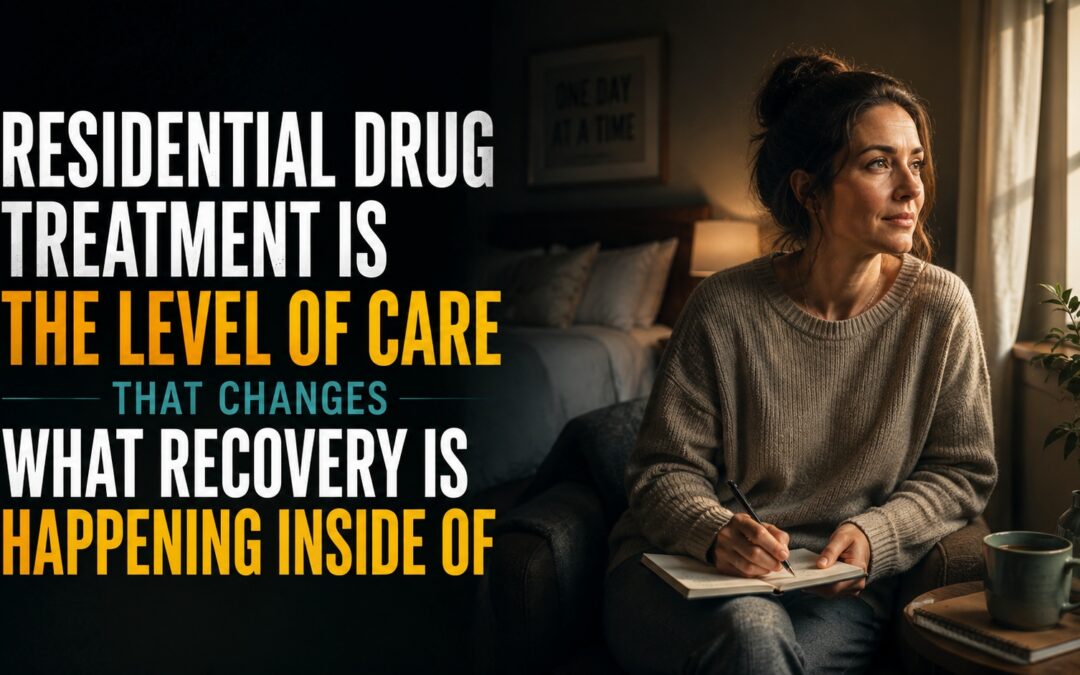
Residential drug treatment gives people something quieter and more powerful than a change of scenery, because it changes the actual conditions recovery happens inside of. If you or someone you love is weighing this decision, the mix of fear, hope and uncertainty is completely understandable. Choosing to step away from daily life can feel like a lot to carry.
You might be picturing everything you would need to pause, from work to family to the routines that hold your days together. Those worries are valid, and you are not alone in feeling them.
The truth is gentler than it may seem right now. This level of care is not about stepping out of your life. It is about building a foundation strong enough to return to it.
What Is Residential Drug Treatment?
Residential drug treatment is a level of care where a person lives on-site at a treatment facility while receiving structured support throughout the day and night. It surrounds each person with therapy, medical oversight and community in one steady environment. Everyday distractions step aside so healing can take the lead.
In this setting, people have access to counseling, medical care and peers who understand the journey. Each day follows a thoughtful rhythm built around rest, reflection and growth.
This immersive approach offers something rare. It gives people the time and space to focus fully on getting well.
Why Does Residential Drug Treatment Change the Conditions of Recovery?
Residential drug treatment changes the conditions of recovery by removing the daily pressures that quietly compete with healing. At home, triggers, stress and old routines constantly pull at your attention. Recovery becomes one task among many, often the one that gets pushed aside.
When those outside pressures step back, energy can finally move toward recovery itself. The environment supports the goal instead of working against it.
This shift matters because early recovery is delicate. Steady surroundings help the brain and body relearn what stability feels like.
How Does Environment Shape Healing?
Environment shapes healing by influencing how safe and focused a person feels each day. A calm, supportive space signals to the nervous system that it can finally rest. That sense of safety opens the door to deeper work.
At home, familiar cues can trigger cravings or old patterns without warning. A dedicated healing space removes many of those triggers.
Over time, the steadiness of the environment becomes something you carry inside. The calm you practice each day starts to feel like your own.
What Does a Day in Residential Drug Treatment Look Like?
A day in residential drug treatment is structured, supportive and filled with a balance of therapy, connection and rest. This predictable rhythm replaces the chaos that often surrounds substance use. Structure itself becomes a quiet form of comfort.
Mornings might begin with a nourishing meal, mindfulness or gentle movement. These simple routines help restore stability to body and mind.
Afternoons often include individual counseling, group sessions and educational time. Evenings offer space for reflection, connection and rest.
Why Does Structure Help So Much Early On?
Structure helps early on because it removes the weight of constant decision-making. When your schedule is thoughtfully planned, you do not have to navigate every choice alone. That relief frees up energy for the real work of healing.
Substance use often scatters daily routines and disrupts sleep, meals and rest. A steady rhythm helps rebuild those natural patterns.
Over time, these habits become tools you carry forward. Structure that once felt external slowly becomes internal.
Who Is Residential Drug Treatment Right For?
Residential drug treatment is right for people who need a higher level of support and a break from an environment that makes healing difficult. It often suits those whose home life is filled with triggers, stress or relationships that complicate recovery. A safe, focused space can make a meaningful difference.
This level of care can also help people who have tried other approaches without lasting results. Sometimes healing simply needs more room than daily life allows.
At Impact Wellness Network, care begins with understanding your unique story before any plan takes shape. Different levels of support exist so treatment can match what you actually need.
How Does It Compare to Outpatient Care?
Residential care differs from outpatient care mainly in its intensity and immersion. In residential treatment, you live on-site with support available around the clock. In outpatient care, you attend sessions while continuing to live at home.
Neither option is better in every situation. The right choice depends on your needs, your home environment and the level of structure that will help you most.
A caring team can help you weigh these factors. There is no single right path, only the one that supports you best.
What Kinds of Support Are Offered?
Residential drug treatment offers a blend of therapy, medical care and community designed to support the whole person. Healing means more than stopping substance use. It means understanding the deeper causes and building a healthier way of living.
Individual therapy helps you explore the roots of what you are facing. Group sessions remind you that you are not walking this path alone.
What About Co-Occurring Mental Health Needs?
Co-occurring mental health needs are addressed alongside substance use in quality residential care. Many people carry more than one struggle at once, such as anxiety, depression or trauma. Treating these together leads to steadier, more complete healing.
When only one concern receives attention, the other can quietly keep causing distress. A whole-person approach helps make sure nothing important gets overlooked.
This kind of care is central to lasting recovery. Seeing the full picture allows support to reach every part of the experience.
How Long Does Residential Drug Treatment Usually Last?
Residential drug treatment usually lasts between 30 and 90 days, though the length depends on individual needs. Some people benefit from a shorter, focused stay. Others find that more time gives them the steadiness they need to move forward.
Your care team works with you to shape a timeline that fits your situation. There is no single right length, only the one that supports your healing best.
Recovery is not a race. Giving yourself enough time is an act of self-respect, not weakness.
How Do You Know When It Is Time to Consider Residential Drug Treatment?
It may be time to consider residential drug treatment when daily life keeps getting in the way of healing. You do not need to reach a breaking point to deserve this level of care. Reaching out early often makes the path forward smoother.
Consider whether any of the following feel familiar:
- Your home environment is filled with triggers that make recovery feel nearly impossible.
- Previous attempts to heal through outpatient care or on your own have not lasted.
- Substance use is affecting your health, relationships or daily responsibilities.
- Stopping substance use on your own has felt unsafe or unmanageable.
- You sense that you need dedicated time and space to truly focus on getting well.
Recognizing these signs is a sign of strength, not failure. Support can help you find steadier ground.
Common Questions Before Starting Treatment
Can I stay connected with my family during treatment?
Yes, family connection is often an important part of recovery. Most programs offer scheduled visits and include family therapy sessions. These moments help rebuild trust and teach loved ones how to offer meaningful support.
Will I be able to keep my job?
Many people are able to protect their jobs while receiving care. Certain workplace protections may apply, and some employers offer medical leave options. A caring admissions team can help you understand your rights and plan the conversation.
What happens after residential drug treatment ends?
After residential care, most people step down into a less intensive level of support. This may include outpatient therapy, support groups or ongoing counseling. Quality programs build this aftercare plan with you before you ever leave.
Is residential care only for severe situations?
No, residential care helps people across a wide range of situations. Some arrive in crisis, while others simply need focused time away from daily triggers. What matters most is whether this level of support fits your needs.
Will my privacy be protected?
Yes, your confidentiality is treated with great care. Treatment centers follow strict privacy laws to keep your information safe. You can focus on healing knowing your story stays protected.
Taking the Next Step Toward Focused Healing
Residential drug treatment changes the very conditions recovery happens inside of, and that shift can reshape the entire experience of healing. Stepping away from daily distractions is not giving up on your life. It is choosing to protect it.
You deserve a space where recovery can come first, surrounded by people who truly understand. Choosing to ask for help is one of the bravest and most hopeful steps a person can take. If you or someone you love is ready to explore this path, please visit Impact Wellness Network to learn how we can walk beside you toward lasting wellness.