
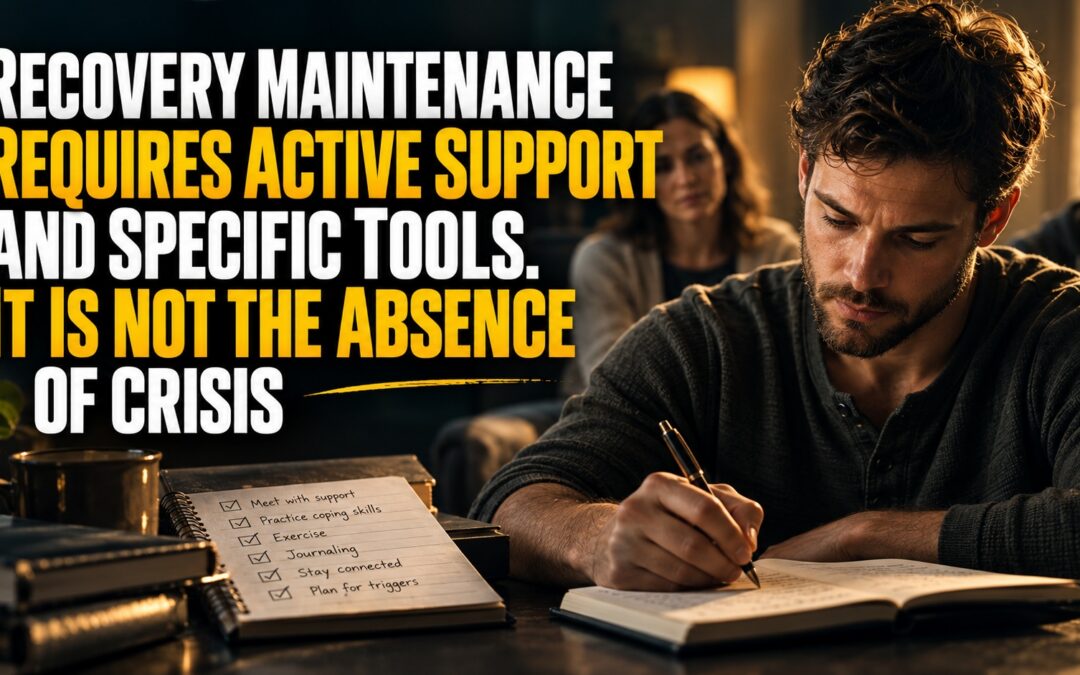
Recovery maintenance is the steady, intentional work of protecting your progress long after the most intense phase of treatment ends. If you or someone you love has finished a program, you may feel proud, relieved and a little uncertain about what comes next. Those feelings can live side by side.
Many people expect that once the cravings fade and life settles down, the hard part is over. Families often feel the same way. They quietly hope that calm days mean the danger has passed.
Calm days are worth celebrating, but a quiet stretch is not the same as a protected one. Lasting recovery is built through daily choices, real connection and tools you can reach for when life gets heavy. You do not have to do that work alone, and help is available at every step.
What Is Recovery Maintenance?
Recovery maintenance is the ongoing phase of care in which a person uses support, routines and coping skills to stay well after structured treatment. It often begins as someone steps down from residential or outpatient care. It continues for months and often for years.
Think of it like caring for your heart after a health scare. You keep taking medication, moving your body and seeing your doctor, even when you feel fine. Recovery maintenance works the same way.
The goal is not perfection. The goal is a life that makes a return to use less likely and makes reaching out easier when stress rises.
Who Needs Recovery Maintenance?
Everyone in recovery from a substance use disorder or a mental health condition can benefit from recovery maintenance. That includes people with one year of recovery and people with ten. Needs change over time, so the plan should change too.
Families need their own version of this support. When loved ones stay supported, the whole household stays steadier.
Why Is Recovery Maintenance More Than the Absence of Crisis?
Recovery maintenance is more than the absence of crisis because problems often grow quietly before they show up as an emergency. A person can look stable on the outside while stress, isolation or untreated symptoms build underneath. Waiting for a crisis means waiting until the problem has already grown large.
The National Institute on Drug Abuse describes addiction as a chronic, treatable condition. Like other chronic conditions, it responds best to ongoing management rather than care that appears only during emergencies.
Why Can Quiet Periods Feel Misleading?
Quiet periods can feel misleading because they tempt people to relax the habits that created the calm in the first place. Therapy sessions get skipped and support meetings slide off the calendar. Sleep and meals become irregular.
None of this happens because someone stopped caring. It often happens because life finally feels better. That is exactly why recovery maintenance needs a plan that stays active even on good days.
What Does Active Support Actually Mean?
Active support means scheduled, ongoing contact with people and services that help you stay well. It includes therapy appointments, peer groups, medication check-ins and honest conversations with loved ones. You plan these supports ahead of time instead of reaching for them only in an emergency.
Active support also means someone notices when you start to drift. A counselor or peer mentor who knows your patterns can often spot early changes before you do.
Which Specific Tools Support Recovery Maintenance?
The most helpful tools for recovery maintenance include a written relapse prevention plan, steady daily routines, ongoing therapy, medication management when appropriate and a reliable support network. Each tool covers a different kind of risk. Together they create a stronger safety net than any single tool can on its own.
How Does a Relapse Prevention Plan Help?
A relapse prevention plan helps by naming your personal triggers, your early warning signs and the exact steps you will take when they appear. Writing it down turns a vague intention into a clear action. It also gives loved ones a shared guide.
A strong plan might list three people to call, two healthy ways to handle cravings and one appointment to book if things feel shaky. Review it with your care team every few months so it stays current.
What Daily Routines Matter Most?
The daily routines that matter most are consistent sleep, regular meals, physical movement and time set aside for connection. These basics steady your mood and lower stress. When they slip, cravings and difficult emotions often grow stronger.
Small habits count. A morning walk, a set bedtime or a weekly coffee with a friend can quietly protect recovery maintenance over time.
How Do Therapy and Medication Fit In?
Therapy and medication fit in as ongoing supports that keep both mental health and substance use needs in focus. Cognitive behavioral therapy (CBT) teaches practical skills for handling stress, negative thoughts and cravings. Continuing therapy after treatment lets you practice those skills in real life.
For some people, medication-assisted treatment (MAT) is part of the plan. MAT pairs approved medications with counseling for opioid or alcohol use disorders. Medications for anxiety or depression may also continue under a provider’s care.
Why Does Connection Matter So Much?
Connection matters because isolation is one of the most common early warning signs of a return to use. Peer groups, alumni programs and family relationships remind you that you are not walking this road alone. They also offer honest feedback when you need it most.
Families can take part through family therapy or groups like Al-Anon and Nar-Anon. When loved ones feel supported, they can support recovery maintenance with more patience and less fear.
How Do Levels of Care Support Long-Term Recovery Maintenance?
Levels of care support long-term recovery maintenance by giving people a gradual step down from intensive treatment into daily life. Moving too quickly from full structure to no structure can leave real gaps. A thoughtful step down keeps support in place while independence grows.
At Impact Wellness Network, care begins with understanding your full story so each transition matches what you need right now.
- Partial hospitalization program (PHP). You attend treatment for most of the day while living at home or in supportive housing.
- Intensive outpatient program (IOP). Structured sessions several days a week help you practice new skills while work and family life continue.
- Standard outpatient care. Regular therapy and check-ins support people who feel steadier in their recovery.
- Aftercare and alumni support. Ongoing groups and follow-up keep you connected long after formal treatment ends.
Can You Step Back Up If You Need More Support?
Yes, stepping back up to a more structured level of care is a healthy and responsible choice. Needs shift with life events, stress and changes in health.
Returning to more support is not a setback. It is recovery maintenance doing exactly what it was designed to do.
What Warning Signs Suggest a Plan Needs Attention?
Warning signs that a plan needs attention usually show up in mood, routine and relationships before any return to use. Noticing them early gives you and your care team time to adjust. Common signs include:
- Skipping therapy, meetings or medication appointments
- Pulling away from friends, family or support groups
- Having trouble sleeping, eating or managing everyday stress
- Feeling more irritable, restless or secretive than usual
- Thinking that using “just once” would be harmless
A warning sign is not a failure. It is a signal to reach out and strengthen your recovery maintenance plan.
How Do You Know If Your Recovery Maintenance Plan Is Strong Enough?
Your recovery maintenance plan is strong enough when it is active, specific and shared with people who can help. Use these statements as a gentle self-check:
- You have at least one appointment or support meeting scheduled in the next two weeks.
- You have a written list of your triggers and the steps you will take when they show up.
- You can name two or three people you would call on a hard day.
- Your mental health needs are being addressed alongside your substance use.
- Your family or close supports know how to respond if they notice warning signs.
- You review and update your plan when life changes, such as a new job, a move or a loss.
If several of these feel uncertain, that is useful information rather than a reason for worry. A care team can help you fill the gaps before stress builds.
What Families Often Ask
How long does recovery maintenance last?
Recovery maintenance has no fixed end date. Support usually becomes lighter over time, but many people keep some form of ongoing care for years. The right pace depends on individual needs and goals.
If my loved one seems fine, do they still need support?
Yes, ongoing support protects progress during calm stretches. Stability is often the result of the tools a person keeps using. Removing those tools can make the next stressful moment harder to handle.
What should we do if we notice warning signs?
Start a calm conversation that comes from concern rather than blame. Encourage your loved one to contact their therapist or care team soon. Early adjustments are often simpler than responding to a crisis later.
Does a return to use mean recovery maintenance failed?
No, a return to use means the plan needs to change. Many people adjust their support and find their way back to steady recovery. Reaching out quickly makes that next step easier.
Taking the Next Step Toward Lasting Support
Recovery maintenance does not happen on its own once a crisis passes. It is an active, hopeful process built on real support and specific tools that grow with you over time.
Calm days are a gift, and the right plan helps protect them. You do not have to figure out what comes next by yourself. If you or someone you love is looking for ongoing care, connect with the caring admissions team at Impact Wellness Network to build a plan that supports you for the long road ahead.