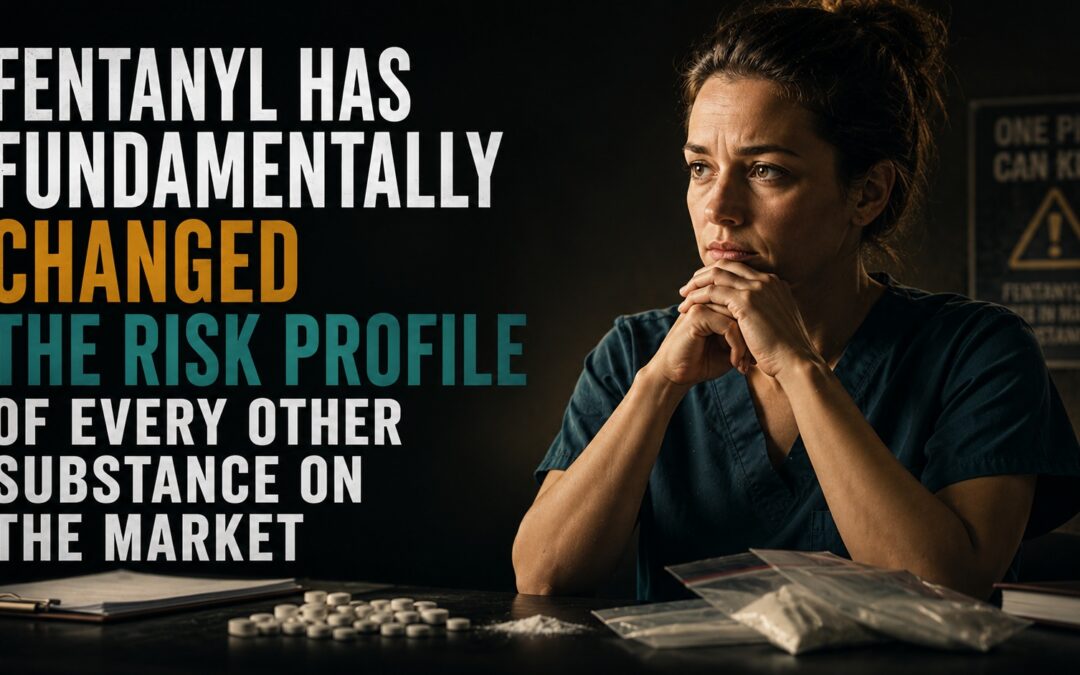
The fentanyl risk profile has quietly reshaped the danger of nearly every drug sold today, and that truth deserves your attention if you or someone you love uses any substance at all. You may feel scared, confused or unsure where these worries even come from. Those feelings make complete sense.
Maybe you have heard warnings and wondered if they really apply to your situation. Maybe someone you care about uses a substance you never connected to fentanyl before.
The reality is heavier than most people realize, yet understanding it can be its own kind of protection. Knowledge does not make the fear disappear, but it can help you make safer, more informed choices. You are not alone in trying to make sense of this, and support is closer than it may feel right now.
What Does Fentanyl Contamination Actually Mean?
Fentanyl contamination means that a powerful synthetic opioid has been mixed into drugs where a person would never expect to find it. Fentanyl is extremely potent, so even a tiny amount can be dangerous. Because it is cheap to produce, it now shows up in many substances sold on the illegal market.
This contamination is often invisible. You cannot see, smell or taste fentanyl in a pill or powder.
That is what makes it so concerning. A person may believe they are using one substance while unknowingly taking something far stronger and far riskier.
Why Has the Fentanyl Risk Profile Changed Every Other Substance?
The fentanyl risk profile has changed every other substance because fentanyl now turns up in drugs that have nothing to do with opioids. Counterfeit pills, cocaine, methamphetamine and other substances have all been found to contain it. This means a person’s usual drug may carry a hidden and unpredictable danger.
In the past, someone might have understood the risks of their particular substance. That understanding no longer offers the same protection.
Today the danger is not only the drug a person chooses. It is the possibility that fentanyl was added without their knowledge.
How Does Fentanyl End Up in Unexpected Drugs?
Fentanyl ends up in unexpected drugs through the way substances are produced and handled on the illegal market. It may be added intentionally to increase potency or mixed in accidentally during production. Equipment used for one drug can also carry traces into another.
Because fentanyl is so potent, even a small amount left behind can be harmful. There is no quality control in this setting.
This is why two pills that look identical can carry very different risks. One may be safe by comparison while the other holds a dangerous dose.
Why Does This Make the Risk So Unpredictable?
This makes the risk unpredictable because there is no reliable way to know what a substance truly contains. The amount of fentanyl can vary from one pill or batch to the next. A person cannot judge safety by appearance or by past experience.
Someone might use the same substance many times without a problem, then encounter a contaminated batch. The change is invisible until harm has already happened.
That unpredictability is exactly what makes the current landscape so different. Familiarity no longer means safety.
Who Is at Risk From Fentanyl in the Drug Supply?
Anyone who uses illegal or counterfeit drugs is at risk from fentanyl in the drug supply, regardless of the substance. This includes people who have never touched an opioid on purpose. The danger reaches far beyond those seeking opioids specifically.
People buying pills that look like prescription medication face real risk. Counterfeit versions often contain fentanyl instead of the expected ingredient.
Individuals who use stimulants like cocaine or methamphetamine are also vulnerable. Contamination does not respect the type of drug a person chooses.
What Are the Warning Signs of a Fentanyl-Related Overdose?
The warning signs of a fentanyl-related overdose include slowed or stopped breathing, extreme drowsiness and unresponsiveness. These signs can appear quickly and require immediate emergency care. Recognizing them may help save a life.
Some signs are easier to spot than others. Learning them can help you protect yourself or someone you love.
Common warning signs to watch for include:
- Very slow, shallow or stopped breathing
- Blue or gray lips, fingertips or skin
- Extreme sleepiness or an inability to wake the person
- Limp body, pinpoint pupils or gurgling sounds
- No response to your voice or touch
If you notice any of these signs, call emergency services right away. Naloxone, a medication that can reverse an opioid overdose, may help if given quickly.
Acting fast makes a real difference. These moments are never something to wait out.
How Are Fentanyl and Substance Use Treated Together?
Fentanyl and substance use are treated together through comprehensive care that supports both the body and the mind. Recovery involves more than stopping a substance. It means healing the whole person with steady, compassionate guidance.
At Impact Wellness Network, care begins with understanding your unique story before any plan takes shape. This approach helps match each person with the right level of support.
Because opioids can cause difficult withdrawal, medical guidance makes early recovery safer. A supportive setting eases those first steps.
What Levels of Care Are Available?
The levels of care available range from medically supervised detox to residential and outpatient support, depending on individual needs. Each option offers a different balance of structure and flexibility.
- Medically supervised detox. This first step helps the body stabilize safely with professional monitoring.
- Residential care. People live on-site with round-the-clock support and full focus on healing.
- Intensive outpatient care. Structured sessions happen a few days a week while daily life continues.
- Standard outpatient care. Regular counseling supports those who are further along in recovery.
A caring team can help you decide which level fits your situation. There is no single right path, only the one that supports you best.
How Does Therapy Support Recovery?
Therapy supports recovery by helping you understand and heal the roots of substance use. Individual counseling offers space to explore stress, trauma and personal goals. This work builds a foundation for lasting change.
Group therapy connects you with others who truly understand the journey. That shared experience often eases the loneliness recovery can bring.
Over time, these tools help you build a healthier way of living. Healing the mind supports healing the body as well.
How Do You Know When It Is Time to Reach Out?
It may be time to reach out when substance use starts affecting your health, safety, relationships or peace of mind. You do not need to reach a breaking point to deserve support. Reaching out early often makes the path forward smoother.
Consider whether any of the following feel familiar for you or someone you love:
- You worry about hidden fentanyl in the substances you or a loved one use.
- Efforts to stop using on your own have not lasted.
- Substance use is affecting work, relationships or daily life.
- You have experienced a scare, an overdose or a close call.
- You sense a quiet readiness to ask for help, even if it feels frightening.
Recognizing these signs is a sign of strength, not weakness. Support can meet you exactly where you are.
Common Questions Before Starting Treatment
Can fentanyl really be in drugs that are not opioids?
Yes, fentanyl has been found in counterfeit pills, cocaine, methamphetamine and other substances. It is often added without the user’s knowledge. This is why the danger now reaches people who never intended to use an opioid.
Is it safe to stop using opioids on my own?
Stopping opioids suddenly can cause uncomfortable and sometimes serious withdrawal symptoms. Medical supervision helps you taper safely and stay more comfortable. A supportive setting also lowers the risk of returning to use during a vulnerable time.
Does using fentanyl mean recovery is out of reach?
No, recovery is possible even after fentanyl use. Many people begin treatment and go on to rebuild healthy, meaningful lives. With the right medical and emotional support, lasting change is genuinely within reach.
How can I keep a loved one safer right now?
You can learn the signs of an overdose and keep naloxone on hand if possible. Encourage never using alone and having help nearby. Most of all, offer compassion, because judgment often keeps people from asking for help.
Will treatment address the reasons behind the substance use?
Yes, quality care looks at the whole person, not just the substance. Therapy helps you explore stress, trauma or pain that may have contributed. Addressing these roots supports steadier, more lasting recovery.
Taking the Next Step Toward Safety and Healing
The fentanyl risk profile has changed what safety means for nearly every substance, yet understanding this reality can become the turning point toward help and hope. The danger is real, but so is the possibility of healing. You do not have to face this alone.
You deserve care that honors your whole story and supports both your safety and your well-being. Choosing to ask for help is one of the bravest and most hopeful steps a person can take. If you or someone you love is ready to explore support, please reach out to Impact Wellness Network to learn how we can walk beside you toward lasting wellness.