
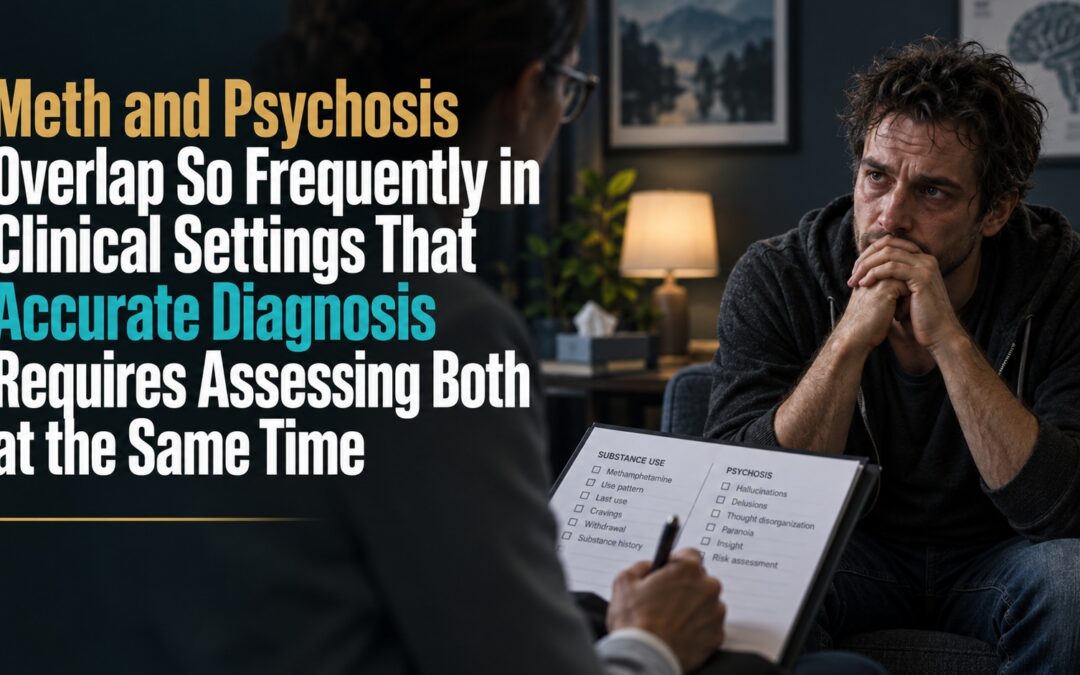
Meth and psychosis overlap so often in treatment settings that separating the two can feel almost impossible without careful, coordinated assessment. If you or someone you love is facing this, the fear and confusion can feel overwhelming. Those feelings are valid, and you are not alone in carrying them.
You may have watched a loved one change in ways that frighten you, or felt your own thoughts turn unfamiliar and hard to trust. It can be difficult to know where substance use ends and something deeper begins.
The truth is gentler and more hopeful than it may feel right now. These two conditions can be understood and treated together with the right team and a thoughtful plan. What matters most is that both are assessed at the same time, so care reaches the whole picture rather than only one part of it.
What Does It Mean When Meth and Psychosis Overlap?
Meth and psychosis overlap when methamphetamine use triggers or intensifies symptoms like paranoia, hallucinations or disordered thinking. The two become tangled together, and each can make the other harder to recognize. Treating them as separate problems often leaves part of the struggle unaddressed.
Methamphetamine is a powerful stimulant that affects the brain in significant ways. For some people, heavy or prolonged use can produce psychotic symptoms that feel very real.
For others, an underlying mental health condition may already be present before substance use begins. This is why a clear, careful assessment matters so much.
Why Does Meth and Psychosis Require Assessing Both Conditions Together?
Meth and psychosis require assessing both conditions together because the symptoms often look nearly identical from the outside. Paranoia, agitation, and hallucinations can come from stimulant use, from a mental health condition or from both at once. Looking at only one piece can lead to a plan that misses the deeper need.
When a person receives care for substance use but not for underlying psychosis, the untreated symptoms can linger. That lingering distress can quietly pull them back toward substance use.
Assessing both at the same time helps a care team see the full story. This whole-person view is the foundation of accurate diagnosis and effective care.
How Do Symptoms Look So Similar?
Symptoms look similar because both meth use and psychotic conditions can affect thinking, perception and mood in overlapping ways. A person might experience fear that others are watching them, hear or see things that are not there, or struggle to organize their thoughts. From the outside, the cause is not always obvious.
Stimulant use can produce these experiences during intoxication or withdrawal. A separate mental health condition can produce the very same ones.
This is why guessing is never enough. A skilled assessment looks at history, timing and patterns to understand what is truly happening.
How Do Professionals Assess Both at the Same Time?
Professionals assess both at the same time by gathering a full picture of a person’s history, symptoms and substance use. They look at when symptoms began, how long they last and whether they persist once substances leave the body. This careful timeline helps separate temporary effects from a lasting condition.
At Impact Wellness Network®, care begins with understanding your unique story before any plan takes shape. This helps match each person with the right combination of support.
A thorough assessment also includes medical monitoring and mental health evaluation. Bringing these together creates one clear, coordinated understanding.
Why Does Timing of Symptoms Matter?
Timing of symptoms matters because it helps reveal whether psychosis is tied to substance use or to a separate condition. Symptoms that fade as the body clears meth may point to substance-induced psychosis. Symptoms that continue well after use stops may suggest an underlying mental health condition.
This distinction shapes the entire treatment plan. It guides which supports, therapies and medical care will help most.
A caring team takes the time to observe these patterns closely. Rushing this step often leads to incomplete care.
Who Is Most Affected by Meth and Psychosis?
People who use methamphetamine heavily or over a long period are most affected by meth and psychosis, though anyone can experience it. Those with a personal or family history of mental health conditions may be more vulnerable. Sleep loss and high stress can also raise the risk.
This experience does not reflect weakness or a personal failing. It reflects how methamphetamine affects the brain, sometimes in frightening ways.
If this feels familiar, that recognition is a meaningful first step. Understanding what you are facing helps guide you toward the right kind of support.
What Warning Signs Should Families Watch For?
Warning signs families should watch for include intense paranoia, hallucinations and sudden changes in thinking or behavior. These shifts can build gradually or appear quickly, which can make them easy to misread. Gentle awareness helps far more than fear.
Some common signs to notice include:
- Strong fear or suspicion that others intend harm
- Seeing, hearing or sensing things that are not there
- Confused, racing or disorganized thoughts
- Extreme agitation, restlessness or sleeplessness
- Withdrawing from loved ones or familiar routines
If several of these feel familiar, that is worth compassionate attention. These patterns do not define anyone, and support is available.
What Levels of Care Support Meth and Psychosis Together?
The levels of care that support meth and psychosis together range from medically supervised detox to residential and outpatient options, depending on individual needs. Each offers a different balance of structure and flexibility. The right fit depends on your situation and the support around you.
Understanding the options can make the path forward feel clearer.
- Medically supervised detox. This first step helps the body stabilize safely with professional monitoring.
- Residential care. People live on-site with round-the-clock support and full focus on healing both conditions.
- Intensive outpatient care. Structured sessions happen a few days a week while daily life continues.
- Standard outpatient care. Regular counseling supports those who are further along in their recovery.
A caring team can help you decide where to begin. There is no single right path, only the one that supports you best.
How Does Therapy Support Recovery?
Therapy supports recovery by helping you understand and heal the roots of substance use and mental health symptoms. Individual counseling offers space to explore stress, fear and personal goals. This work builds a foundation for lasting change.
Group therapy connects you with others who truly understand the journey. That shared experience often eases the loneliness recovery can bring.
Over time, these tools help you build a healthier way of living. Healing the mind and body together makes progress steadier.
How Do You Know When It Is Time to Reach Out?
It may be time to reach out when meth use and troubling changes in thinking keep feeding each other in ways that feel hard to manage. You do not need to reach a breaking point to deserve support. Reaching out early often makes the whole journey smoother.
Consider whether any of the following feel familiar for you or someone you love:
- Substance use and frightening changes in perception seem tangled together and hard to separate.
- Paranoia, hallucinations, or confusion continue even during periods without use.
- Previous care addressed only one condition and did not bring lasting relief.
- Efforts to stop using on your own have not lasted over time.
- You sense a quiet readiness to ask for help, even if it feels frightening.
Recognizing these signs is a sign of strength, not weakness. Support can meet you exactly where you are.
Common Questions Before Starting Treatment
Can meth cause psychosis even without a mental illness?
Yes, methamphetamine can trigger psychotic symptoms in people with no prior mental health condition. Heavy use, sleep loss and long periods of use can all contribute. These symptoms often ease as the body clears the substance, though careful assessment is still important.
Will psychosis go away once someone stops using meth?
For some people, psychotic symptoms fade after stopping meth and stabilizing. For others, symptoms continue and point to a separate condition that needs its own care. Only a thorough assessment can tell the difference, which is why treating both together matters.
Why is treating both conditions at once so important?
Treating both at once is important because each condition can worsen the other when left unaddressed. Focusing on only substance use or only mental health often leaves part of the struggle untouched. A coordinated plan reaches the whole person and supports steadier progress.
Is it safe to stop using meth without help?
Stopping meth can bring difficult emotional and physical symptoms, so professional support is strongly recommended. A supervised setting keeps you safer and more comfortable during early recovery. Trained professionals can also monitor for psychosis and respond quickly if needed.
Can someone recover from both meth use and psychosis?
Yes, many people find real stability when both conditions are treated together with steady support. Recovery is a process that often blends medical care, therapy and ongoing guidance. With the right help, a calmer and healthier life is genuinely within reach.
Taking the Next Step Toward Coordinated Healing
Meth and psychosis overlap so frequently that accurate diagnosis depends on assessing both conditions at the same time, and that careful approach can change everything about the path forward. The confusion you feel now does not have to define what comes next. With coordinated care, healing becomes possible.
You deserve support that honors your whole story, not just one piece of it. Choosing to ask for help is one of the bravest and most hopeful steps a person can take. If you or someone you love is ready to explore this path, please reach out to Impact Wellness Network to learn how we can walk beside you toward lasting wellness.