
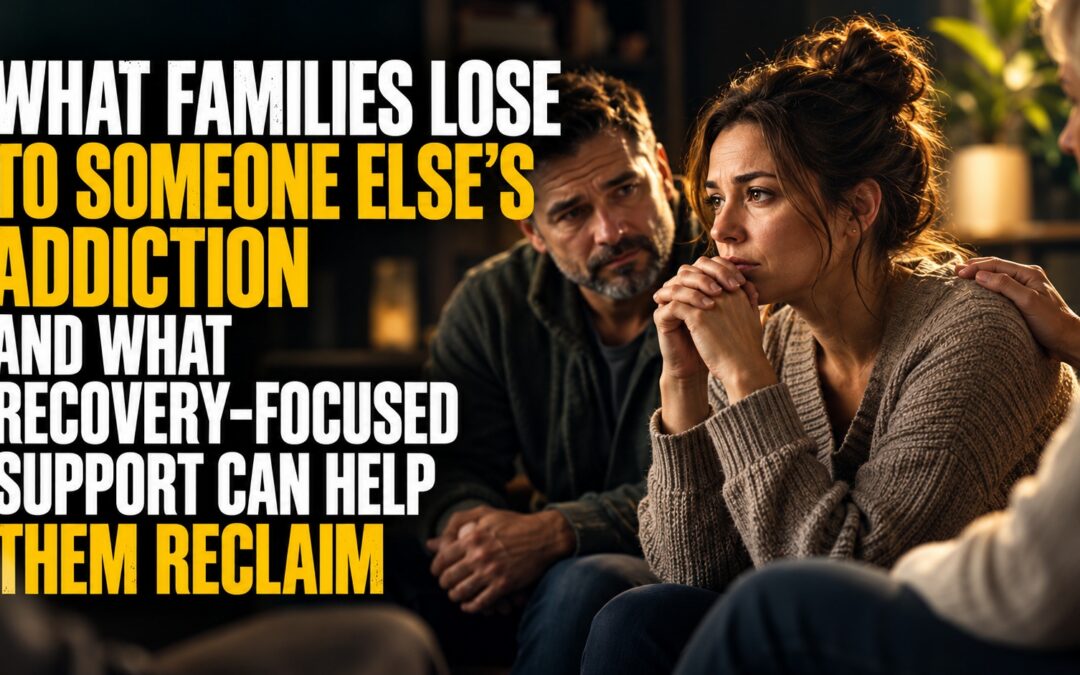
Understanding what families lose to addiction often starts in a quiet moment, when you realize how much of your own life has slipped away. If someone you love is living with a substance use disorder, you may feel exhausted, angry, guilty and heartbroken all at once. These feelings can exist side by side, and none of them make you a bad parent, partner or sibling.
Maybe you’ve stopped sleeping through the night. Maybe holidays feel tense, money feels unpredictable and friends have drifted away because explaining things felt too hard.
You are not imagining the toll, and you are not alone in carrying it. Naming what has been lost is not about blame. It is the first step toward getting some of it back, with support built for you as well as the person you love.
How Do You Recognize What Families Lose to Addiction?
You can recognize what families lose to addiction by looking past the substance use and noticing what has slowly changed at home. These losses are rarely sudden. They build through months or years of worry, broken promises and constant adjustment.
Many families describe a gradual narrowing of life. Plans shrink, conversations get careful and everyone starts orbiting one person’s crisis.
What Happens to Trust?
Trust is often the first thing a family loses, because addiction can bring secrecy, missed commitments and painful surprises. You may find yourself checking phones, counting pills or questioning every explanation. That vigilance is a natural response, yet it wears everyone down.
Lost trust ranks high among what families lose to addiction because it touches every other relationship in the home.
How Does Addiction Affect Routine and Stability?
Addiction disrupts routine and stability by making daily life feel unpredictable. Meals, sleep, work schedules and family traditions can all bend around the next emergency. Children may learn to tiptoe, and adults may cancel plans just in case.
Over time, unpredictability itself becomes one more piece of what families lose to addiction.
What About Money, Health and Time?
Money, health and time are some of the most practical losses families face. Some families cover debts, legal costs or missed rent. Many caregivers notice their own sleep, appetite and physical health slipping as stress builds.
These costs are part of what families lose to addiction, even when no one talks about them openly. Hours also disappear into searching, worrying and waiting for news.
Why Do Family Members Lose Their Sense of Self?
Family members often lose their sense of self because so much energy goes toward managing someone else’s crisis. Hobbies fade, friendships go quiet and personal goals get set aside.
This loss of identity is one of the hardest parts of what families lose to addiction to see. It is also one of the most important to reclaim.
Why Is What Families Lose to Addiction So Often Overlooked?
What families lose to addiction is often overlooked because attention naturally centers on the person using substances. Treatment plans, emergencies and conversations revolve around their safety. Family members’ needs end up waiting in the background.
Stigma plays a role too. Many families keep the struggle private to protect their loved one, which can leave them without anyone to talk to.
Why Do Family Members Put Their Own Needs Last?
Family members put their own needs last because love and fear make the other person’s crisis feel more urgent. Taking time for yourself can feel selfish when someone you care about is in danger. Yet running on empty makes steady support much harder to offer.
Clinicians often describe addiction as a family illness for this reason. Making room for your own needs is how you begin to address what families lose to addiction rather than simply endure it.
What Can Recovery-Focused Support Help Families Reclaim?
Recovery-focused support can help families reclaim trust, healthier communication, personal well-being and a renewed sense of connection. It does not erase what happened. It gives families tools and space to rebuild at a pace that feels safe.
Families can begin reclaiming what families lose to addiction even before a loved one is ready for treatment.
How Do Families Rebuild Trust and Communication?
Families rebuild trust and communication through consistent actions, honest conversations and guided practice in a safe setting. Family therapy gives everyone a place to share hurt without blame. A trained therapist helps each person listen without becoming defensive.
Trust grows slowly. Small kept promises usually matter more than big apologies.
Why Do Boundaries Matter?
Boundaries matter because they protect your well-being while still leaving room for love. A boundary might mean no longer covering for missed work or not allowing substances in the home. Clear limits replace chaos with predictability.
How Can Family Members Care for Themselves?
Family members can care for themselves through individual therapy, peer support and small routines that restore rest and joy. Groups like Al-Anon and Nar-Anon connect you with people who understand this road firsthand.
Community Reinforcement and Family Training (CRAFT) is an evidence-based approach that teaches families practical ways to encourage a loved one toward treatment. It also helps families care for their own health. Reconnecting with friends, hobbies and sleep is not a distraction from helping. It is part of recovering what families lose to addiction.
How Does Family Support Fit Into a Loved One’s Treatment?
Family support fits into a loved one’s treatment as an active part of the care plan, not an extra added at the end. Strong programs invite families into education, therapy and discharge planning. When everyone learns the same language, home becomes a steadier place for recovery.
At Impact Wellness Network, care begins with understanding each person’s full story, including the people who love them. That whole-family view shapes how support is offered at every stage.
What Levels of Care Include Family Involvement?
Family involvement can be part of every level of care, from detox through aftercare. Each step offers different ways for loved ones to stay connected.
- Medically supervised detox. Families receive education while their loved one stabilizes safely.
- Residential care. Family therapy and visits help rebuild connection during focused, on-site treatment.
- Partial hospitalization program (PHP). A loved one attends treatment most of the day while living at home, giving families steady clinical backup.
- Intensive outpatient program (IOP). Structured sessions several days a week let families practice new skills in everyday life.
- Aftercare and alumni support. Ongoing groups help families protect progress after formal treatment ends.
Understanding what families lose to addiction helps a care team plan for the whole household, not just one person.
How Do You Know Your Family Needs Support Too?
Your family likely needs support when a loved one’s substance use is shaping your health, relationships or daily choices. You do not need to wait for your loved one to enter treatment before getting help yourself. Consider whether these statements feel familiar:
- You spend more time worrying about your loved one than caring for your own needs.
- You have stopped seeing friends or doing activities you once enjoyed.
- Conversations at home often turn tense, guarded or explosive.
- You have covered debts, made excuses or hidden problems to keep the peace.
- Your sleep, mood or physical health has changed since the struggle began.
- Children in the home seem anxious, withdrawn or older than their years.
- You feel unsure how to help without making things worse.
If several of these ring true, that is a signal to reach out, not a reason for shame. Recognizing what families lose to addiction is often where healing begins.
What Families Often Ask
Can we get support if our loved one refuses treatment?
Yes, families can begin their own healing whether or not a loved one is ready. Family therapy, peer groups and approaches like CRAFT help you set boundaries and care for yourself. These steps may also make your loved one more open to help over time.
Is it normal to feel angry at someone I love?
Yes, anger is a common response to repeated hurt and fear. Feeling angry does not mean you have stopped loving them. A therapist can help you work through those feelings in a healthy way.
How do we help children understand what is happening?
Children do best with honest, age-appropriate explanations and reassurance that the addiction is not their fault. Steady routines help them feel safe. Family programs can guide these conversations so kids feel included rather than confused.
Can we really get back what we lost?
Many families rebuild trust, routines and closeness over time with consistent support. Some things may look different than before, and that is okay. What families lose to addiction does not have to define what the family becomes next.
Taking the Next Step Toward Healing Together
Naming what families lose to addiction is not about dwelling on pain. It is about recognizing that you have carried a heavy load and that you deserve support too. Trust, stability, health and connection can be rebuilt with the right tools and people beside you.
You do not have to wait for a crisis or for your loved one to be ready. Healing can start with you. If your family is ready to talk, reach out to the compassionate team at Impact Wellness Network to learn how family-centered care can help you reclaim what matters most.