
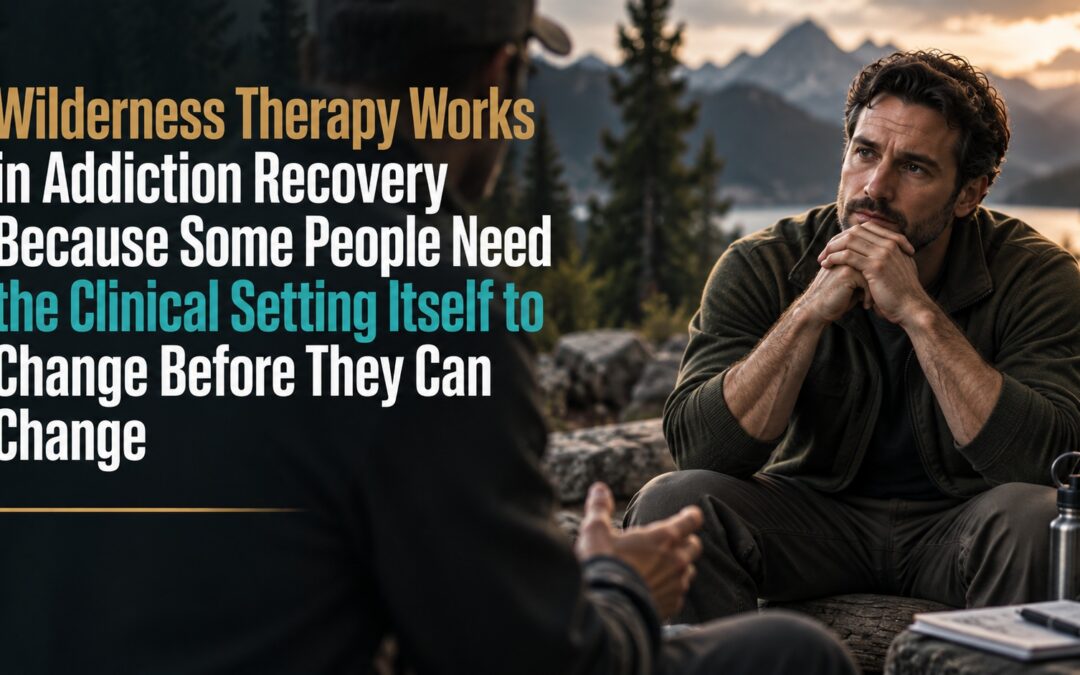
Wilderness therapy addiction recovery offers something a traditional treatment room sometimes cannot, because for some people the setting itself has to change before real change becomes possible. If you or someone you love has tried treatment before without lasting results, that experience can leave you feeling discouraged. Those feelings are valid, and you are not alone in carrying them.
You may have sat in a counseling office and felt too guarded to open up. Sometimes the familiar walls, routines and pressures of everyday life follow us right into the room.
The truth is gentler and more hopeful than it may feel right now. A different environment can quiet those old defenses and create space for honesty. Nature has a way of lowering the walls we build, and that shift can make deeper healing possible.
What Is Wilderness Therapy Addiction Recovery?
Wilderness therapy addiction recovery is an approach that combines outdoor experiences with clinical treatment to help people heal from substance use. It moves therapy out of a traditional office and into a natural setting. The change of environment becomes part of the healing itself.
In this model, licensed professionals guide therapy while people take part in activities like hiking, camping and reflection. The outdoors is not a vacation. It is the backdrop for real clinical work.
This approach still includes the core elements of quality care. Individual counseling, group therapy and skill-building all remain central to the process.
Why Does the Clinical Setting Itself Need to Change for Some People?
The clinical setting itself needs to change for some people because a familiar environment can keep old patterns firmly in place. When someone has struggled to open up in a traditional office, the same walls, chairs and routines can trigger the same guardedness. A new setting interrupts those reflexes.
Nature strips away many of the distractions and pressures of daily life. Without a phone buzzing or a schedule to rush through, a person can finally slow down and reflect.
This shift matters because early healing asks for honesty. A setting that feels safe and different can make that honesty feel possible for the first time.
How Does a Change of Environment Support Healing?
A change of environment supports healing by signaling to the mind and body that something new is happening. Stepping into nature can calm the nervous system and ease the constant hum of stress. That sense of calm opens the door to deeper work.
Familiar surroundings often carry hidden triggers tied to substance use. Removing those cues gives a person room to breathe and think clearly.
Over time, the steadiness found outdoors can become something a person carries within. The calm practiced in nature starts to feel like their own.
Who Is Wilderness Therapy Addiction Recovery Right For?
Wilderness therapy addiction recovery is right for people who have struggled to connect with traditional treatment or who feel stuck in old patterns. It often helps those who shut down in a standard office setting. A different environment can reach them in a way four walls could not.
This approach can also support people who feel disconnected from themselves or from others. Time in nature has a way of restoring that sense of connection.
At Impact Wellness Network, care begins with understanding your unique story before any plan takes shape. This helps match each person with the level of support that truly fits their needs.
How Does It Compare to Traditional Treatment?
Wilderness therapy differs from traditional treatment mainly in where and how the clinical work happens. Traditional programs deliver care in offices or facilities. Wilderness programs bring that same care into a natural setting through shared outdoor experiences.
Neither approach is better in every situation. The right choice depends on your needs, your history with treatment and the environment that will help you most.
Many people benefit from blending approaches over time. What matters is finding the setting where you can finally do the work.
What Does a Typical Experience Look Like?
A typical wilderness therapy experience blends structured clinical care with meaningful time in nature. Days often follow a steady rhythm of therapy, physical activity and quiet reflection. This structure brings a sense of calm that many people have not felt in a long time.
Mornings might begin with a shared meal and a group check-in. Activities like hiking or building a campsite create natural moments for growth and teamwork.
Afternoons and evenings often include individual counseling and group sessions. The outdoor setting keeps the work grounded and real.
What Skills Do People Build Outdoors?
People build practical life skills outdoors that carry directly into everyday recovery. Learning to set up a shelter or navigate a trail teaches patience, focus and problem-solving. Small victories rebuild confidence one step at a time.
These experiences also teach people to face challenges without turning to substances. Each obstacle met in nature becomes proof of new strength.
Working alongside others fosters trust and communication. Those bonds often ease the loneliness recovery can bring.
How Does Wilderness Therapy Fit Into a Full Treatment Plan?
Wilderness therapy fits into a full treatment plan as one meaningful part of a larger continuum of care. It works best when connected to other levels of support before and after the outdoor experience. Recovery is rarely a single step, and steady transitions help progress last.
At Impact Wellness Network, care is built around the whole person rather than a single method. Understanding the different levels of support can make the path forward feel clearer.
- Medically supervised detox. This first step helps the body stabilize safely with professional monitoring.
- Residential care. People live on-site with round-the-clock support and full focus on healing.
- Intensive outpatient care. Structured sessions happen a few days a week while daily life continues.
- Standard outpatient care. Regular counseling supports those who are further along in recovery.
A caring team can help you decide where to begin. There is no single right path, only the one that supports you best.
How Do You Know When It Is Time to Consider This Approach?
It may be time to consider wilderness therapy when traditional treatment has not reached you the way you hoped. You do not need to reach a breaking point to deserve a different kind of care. Reaching out early often makes the path forward smoother.
Consider whether any of the following feel familiar:
- You have tried treatment before but struggled to open up or stay engaged.
- The familiar setting of an office or facility makes it hard to feel present.
- You feel disconnected from yourself, from others or from a sense of hope.
- Old routines and triggers keep pulling you back toward substance use.
- You sense that a change of environment might help you finally do the work.
Recognizing these signs is a sign of strength, not failure. Support can help you find steadier ground.
Common Questions Before Starting Treatment
Is wilderness therapy just camping instead of real treatment?
No, wilderness therapy is a clinical approach guided by licensed professionals. The outdoor setting supports the work, but individual counseling, group therapy and evidence-based care remain at its heart. Nature is the environment, not a replacement for treatment.
Do I need to be physically fit to take part?
You do not need to be an athlete to benefit from this approach. Activities are adapted to different ability levels, and the focus is on growth rather than performance. A caring team helps make sure the experience feels safe and manageable.
Will I still receive medical support if I need it?
Yes, your safety and health remain a top priority throughout the experience. Quality programs coordinate medical and clinical care so support is always available. Trained professionals stay involved every step of the way.
What happens after the wilderness experience ends?
After the outdoor portion, most people step into a less intensive level of support. This may include outpatient therapy, counseling or support groups. A strong plan connects the growth from nature to daily life so progress can continue.
Can this approach really help if nothing else has worked?
Yes, a new setting sometimes reaches people that traditional programs could not. Many individuals who felt stuck find that a different environment opens the door to real change. What did not work before does not mean healing is out of reach.
Taking the Next Step Toward a New Beginning
Wilderness therapy addiction recovery proves that sometimes the setting itself has to change before a person can change, and that shift can reshape the entire experience of healing. Stepping into nature is not stepping away from serious care. It is choosing an environment where honesty and growth finally feel possible.
You deserve a space where recovery can take root, surrounded by people who truly understand. Choosing to ask for help is one of the bravest and most hopeful steps a person can take. If you or someone you love is ready to explore this path, please reach out to Impact Wellness Network to learn how we can walk beside you toward lasting wellness.