
Long-term recovery often looks different than people expect when they first finish a treatment program. If you or someone you love just completed detox or residential care, you may feel proud, hopeful and a little nervous about what comes next. All of those feelings can exist at once.
Maybe you’re wondering why the confidence you felt on discharge day seems harder to hold onto at home. Maybe your family is quietly waiting for things to feel “normal” again. Those worries are common, and they don’t mean anything has gone wrong.
The first phase of treatment does important work. It helps the body stabilize, builds early coping skills and creates a safe space to begin healing.
Yet the skills learned in a structured setting still need time, practice and support to hold up in everyday life. Knowing what comes next can help you plan with confidence, and you don’t have to figure it out alone.
What Does Long-Term Recovery Actually Mean?
Long-term recovery is the ongoing process of maintaining health, stability and well-being long after the most intensive phase of treatment ends. It isn’t defined by a single finish line. It grows through daily habits, steady support and a life that feels worth protecting.
The Substance Abuse and Mental Health Services Administration (SAMHSA) describes four major dimensions that support recovery: health, home, purpose and community. Health means managing physical and mental well-being. Home means having a safe, stable place to live.
Purpose means meaningful daily activities, such as work, school, volunteering or caregiving. Community means relationships that offer support, friendship and hope. Long-term recovery touches all four areas, not just substance use.
Why Is Recovery Considered an Ongoing Process?
Recovery is considered an ongoing process because addiction is a chronic, treatable condition. The National Institute on Drug Abuse (NIDA) notes that relapse rates for substance use disorders are similar to those for other chronic illnesses, such as high blood pressure and asthma.
Those conditions are managed over time, and substance use disorders respond best to the same kind of steady care. Think of it like caring for your heart after a health scare. You keep up with checkups and healthy habits even when you feel fine, and long-term recovery works the same way.
What Does the Initial Treatment Phase Provide?
The initial treatment phase provides medical stability, a structured environment and a foundation of early recovery skills. This phase often includes medically supervised detox, residential care or an intensive program. It’s designed to help a person stop using safely and begin understanding what drove their substance use.
During this time, you’re surrounded by support. Meals, therapy sessions and daily routines are planned for you, and help is available around the clock.
That structure is a gift during early healing. It gives the mind and body room to rest, reset and start learning new ways to cope.
Why Isn’t Initial Treatment Enough on Its Own?
Initial treatment isn’t enough on its own because it happens in a protected setting, while long-term recovery happens in the real world. At home, old stressors, relationships and routines are still waiting. The skills practiced in treatment now have to work without round-the-clock support.
NIDA’s research indicates that most people need at least three months of treatment to significantly reduce or stop drug use, with better outcomes linked to longer care. Many initial programs last weeks rather than months. The work that follows matters just as much as the work that came first.
What Does Long-Term Recovery Require That Initial Treatment Does Not Provide?
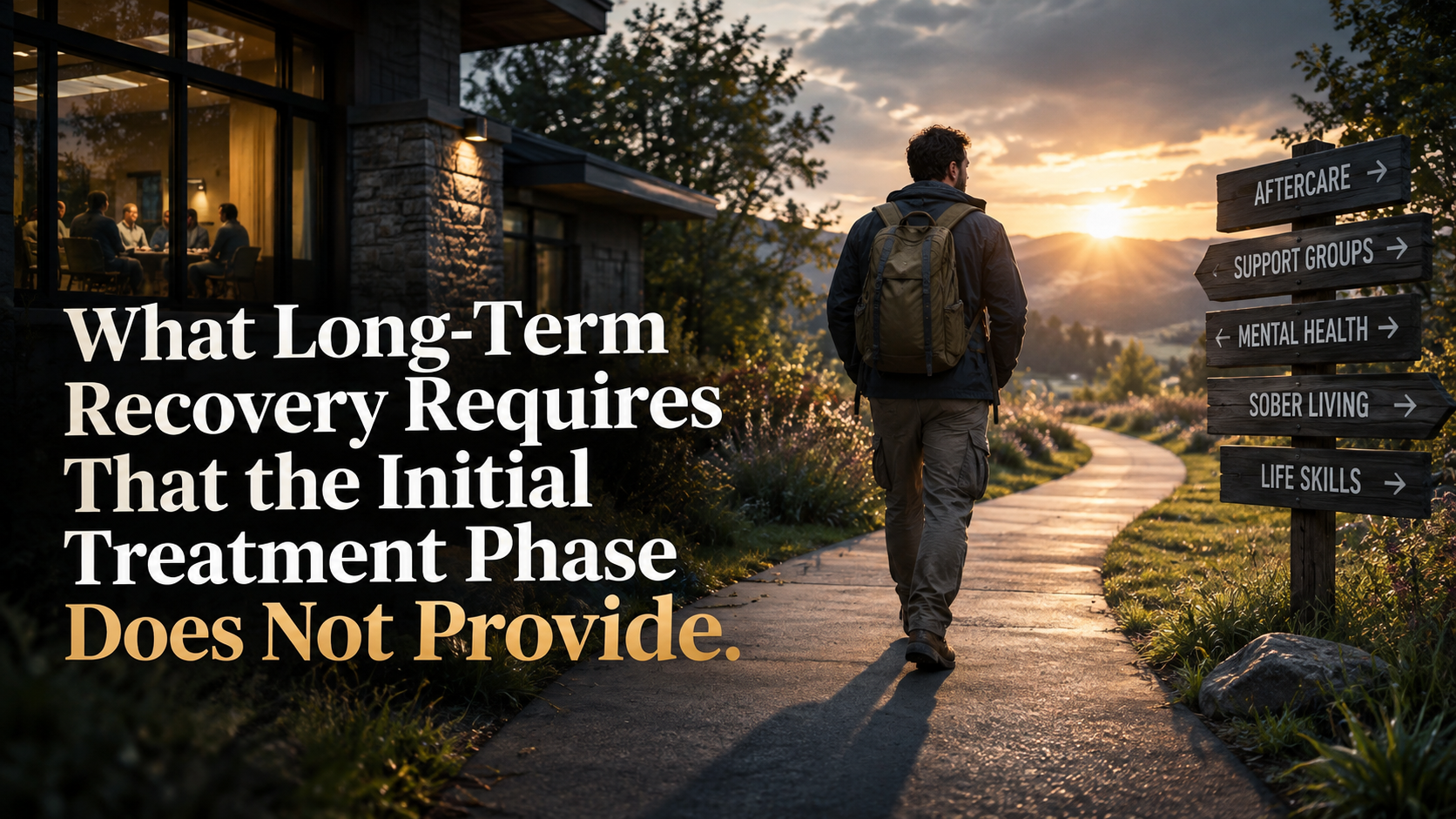
Long-term recovery requires ongoing clinical support, real-world practice, lasting connection, a sense of purpose and family healing. These needs often grow stronger after discharge, not weaker. Each one fills a gap that a short, structured program isn’t designed to reach.
Why Does Ongoing Clinical Care Matter?
Ongoing clinical care matters because mental health and substance use needs keep changing after initial treatment ends. Regular therapy helps you work through new stressors as they appear. Medication-assisted treatment (MAT), which pairs approved medications with counseling for opioid or alcohol use disorders, may also continue under a provider’s care.
Co-occurring conditions such as anxiety, depression or trauma often need months of attention. Integrated care keeps both mental health and substance use in focus throughout long-term recovery.
How Does Real-World Practice Build Lasting Skills?
Real-world practice builds lasting skills by letting you use coping tools in the exact places where challenges happen. It’s one thing to manage a craving in a calm therapy room. It’s another to handle it after a hard day at work or during a tense family gathering.
Stepping down gradually lets you try new skills at home while support stays close. When something doesn’t work, you can bring it back to your therapist and adjust.
Why Is Connection So Important?
Connection is important because isolation is one of the most common early warning signs of a return to use. Peer support groups, alumni programs and sober friendships remind you that you aren’t walking this road alone. They also offer honest encouragement on difficult days.
Options include 12-step groups like Alcoholics Anonymous (AA) and Narcotics Anonymous (NA), along with skills-based groups like Self-Management and Recovery Training (SMART Recovery). Many people try more than one before finding the right community for long-term recovery.
How Do Purpose and Stability Support Recovery?
Purpose and stability support recovery by giving each day structure and meaning. A steady job, a return to school or a regular volunteer role can rebuild confidence. Safe housing and reliable routines lower the stress that often fuels cravings.
Some people use sober living homes as a bridge between treatment and independent living. These homes offer a substance-free setting while new habits take root.
Why Does the Family Need Support Too?
The family needs support because addiction affects the whole household, and healing works best when everyone grows together. Family therapy helps rebuild trust and improve communication. Groups like Al-Anon and Nar-Anon give loved ones a place to share their own experiences.
When families feel supported, home becomes a steadier place for long-term recovery.
How Do Levels of Care Support Long-Term Recovery?
Levels of care support long-term recovery by offering a gradual step down from intensive treatment into daily life. Moving too quickly from full structure to no structure can leave real gaps. A thoughtful transition keeps support in place while independence grows.
At Impact Wellness Network, care begins with understanding your full story so each step matches what you need right now.
- Medically supervised detox. Withdrawal is managed safely with close monitoring, setting a stable foundation.
- Residential care. You live on-site with round-the-clock support and daily therapy away from everyday triggers.
- Partial hospitalization program (PHP). Treatment happens most of the day while you live at home or in supportive housing.
- Intensive outpatient program (IOP). Structured sessions several days a week fit around work, school and family.
- Outpatient care and aftercare. Ongoing therapy, medication follow-up and alumni support help protect progress over time.
Stepping back up to more support when life gets harder is a healthy choice, not a setback. Needs change, and a good plan changes with them.
What Warning Signs Suggest You Need More Support?
Warning signs that you need more support usually appear in mood, routine and relationships before any return to use. Noticing them early gives you and your care team time to adjust. Common signs include:
- Skipping therapy, meetings or medication appointments
- Pulling away from friends, family or support groups
- Trouble sleeping, eating or managing everyday stress
- Feeling more irritable, restless or secretive than usual
- Thinking that using “just once” would be harmless
A warning sign isn’t a failure. It’s a signal to reach out and strengthen your plan for long-term recovery.
How Do You Know If Your Plan Supports Long-Term Recovery?
Your plan supports long-term recovery when it is active, specific and shared with people who can help. Use these statements as a gentle self-check:
- You have a therapy session or support meeting scheduled within the next two weeks.
- You have a written list of your triggers and the steps you’ll take when they show up.
- You can name two or three people you would call on a hard day.
- Your mental health needs are being treated alongside your substance use.
- Your family or close supports know how to respond if they notice warning signs.
- You review your plan whenever life changes, such as a new job, a move or a loss.
If several of these feel uncertain, that’s useful information, not a reason to worry. A care team can help you fill the gaps before stress builds.
Common Questions Before Starting Treatment
How long does long-term recovery last?
Long-term recovery has no fixed end date. Support usually becomes lighter over time, but many people keep some form of ongoing care for years. The right pace depends on your needs and goals.
Will I always need this much support?
Probably not. Most people move from more structure to less as their skills and confidence grow. Your care team adjusts the plan as you progress.
What if I already finished treatment without an aftercare plan?
It’s not too late to build one now. Many people reconnect with outpatient care, therapy or peer groups after discharge. Reaching out soon can help you strengthen support before challenges grow.
How can families help a loved one after treatment?
Families can help by learning about recovery, joining family therapy and responding to setbacks with calm concern instead of blame. Caring for your own well-being matters too. You don’t have to carry this alone.
Taking the Next Step Toward Lasting Recovery
Long-term recovery is built on more than the first weeks of treatment. It grows through ongoing care, real-world practice, connection, purpose and a family that heals alongside you.
The initial phase gives you a strong start, and the right plan helps that progress last. Recovery is possible, and you deserve support for every stage of the journey. If you or someone you love is ready to plan what comes next, reach out to the caring admissions team at Impact Wellness Network and take your next step with support beside you.