
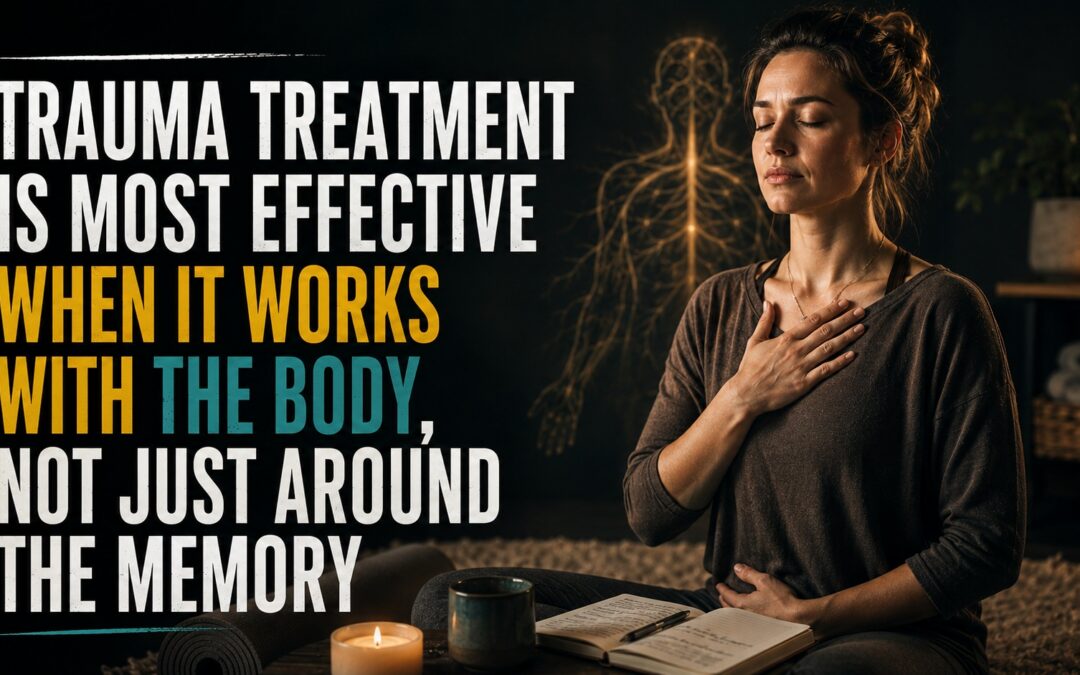
Trauma treatment works best when it helps the body feel safe again, not only when it talks through a painful memory. If you or someone you love has been carrying the weight of a difficult past, you may have noticed that understanding what happened does not always make the feelings go away. That can be discouraging, and it makes complete sense.
You might have tried talking about it, thinking it through, or pushing it aside. Yet the tension, the racing heart, or the sense of being on edge often remains. Those reactions are not a sign of failure. They are a sign that the body is still holding something the mind alone cannot release.
The good news is gentler than you might expect. Trauma lives in the nervous system as much as in memory, and healing can reach both. When care includes the body, real and lasting relief becomes possible.
What Is Trauma Treatment?
Trauma treatment is a form of care that helps a person process and heal from overwhelming past experiences with the support of trained professionals. It addresses both the emotional weight of what happened and the physical ways the body still responds. The goal is safety, understanding, and steady relief.
Trauma is not only a story you remember. It is also a set of reactions stored in the nervous system, shaping how you feel and respond today.
Good care honors both parts. It gives you tools to understand your experience while helping your body learn that the danger has passed. That combination is what makes healing feel real.
Why Does Trauma Treatment Need to Work With the Body?
Trauma treatment needs to work with the body because trauma is stored in the nervous system, not just in conscious memory. When something overwhelming happens, the body prepares to fight, flee, or freeze. Those survival responses can stay switched on long after the event ends.
This is why some people feel anxious, tense, or numb without knowing exactly why. The mind may have moved on, yet the body still braces for danger.
Talking through a memory can bring insight, but insight alone does not always calm a body stuck in high alert. Real relief often comes when the nervous system finally learns it is safe.
How Does Trauma Show Up in the Body?
Trauma often shows up as physical symptoms that seem disconnected from the past. Many people notice trouble sleeping, muscle tension, a racing heart, or an upset stomach. Others feel exhausted, jumpy, or strangely disconnected from their own emotions.
These reactions are the body’s way of carrying what has not yet been processed. They are not imagined, and they are not a weakness.
When care addresses these physical patterns, the symptoms often begin to ease. Healing the body supports healing the mind.
Why Isn’t Talking About It Always Enough?
Talking about a memory is not always enough because language reaches only part of how trauma is stored. Some experiences live below words, in the automatic responses of the nervous system. You can understand exactly what happened and still feel the effects in your body.
For some people, being pushed to talk before feeling safe can even increase distress. That pressure can make healing feel harder, not easier.
This is why gentle, body-aware approaches matter so much. They help create safety first, so deeper work becomes possible.
What Are Body-Based Approaches in Trauma Treatment?
Body-based approaches in trauma treatment are methods that help calm the nervous system and release stored tension through physical awareness. They work alongside talk therapy rather than replacing it. Together, they support the whole person.
These approaches focus on how you feel in your body, not only on what you think. That shift often opens the door to relief that words alone could not reach.
Common body-aware methods include:
- Eye Movement Desensitization and Reprocessing (EMDR). This helps the brain process difficult memories so they lose their intense grip.
- Somatic therapy. This gently guides awareness to physical sensations, helping release stored tension.
- Breathwork and grounding. These simple practices help the nervous system settle in the present moment.
- Mindful movement. Gentle activities like yoga can help rebuild a sense of safety in the body.
A trained professional guides each of these at a pace that feels safe for you. Nothing is forced, and you stay in control throughout.
Who Is Trauma Treatment Right For?
Trauma treatment is right for anyone whose past experiences continue to affect their present life. You do not need a specific diagnosis or a single dramatic event to benefit. What matters is how those experiences shape how you feel today.
This care helps people living with anxiety, depression, or difficult memories. It also supports those in recovery, since trauma and substance use often overlap.
At Impact Wellness Network, care begins with understanding your unique story before any plan takes shape. Different levels of support exist so treatment can match what you actually need.
How Does It Support Addiction Recovery?
Trauma treatment supports recovery by addressing the pain that often drives substance use. Many people turn to substances to quiet feelings that feel unbearable. When the underlying trauma receives care, those feelings become more manageable.
Treating both together tends to bring steadier, more lasting healing. Ignoring one can leave the other unresolved.
This whole-person approach helps recovery feel less fragile and more grounded.
How Does Body-Based Care Differ From Talk-Only Therapy?
Body-based care differs from talk-only therapy by treating the physical roots of trauma alongside the emotional ones. Talk therapy explores thoughts, meaning, and understanding. Body-aware care adds attention to how trauma lives in the nervous system.
Neither approach is better on its own. The most effective care usually blends them.
When the body feels calmer, difficult conversations often feel more possible. The safety built through body-based work makes emotional processing gentler and more effective.
What Levels of Care Are Available?
The levels of care available range from weekly outpatient sessions to fully immersive residential support. The right choice depends on your needs, your daily life, and the amount of structure that will help you most.
Understanding these options can make the decision feel less overwhelming.
- Outpatient care. You attend regular sessions while continuing your daily life at home.
- Intensive outpatient care. Structured sessions happen several days a week for focused support.
- Partial hospitalization. This offers intensive daytime care while you return home in the evenings.
- Residential care. You live on-site with round-the-clock support and uninterrupted time to heal.
A caring team can help you decide which level fits your situation. There is no single right path, only the one that supports you best.
How Do You Know When It Is Time to Reach Out?
It may be time to reach out when past experiences keep affecting your daily life, relationships, or sense of peace. You do not need to be in crisis to deserve support. Reaching out early often makes healing gentler.
Consider seeking support if any of the following feel familiar:
- Old memories or reactions keep interrupting your daily life or sleep.
- You feel tense, on edge, or numb without a clear reason.
- Physical symptoms like headaches or fatigue have become part of your routine.
- Talking through the past has not eased the way your body responds.
- You have leaned on substances or other habits to cope with difficult feelings.
Recognizing these signs is a sign of strength, not weakness. Support can help you feel safe in your own body again.
Common Questions Before Starting Treatment
Do I have to talk about my trauma in detail?
No, effective care never forces you to relive painful memories before you feel ready. Body-based approaches often build safety and stability first. You stay in control of the pace throughout the entire process.
Can body-based therapy really help with old trauma?
Yes, body-based therapy can help even with trauma from many years ago. The nervous system can learn new, calmer responses at any point in life. Gentle, consistent care often brings relief that talk alone could not reach.
Will I still do talk therapy too?
Yes, most trauma treatment blends talk therapy with body-aware approaches. The calm you build through the body often makes conversations feel more open. The two work beautifully together to support your healing.
How long does trauma treatment take?
The length depends on your personal needs and goals. Some people notice meaningful change within a few months, while others benefit from longer support. Your care team works with you to create a timeline that feels right.
Taking the Next Step Toward Whole-Person Healing
Trauma treatment is most effective when it reaches both the memory and the body, offering relief that words alone often cannot provide. The reactions you have lived with do not have to define your future. When the nervous system finally learns it is safe, real and lasting healing becomes possible.
You deserve care that honors your whole self, not just one part of your story. Choosing to ask for help is one of the bravest and most hopeful steps a person can take. If you or someone you love is ready to explore gentle, whole-person support, please reach out to Impact Wellness Network to learn how we can walk beside you toward lasting wellness.