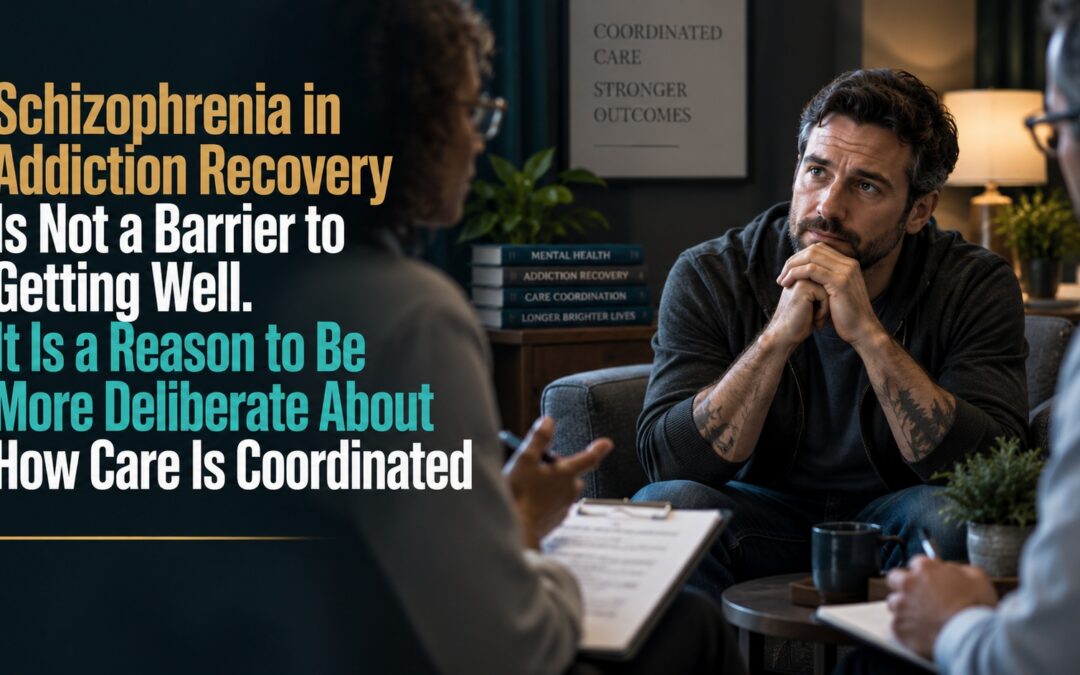
Schizophrenia in addiction recovery can feel like two heavy weights arriving at once, yet it does not close the door to healing. If you or someone you love is facing this, the fear and uncertainty you feel are completely understandable. Carrying both a substance use disorder and a serious mental health condition is a lot to hold.
You might worry that recovery is out of reach or that no one will understand the full picture. Those worries are valid, and you are not alone in them.
The truth is gentler than it may seem right now. This diagnosis does not mean healing is impossible. It means care needs to be thoughtful, coordinated and built around the whole person.
What Does Schizophrenia in Addiction Recovery Actually Mean?
Schizophrenia in addiction recovery means a person is working toward wellness while living with both a substance use disorder and schizophrenia at the same time. These two conditions often shape each other, so treating them together tends to work better than treating them apart. The goal is steady, coordinated support that honors both.
Schizophrenia is a mental health condition that can affect how a person thinks, feels and perceives the world. It may include changes in thoughts, emotions or sensory experiences.
When substance use enters the picture, the two can become tangled. Careful, unified care helps untangle them so healing can move forward.
Why Is Schizophrenia in Addiction Recovery Not a Barrier to Getting Well?
Schizophrenia in addiction recovery is not a barrier because both conditions are treatable with the right coordinated care. A diagnosis describes what someone is facing, not the limit of what they can achieve. Many people live full, meaningful lives while managing schizophrenia and recovery together.
The key is not willpower alone. It is a plan that treats both conditions as connected parts of one person.
When care is organized and consistent, progress becomes possible. The diagnosis simply calls for more intention, not less hope.
How Do the Two Conditions Affect Each Other?
The two conditions affect each other by feeding a cycle that can be hard to break alone. Substance use may temporarily quiet distressing symptoms, yet it often makes them worse over time. Symptoms of schizophrenia can then increase the urge to use.
This back-and-forth is why treating only one side rarely holds. The untreated condition keeps pulling a person back.
Coordinated care interrupts that loop. When both conditions receive attention together, recovery gains a steadier foundation.
Why Does Coordinated Care Matter So Much?
Coordinated care matters because schizophrenia and substance use are deeply connected, so treating them together produces stronger, more lasting results. When one team oversees both conditions, nothing important slips through the cracks. Your medications, therapy and support all work in the same direction.
Fragmented care can leave gaps. A provider treating only substance use might miss shifts in mental health, and the reverse is just as true.
At Impact Wellness Network, care begins with understanding your full story before any plan takes shape. This whole-person approach helps every part of treatment support the others.
What Does Integrated Treatment Look Like?
Integrated treatment blends mental health care, substance use support and medical oversight into one unified plan. A single coordinated team communicates about every part of your care. This connection helps healing feel whole rather than scattered.
You might work with counselors, medical providers and peers who understand what you are navigating. Each stays informed about the others.
That shared understanding matters. It means your care responds to all of who you are, not just one diagnosis.
Who Is Coordinated Care Right For?
Coordinated care is right for anyone managing schizophrenia in addiction recovery, especially when past treatment addressed only one condition. It suits people whose symptoms and substance use seem tangled together. A unified plan can bring clarity where things once felt confusing.
This approach also helps families who feel unsure how to support a loved one. When care is organized, everyone understands the shared goals.
There is no single type of person this helps. It reaches people of every age and background who need steady, thoughtful support.
What Warning Signs Suggest Care Needs to Be More Deliberate?
Warning signs include using substances to quiet distressing symptoms and feeling unable to manage without them. These patterns often build slowly, which can make them easy to overlook. Gentle awareness helps far more than self-blame.
Some common signs to notice include:
- Using alcohol or drugs to ease confusing thoughts, fear or sensory experiences
- Mental health symptoms that grow stronger during or after substance use
- Previous treatment that focused on only one condition and did not fully help
- Trouble keeping up with medications, appointments or daily routines
- Trying to cut back on substances many times without lasting success
If several of these feel familiar, that is worth compassionate attention. These patterns do not define anyone, and support is available.
What Levels of Care Support This Kind of Recovery?
The levels of care that support this recovery range from medically supervised detox to residential and outpatient options, depending on individual needs. Each offers a different balance of structure and flexibility. The right fit depends on your situation and the support around you.
Understanding the options can make the path forward feel clearer.
- Medically supervised detox. This first step helps the body stabilize safely with professional monitoring.
- Residential care. People live on-site with round-the-clock support and full focus on healing both conditions.
- Intensive outpatient care. Structured sessions happen a few days a week while daily life continues.
- Standard outpatient care. Regular counseling supports those who are further along in recovery.
A caring team can help you decide where to begin. There is no single right path, only the one that supports you best.
How Does Therapy Fit Into the Plan?
Therapy fits in by helping you understand your experiences and build practical coping skills. Individual counseling offers space to explore symptoms, triggers and personal goals. This work supports steadier days over time.
Group therapy connects you with others who understand the journey. That shared experience often eases the loneliness recovery can bring.
Medication management usually plays a role too. Consistent medical support helps keep both conditions steady while healing continues.
How Do You Know When It Is Time to Reach Out?
It may be time to reach out when schizophrenia and substance use keep feeding each other in ways you cannot untangle alone. You do not need to reach a breaking point to deserve support. Reaching out early often makes the whole journey smoother.
Consider whether any of the following feel familiar for you or someone you love:
- Mental health symptoms and substance use seem tangled and hard to separate.
- Previous treatment addressed only one part of the struggle and did not fully help.
- Substances are being used to manage confusing or distressing symptoms.
- Efforts to stop on your own have not lasted, and symptoms remain.
- You sense a quiet readiness to ask for help, even if it feels frightening.
Recognizing these signs is a sign of strength, not weakness. Support can meet you exactly where you are.
What Families Often Ask
Can someone with schizophrenia really recover from addiction?
Yes, recovery is possible when both conditions receive coordinated care. Many people manage schizophrenia while building healthier, more stable lives free from substance use. The right support helps make that path steadier.
Which condition should be treated first?
Both conditions are treated together rather than one before the other. Integrated care addresses mental health and substance use at the same time, since they are so closely linked. This approach helps a person heal more fully.
Will medications for schizophrenia work alongside addiction treatment?
Yes, mental health medications are a core part of integrated care. A coordinated team manages these medications alongside therapy and substance use support. Keeping everything connected helps each part of treatment work better.
How can I support a loved one through this?
You can offer patience, encouragement and steady presence without judgment. Learning about both conditions helps you understand what your loved one faces. Family involvement, including family therapy, often strengthens recovery.
What if past treatment did not help?
Past treatment that focused on only one condition may have missed part of the picture. Coordinated care that addresses both at once often reaches what earlier approaches could not. A fresh, whole-person approach can open a new path forward.
Taking the Next Step Toward Coordinated Healing
Schizophrenia in addiction recovery is not the end of hope. It is a reason to build care that is thoughtful, unified and centered on the whole person. When both conditions receive attention together, healing becomes far more possible.
You deserve support that honors your full story, not just one piece of it. Choosing to ask for help is one of the bravest and most hopeful steps a person can take. If you or someone you love is ready to explore this path, please reach out to Impact Wellness Network to learn how we can walk beside you toward lasting wellness.