
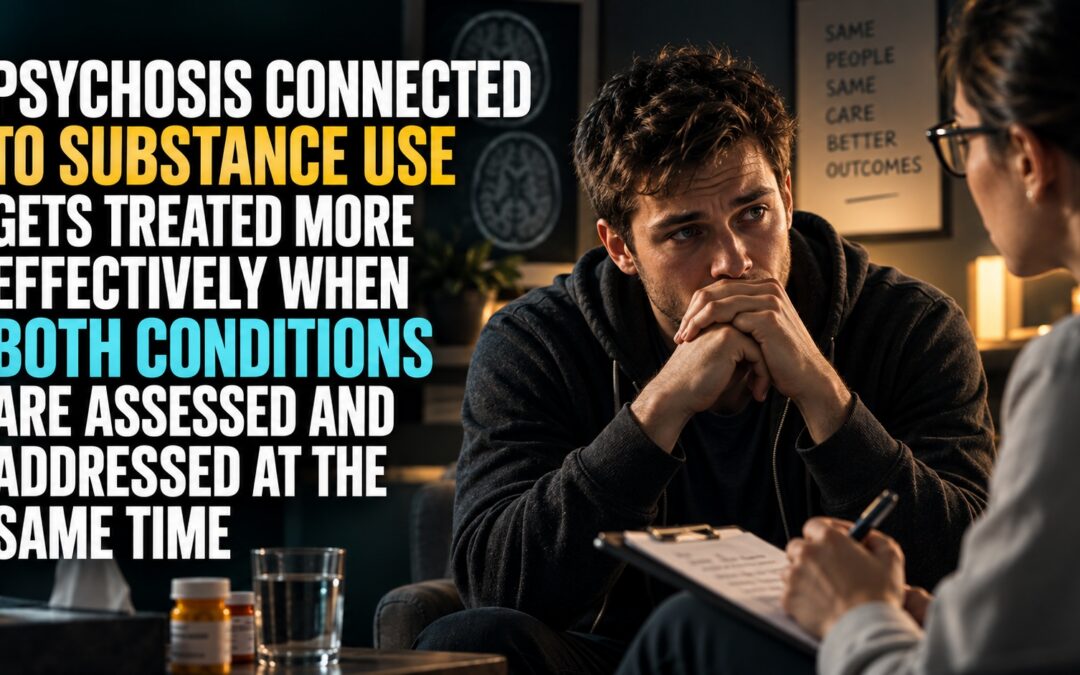
Psychosis connected to substance use often improves most when both the mental health symptoms and the substance use are assessed and treated together as one plan. If you or someone you love is facing this, the fear and confusion can feel overwhelming. Those feelings are valid, and you are not alone in carrying them.
You may be trying to figure out what came first, the substance use or the frightening changes in thinking. That question can leave families feeling stuck and unsure where to turn.
The truth is more hopeful than it may seem right now. When care looks at the whole picture at once, healing becomes far more possible. What matters most is finding support that treats both conditions together, not one at a time.
What Does Psychosis Connected to Substance Use Actually Mean?
Psychosis connected to substance use means a person experiences a break from reality that is linked to using or withdrawing from a substance. This can include hallucinations, delusions or confused thinking. These symptoms may appear during use, during withdrawal or in someone who also lives with a mental health condition.
Certain substances can trigger or worsen these experiences. Stimulants, alcohol and some other drugs are common examples.
Understanding this link matters because it shapes the right kind of care. When both pieces are seen clearly, treatment can respond to the full situation rather than a single symptom.
Why Is Psychosis Connected to Substance Use Treated Better When Both Are Addressed at Once?
Psychosis connected to substance use is treated better when both conditions are addressed at once because they often feed each other. Treating only one side tends to leave the other untouched, which can pull a person back into distress. Care that reaches both at the same time steadies the whole picture.
When substance use continues, mental health symptoms may keep returning. When mental health struggles go untreated, the pull toward substances can grow stronger.
This is the heart of integrated care. It brings mental health support and substance use treatment into one coordinated plan built around the person.
How Do the Two Conditions Influence Each Other?
The two conditions influence each other by creating a cycle where each can intensify the other. Some substances can trigger or deepen symptoms of psychosis. At the same time, distressing symptoms can lead a person to use substances for relief.
That relief usually fades quickly and often makes things harder over time. The cycle can feel impossible to escape alone.
Treating both together helps break this loop. It gives recovery a steadier, more hopeful foundation.
How Is Psychosis Connected to Substance Use Assessed?
Psychosis connected to substance use is assessed through a careful evaluation that looks at both mental health and substance use history together. A skilled team explores the symptoms, when they appear and what substances may be involved. This full picture guides a plan that fits the individual.
Assessment also considers whether a separate mental health condition may be present. Sometimes symptoms come from the substance, and sometimes they point to something deeper.
At Impact Wellness Network®, care begins with understanding your unique story before any plan takes shape. This helps make sure nothing important gets overlooked.
Why Does a Thorough Assessment Matter So Much?
A thorough assessment matters because it shapes the entire direction of care. When both conditions are evaluated together, the plan can respond to the real cause rather than a single visible symptom. This leads to steadier progress.
Assessing only one side risks missing the other. That gap can slow healing or lead to setbacks later.
A complete evaluation brings clarity for the person and the family. It replaces guesswork with a clear, compassionate path forward.
Who Experiences Psychosis Connected to Substance Use?
Anyone can experience psychosis connected to substance use, though certain situations raise the chance of it. This includes people using stimulants heavily, those going through alcohol withdrawal and individuals who also live with a mental health condition. It reaches people of every age and background.
For some, symptoms fade as the substance leaves the body. For others, an underlying mental health condition needs ongoing care.
If this feels familiar, that recognition is a meaningful first step. Understanding what you are facing helps guide you toward the right support.
What Warning Signs Should Families Watch For?
Warning signs families should watch for include changes in thinking, perception and behavior that appear alongside substance use. These shifts can build slowly or arrive suddenly. Gentle awareness helps far more than fear or blame.
Some common signs to notice include:
- Hearing, seeing or believing things that others do not
- Confused or disorganized thinking that makes conversation difficult
- Growing suspicion, fear or withdrawal from loved ones
- Symptoms that worsen during or after substance use
- Trouble telling what is real from what is not
If several of these feel familiar, that is worth compassionate attention. These signs do not define a person, and support is available.
What Does Treatment Look Like When Both Conditions Are Addressed Together?
Treatment looks like a coordinated plan that blends medical care, mental health support and substance use treatment into one connected approach. A single team stays informed about every part of a person’s care. This helps the pieces work together instead of pulling apart.
Because psychosis can feel frightening, safety and stabilization often come first. A calm, supportive setting eases those early days.
From there, therapy helps a person understand and heal the deeper causes. Medical support can address symptoms while the healing continues.
What Levels of Care Are Available?
The levels of care available range from medically supervised detox to residential and outpatient support, depending on individual needs. Each option offers a different balance of structure and flexibility.
- Medically supervised detox. This first step helps the body stabilize safely with professional monitoring.
- Residential care. People live on-site with round-the-clock support and full focus on healing both conditions.
- Intensive outpatient care. Structured sessions happen a few days a week while daily life continues.
- Standard outpatient care. Regular counseling supports those who are further along in recovery.
A caring team can help you decide where to begin. There is no single right path, only the one that supports you best.
How Does Therapy Support Recovery?
Therapy supports recovery by helping a person understand and heal what fuels both conditions. Individual counseling offers space to explore stress, trauma and personal goals. This work builds a foundation for lasting change.
Group therapy connects people with others who understand the journey. That shared experience often eases the loneliness recovery can bring.
Over time, these tools help build a healthier way of living. Healing the mind supports healing the body as well.
How Do You Know When It Is Time to Reach Out?
It may be time to reach out when symptoms and substance use keep affecting each other in ways that feel hard to manage alone. You do not need to reach a breaking point to deserve support. Reaching out early often makes the whole journey smoother.
Consider whether any of the following feel familiar for you or someone you love:
- Frightening changes in thinking or perception appear alongside substance use.
- Symptoms return each time substance use continues or resumes.
- Past treatment addressed only one condition and did not fully help.
- Efforts to stop using on your own have not lasted over time.
- You sense a quiet readiness to ask for help, even if it feels scary.
Recognizing these signs is a sign of strength, not weakness. Support can meet you exactly where you are.
Common Questions Before Starting Treatment
Can psychosis from substance use go away?
Yes, psychosis triggered by a substance often improves as the body heals and treatment begins. For some people, symptoms fade with time and support. For others, an underlying condition needs ongoing care, and both can be treated together.
Which condition should be treated first?
Both conditions are treated at the same time rather than one before the other. Because they are so closely linked, addressing them together leads to steadier progress. This whole-person approach helps a person heal more fully.
Is it safe to stop the substance on my own?
Stopping certain substances suddenly can be uncomfortable or even unsafe, so medical guidance is strongly recommended. A supervised setting keeps you safer and more comfortable. Professionals can monitor symptoms and respond quickly if needed.
What if past treatment did not work?
Past treatment that focused on only one condition may have missed part of the picture. Integrated care that addresses both at once often reaches what earlier approaches could not. A fresh, whole-person plan can open a new path forward.
How can families help during this time?
Families can help by staying calm, offering steady support and avoiding judgment. Learning about both conditions makes it easier to respond with compassion. Many programs include family therapy so loved ones feel prepared and supported.
Taking the Next Step Toward Whole-Person Healing
Psychosis connected to substance use is treated most effectively when both conditions are assessed and addressed together, and that coordinated approach can change everything about recovery. The symptoms may feel frightening now, yet healing is genuinely possible with the right care. You do not have to face this alone.
You deserve support that honors your whole story, not just one symptom. Choosing to ask for help is one of the bravest and most hopeful steps a person can take. If you or someone you love is ready to explore this path, please reach out to Impact Wellness Network to learn how we can walk beside you toward lasting wellness.