
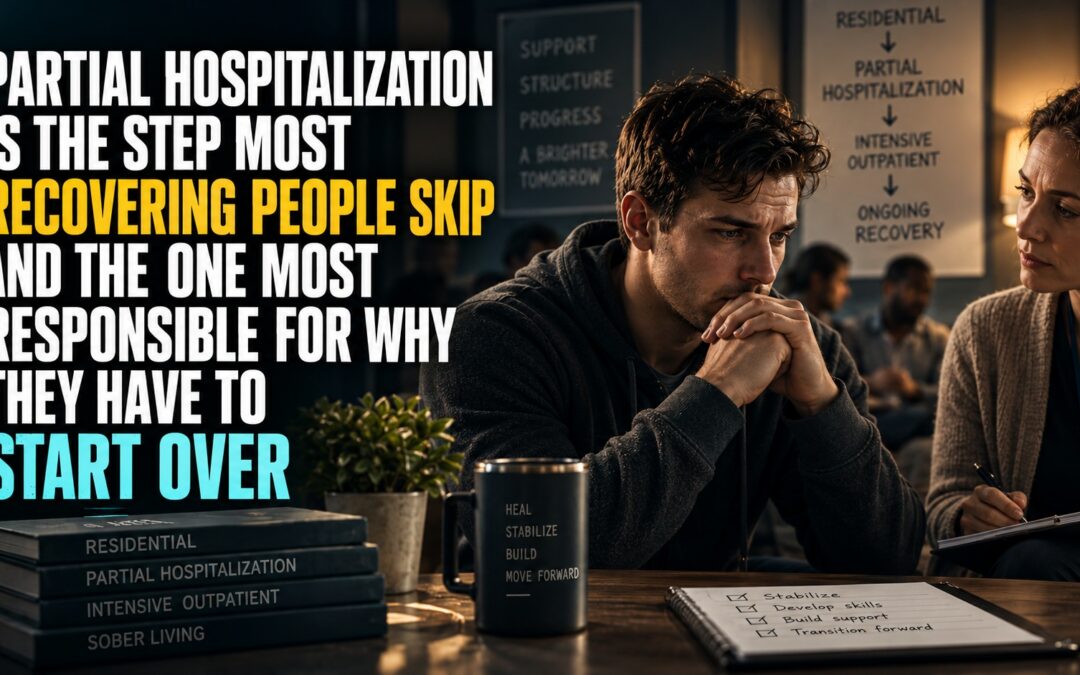
Partial hospitalization is the level of care that many people move past too quickly, and skipping it is one of the most common reasons recovery feels like it keeps resetting. If you or someone you love is weighing treatment options, that fear of losing progress is understandable. You have already worked so hard, and the thought of starting over can feel discouraging.
Maybe you finished a residential stay and felt ready to jump straight back into daily life. Maybe cost, time or simple hope made a lighter option feel like enough.
Those instincts make sense, and you are not alone in having them. Yet the jump from intensive care to little structure often leaves a gap where old patterns can return. Understanding this step can help you protect the progress you have already made and build a steadier path forward.
What Is Partial Hospitalization?
Partial hospitalization is a structured level of addiction and mental health care where a person attends treatment for most of the day, then returns home each evening. It offers many of the same services as residential care without the overnight stay. This gives people strong support while they begin practicing recovery in real life.
Most programs run about five days a week for several hours each day. Care usually includes therapy, medical support and skill-building.
Think of it as a bridge. It connects the intensity of full-time treatment with the freedom of everyday living, one steady step at a time.
Why Do So Many People Skip Partial Hospitalization?
Many people skip partial hospitalization because it feels like an unnecessary in-between step once the hardest part seems over. After residential care, a person often feels stronger and eager to return to normal life. Stepping down gradually can seem overly cautious.
Practical worries play a role too. Time away from work, family duties and the cost of continued care all weigh on the decision.
Hope can also nudge people toward skipping it. Feeling better is a wonderful sign, yet early recovery is still fragile. The support that helped create that progress often needs to continue a little longer.
What Happens When This Step Gets Skipped?
Skipping this step can leave a person without enough support during a vulnerable time. The move from constant structure to almost none is a big leap. Old stressors, triggers and routines all return at once.
Without steady guidance, coping skills that felt solid in treatment can be harder to use under real pressure. Small struggles can build quietly.
This is often why recovery feels like it resets. The setback is rarely about weakness. It usually reflects a gap in support rather than a lack of effort.
How Does Partial Hospitalization Prevent Starting Over?
Partial hospitalization prevents starting over by giving people continued structure while they practice recovery in daily life. It keeps therapy, accountability and support in place as a person eases back into everyday responsibilities. That steady presence catches struggles early.
You return home each night and face real situations, then bring those experiences back to your care team. This loop of living and learning helps new skills take root.
The gradual shift matters. Instead of a sudden drop from full-time care to none, you step down in a way that protects your progress.
Why Does a Gradual Step Down Work Better?
A gradual step down works better because recovery skills grow stronger with practice and support. Learning a coping tool in treatment is one thing. Using it during a hard day at home is another.
This level of care lets you test those skills while help is still close by. If something feels shaky, your team can adjust the plan quickly.
Over time, you gain confidence along with independence. The structure slowly loosens as you show you are ready, not before.
Who Is Partial Hospitalization Right For?
Partial hospitalization is right for people who need substantial support but no longer require round-the-clock care. It often suits those stepping down from residential treatment who want to keep their progress steady. It can also help people who need more than weekly therapy from the start.
This level of care works best when a person has a safe, stable place to return to each evening. A supportive home helps the healing continue between sessions.
At Impact Wellness Network, care begins with understanding your unique story before any plan takes shape. This helps match each person with the level of support that truly fits.
How Does It Compare to Other Levels of Care?
Partial hospitalization offers more structure than outpatient care and more flexibility than residential treatment. It sits in a thoughtful middle space designed to protect progress during a key transition.
Understanding the options can make the path forward feel clearer.
- Medically supervised detox. This first step helps the body stabilize safely with professional monitoring.
- Residential care. People live on-site with round-the-clock support and full focus on healing.
- Partial hospitalization. People attend treatment for most of the day, then return home each evening.
- Intensive outpatient care. Structured sessions happen a few days a week for a few hours at a time.
- Standard outpatient care. Regular counseling supports those who are further along in recovery.
A caring team can help you decide where to begin. There is no single right path, only the one that supports you best.
What Does a Day in Partial Hospitalization Look Like?
A day in partial hospitalization is structured, supportive and focused on building lasting recovery skills. Programs usually run several hours a day, blending different types of care. This rhythm gives the day purpose while leaving evenings free for home life.
Mornings might begin with group therapy or a check-in. These sessions help you set intentions and connect with peers who understand the journey.
Afternoons often include individual counseling, skill-building and education. You then head home to rest and practice what you learned, returning the next day for continued support.
What Kinds of Support Are Included?
The support included in partial hospitalization blends therapy, medical care and community into one coordinated plan. Individual counseling helps you explore the roots of what you are facing. Group sessions remind you that you are not walking this path alone.
Many programs also address co-occurring mental health needs alongside substance use. Treating both together leads to steadier, more complete healing.
This whole-person approach matters. It helps make sure nothing important gets overlooked during a delicate stage of recovery.
How Do You Know When It Is Time to Consider This Step?
It may be time to consider partial hospitalization when you need strong support but can safely spend evenings at home. You do not have to reach a crisis to benefit from this level of care. Choosing it early often protects the progress you have already made.
Consider whether any of the following feel familiar:
- You are finishing residential care and want to protect your progress with continued structure.
- Weekly therapy alone does not feel like enough support right now.
- You have a safe, stable home to return to each evening.
- Past attempts at recovery lost momentum after stepping down too quickly.
- You feel ready to practice recovery in daily life while keeping steady guidance close by.
Recognizing these signs is a sign of strength, not weakness. Support can help you find steadier ground.
Common Questions Before Starting Treatment
How long does partial hospitalization usually last?
The length depends on your individual needs and progress. Many people take part for a few weeks before stepping down to a lighter level of care. Your team works with you to shape a timeline that supports lasting wellness.
Can I keep up with work or family while in this program?
Because you return home each evening, this level of care allows some room for family life. Full-time work is usually difficult during this stage, though. A caring admissions team can help you plan around your responsibilities.
Is partial hospitalization only for people leaving residential care?
No, this level of care helps people in several situations. Some step down from residential treatment, while others begin here when weekly therapy is not enough. What matters most is whether this amount of support fits your needs.
Will my privacy be protected?
Yes, your confidentiality is treated with great care. Treatment centers follow strict privacy laws to keep your information safe. You can focus on healing knowing your story stays protected.
What happens after this program ends?
After this step, most people move into a lighter level of support such as intensive outpatient or standard outpatient care. Quality programs build this plan with you before you finish. The goal is a smooth, steady transition rather than a sudden stop.
Taking the Next Step Toward Lasting Recovery
Partial hospitalization is the step that helps protect your progress instead of letting it slip away, and choosing it can be the difference between moving forward and starting over. Stepping down gradually is not a sign of doubt. It is a way of honoring how hard you have already worked.
You deserve support that meets you at every stage, not just the hardest one. Choosing to continue your care is a brave and hopeful decision, and lasting recovery truly is possible with the right support. If you or someone you love is ready to explore this path, please reach out to Impact Wellness Network to learn how we can walk beside you toward lasting wellness.