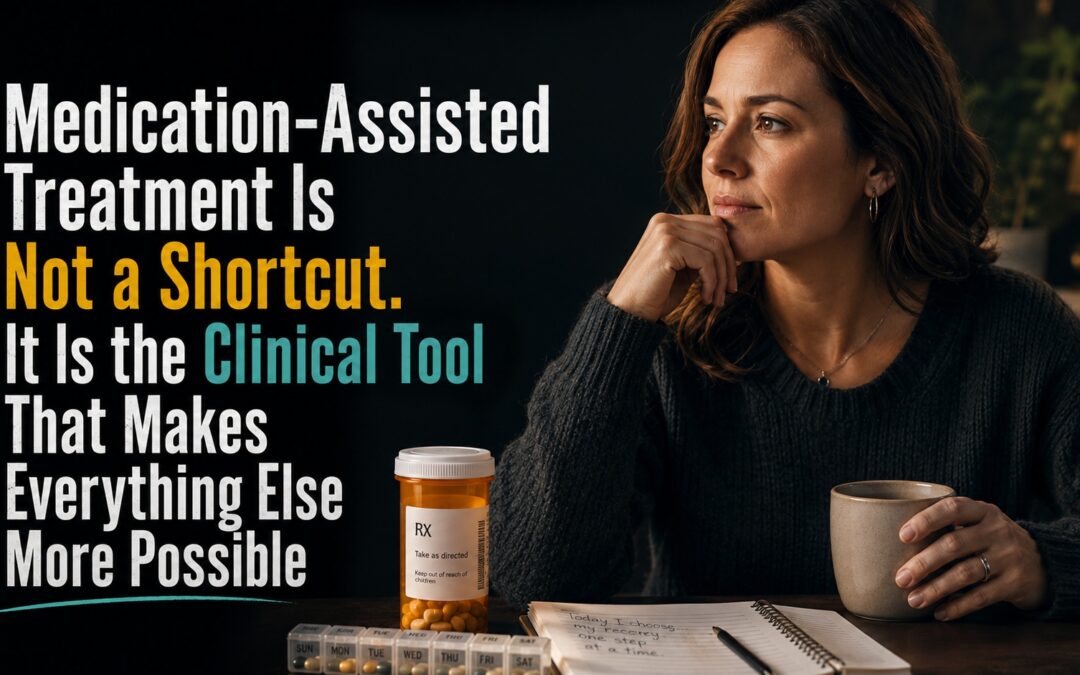
Medication-assisted treatment is often misunderstood as an easy way out, when in reality it is a clinical tool that makes the deeper work of recovery more possible. If you or someone you love is considering it, you may feel a mix of hope and hesitation. Maybe you have heard that using medication means you are not truly sober, or that it simply replaces one substance with another.
Those worries are valid, and you are not alone in carrying them. Many people arrive at this decision feeling confused about what is true and what is myth.
The reality is gentler and more hopeful than the stigma suggests. Medication is not a replacement for effort. It is support that steadies the ground so real healing can happen.
What Is Medication-Assisted Treatment?
Medication-assisted treatment is an evidence-based approach that combines FDA-approved medications with counseling and behavioral therapy to treat substance use disorders. It addresses both the physical and the emotional sides of recovery at the same time. The medication eases cravings and withdrawal, while therapy helps heal the deeper causes.
This approach is most often used for opioid and alcohol use disorders. It works by calming the body enough that a person can focus on the harder work ahead.
Medication alone is never the whole plan. It is one part of a fuller, personalized approach to lasting recovery.
Why Is Medication-Assisted Treatment Not a Shortcut?
Medication-assisted treatment is not a shortcut because the medication does not do the healing for you. Instead, it removes some of the physical barriers that make healing feel impossible. The real work still happens in therapy, reflection and daily choices.
Cravings and withdrawal can consume all of a person’s energy. When those symptoms ease, that energy becomes available for growth.
Think of it like a cast on a broken bone. The cast does not heal the bone itself, yet it holds everything steady so healing can happen. Medication offers that same kind of steady support.
How Does It Make Everything Else More Possible?
It makes everything else more possible by quieting the noise of cravings so deeper work can begin. When your body is not in constant distress, your mind can finally engage in therapy. That clarity opens the door to real change.
People often find they can focus better, sleep better and think more clearly. These small shifts create room for meaningful progress.
With the body more settled, counseling and coping skills tend to take root. The medication supports the foundation, and the therapy builds the house.
How Does Medication-Assisted Treatment Actually Work?
Medication-assisted treatment works by using medications that reduce cravings and ease withdrawal while therapy addresses the roots of substance use. The two parts work together, each supporting the other. Neither is meant to stand alone.
For opioid use disorder, medications can lessen cravings without producing the same high. For alcohol use disorder, certain medications reduce the urge to drink or make drinking less rewarding.
A medical provider oversees the process closely. Doses are adjusted carefully to fit each person’s needs and comfort.
What Role Does Therapy Play?
Therapy plays a central role by helping you understand and heal what led to substance use in the first place. Individual counseling offers space to explore stress, trauma and personal goals. This work builds the foundation for lasting change.
Group therapy connects you with others who understand the journey. That shared experience often eases the loneliness recovery can bring.
Medication makes it easier to show up for this work. When cravings quiet down, you can be fully present for the healing.
Who Can Benefit From Medication-Assisted Treatment?
People with opioid or alcohol use disorders often benefit most from medication-assisted treatment, especially when cravings feel overwhelming. It can help those who have tried to stop before without lasting success. Sometimes the body simply needs extra support to steady itself.
This approach may also help people who face intense withdrawal symptoms. Easing those symptoms makes early recovery safer and more manageable.
At Impact Wellness Network, care begins with understanding your unique story before any plan takes shape. This helps match you with the right combination of support.
What Levels of Care Might Include It?
Several levels of care can include medication-assisted treatment depending on individual needs. Each option offers a different balance of structure and flexibility.
- Medically supervised detox. Medication can ease withdrawal safely during those first difficult days.
- Residential care. People live on-site and receive medication alongside daily therapy and support.
- Intensive outpatient care. Structured sessions a few days a week can include ongoing medication management.
- Standard outpatient care. Regular check-ins support medication and counseling as recovery continues.
A caring team can help you decide which level fits your situation. There is no single right path, only the one that supports you best.
What Are the Common Myths About Medication-Assisted Treatment?
The most common myth is that medication-assisted treatment simply trades one substance for another. In reality, these medications are carefully dosed and monitored to support stability, not to create a high. They help the brain and body function normally again.
This misunderstanding creates stigma, and stigma keeps people from getting help. When someone believes medication means failure, they may avoid a tool that could truly support them.
Does Using Medication Mean a Person Is Not Truly in Recovery?
No, using medication does not mean a person is any less in recovery. Recovery is about reclaiming your health, relationships and sense of self. Medication is one tool that helps make that possible.
Many people in strong, lasting recovery use these medications as part of their care. Their progress is real and worthy of respect.
Healing looks different for everyone. What matters is finding the support that helps you build a healthier life.
How Do You Know When It Is Time to Consider This Option?
It may be time to consider medication-assisted treatment when cravings or withdrawal keep getting in the way of recovery. You do not need to reach a breaking point to explore this support. Reaching out early often makes the path forward smoother.
Consider whether any of the following feel familiar:
- Cravings feel so strong that they overwhelm your efforts to stop.
- Past attempts to quit have been cut short by intense withdrawal symptoms.
- Substance use is affecting your health, relationships or daily responsibilities.
- You want a steadier foundation so you can focus on therapy and healing.
- You feel a quiet readiness to explore every tool that could help.
Recognizing these signs is a sign of strength, not weakness. Support can meet you exactly where you are.
Common Questions Before Starting Treatment
Is medication-assisted treatment safe?
Yes, these medications are FDA-approved and used under close medical supervision. A provider monitors your progress and adjusts your care as needed. This oversight helps keep the process safe and comfortable.
How long will I need to stay on medication?
The length varies from person to person and depends on your individual needs. Some people use medication for months, while others benefit from longer support. Your care team works with you to decide what feels right over time.
Will I still need therapy if I take medication?
Yes, therapy is a core part of this approach, not an optional add-on. Medication eases the physical struggle so you can engage fully in counseling. The two work together to support lasting recovery.
Can I stop the medication when I am ready?
Yes, and stopping is always done gradually with medical guidance. Your provider helps you taper safely when the time is right. You remain an active partner in every decision about your care.
Does needing medication mean my addiction is worse?
No, needing medication says nothing negative about you or your recovery. Substance use disorders affect the brain and body in real ways, and medication addresses that reality. Using every available tool is a wise and caring choice.
Taking the Next Step Toward Lasting Recovery
Medication-assisted treatment is not a shortcut around the work of recovery. It is the clinical tool that steadies the body so the deeper healing becomes possible. When cravings quiet down, therapy, connection and growth all move within reach.
You deserve care that honors your whole story and gives you every chance to heal. Choosing to ask for help is one of the bravest and most hopeful steps a person can take. If you or someone you love is ready to explore this path, please reach out to Impact Wellness Network to learn how we can walk beside you toward lasting wellness.