
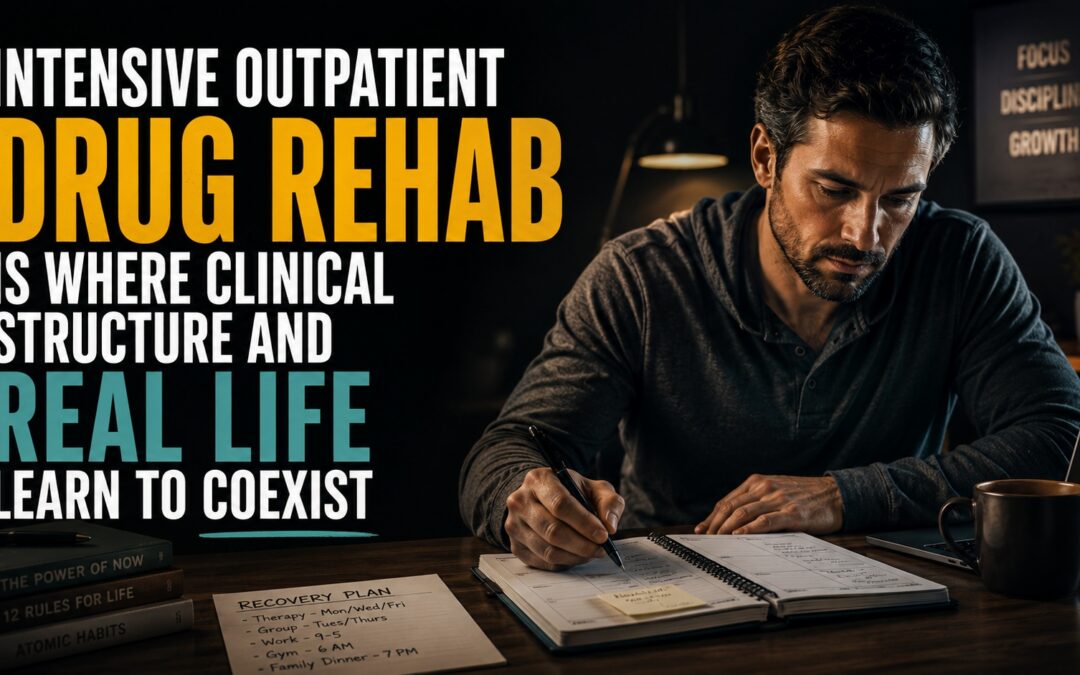
Intensive outpatient drug rehab offers a way to receive serious, structured care for substance use while staying connected to your home, your work and the people who matter most. If you or someone you love is weighing treatment options, feeling torn between healing and daily life is completely understandable. You should not have to choose between recovery and the world you have already built.
That worry is valid, and you are not alone in feeling it. Many people fear that getting help means stepping away from a job, a family or a sense of normal life.
The truth is gentler than you might expect. Strong clinical care can fit alongside a full life, and that balance often becomes part of what makes recovery last.
What Is Intensive Outpatient Drug Rehab?
Intensive outpatient drug rehab is a structured level of addiction care that provides several hours of therapy each week while a person continues living at home. It sits between full-time residential treatment and standard weekly counseling. The goal is meaningful clinical support without pressing pause on daily life.
Most programs include group therapy, individual counseling and education about substance use. Sessions usually happen three to five days a week for a few hours at a time.
This approach keeps the intensity of treatment high while honoring your everyday responsibilities. You receive focused care, then return home to practice what you learn.
Why Does Intensive Outpatient Drug Rehab Fit Real Life So Well?
Intensive outpatient drug rehab fits real life because it lets people heal while staying rooted in their actual world. Recovery does not happen in a bubble. It happens in the same places where stress, relationships and triggers live.
When you practice new coping skills in real time, those lessons tend to stick. You face a hard day, then bring it straight into your next session for support. This steady loop of living and learning builds lasting change.
Staying connected also protects what gives life meaning. You keep your income, your family bonds and your sense of purpose, and those connections often become powerful reasons to keep going.
How Does Clinical Structure and Daily Life Coexist?
Clinical structure and daily life coexist through frequent, thoughtfully scheduled sessions that work around your responsibilities. Programs often meet in the morning or evening so you can keep working, studying or caring for family. The structure bends to fit your world rather than replacing it.
Each week, you engage in evidence-based therapies that address the roots of substance use. Then you return home and apply what you practiced.
That rhythm holds you accountable in a caring way. Over time, the structure stops feeling like an obligation and starts feeling like a source of steadiness.
Who Is Intensive Outpatient Drug Rehab Right For?
Intensive outpatient drug rehab is right for people who need serious support and have a stable, safe place to live. It works best when the home environment feels secure and relatively free from constant triggers. A supportive space at home helps the healing continue between sessions.
This level of care often suits parents, professionals and students who cannot step away from essential duties. It lets them pursue recovery without abandoning what matters most.
It is also a strong fit for people stepping down from residential care. After full-time treatment, this level helps a person practice new skills in daily life while still receiving steady guidance.
When Might a Higher Level of Care Fit Better?
A higher level of care may fit better when someone needs round-the-clock support or medical supervision. If stopping substances causes unsafe physical symptoms, medically supervised detox usually comes first. Safety always leads the way.
Residential care may also help when the home environment feels chaotic or filled with triggers. Sometimes a person simply needs uninterrupted time and space to stabilize.
A caring team can help you decide where to begin. There is no single right path, only the one that supports you best.
What Does a Typical Week Look Like?
A typical week in intensive outpatient drug rehab is built around your life rather than against it. Sessions are often scheduled so you can keep working, studying or caring for loved ones. This flexibility is one of the biggest reasons people choose this path.
You might attend group therapy before work or individual counseling after the kids are asleep. The schedule adapts to the real shape of your days.
What Happens During Sessions?
During sessions, you focus on understanding and healing the deeper causes of substance use. Group therapy connects you with peers who truly understand the journey, which often eases the loneliness recovery can bring.
Individual counseling gives you private space to explore personal triggers and goals. Educational sessions teach practical skills for managing stress and cravings.
Over time, these tools become part of how you handle daily life. You leave each session a little more equipped than before.
How Does It Compare to Other Levels of Care?
Intensive outpatient drug rehab offers more structure than standard therapy and more freedom than residential care. It occupies a thoughtful middle ground built for people who need real support while staying active in their lives.
Understanding the different levels can help you find the right fit for your needs.
- Medically supervised detox. This first step helps the body safely clear substances with professional support.
- Residential care. People live on-site with round-the-clock support and full immersion in treatment.
- Partial Hospitalization Program (PHP). This offers the most intensive outpatient support, often several hours a day, five days a week.
- Intensive outpatient care. Sessions happen a few days a week for a few hours, allowing daily life to continue.
- Standard outpatient care. This flexible option usually involves weekly counseling for those further along in recovery.
Many people move through these levels over time. Stepping down gradually helps recovery feel steady and supported.
At Impact Wellness Network, care begins with understanding your unique story before any plan takes shape. This helps match you with the level of support that truly fits.
What Are Signs This Level of Care Could Help?
Common signs include struggling to manage substance use alone while still needing to keep up with daily responsibilities. If weekly therapy has not felt like enough, a more structured option may help. Recognizing this is a meaningful step toward real support.
Consider whether any of the following feel familiar:
- Substance use is affecting your health, relationships or work, yet stepping away fully is not possible.
- Standard weekly counseling has not provided enough structure to maintain progress.
- You have a stable, supportive home where healing can continue between sessions.
- You are stepping down from residential care and want continued guidance.
- You feel ready to commit seriously to recovery without pausing everything else.
Noticing these signs is not a weakness. It is a sign of awareness and quiet strength.
How Do You Know If You Are Ready to Reach Out?
You may be ready to reach out when you feel a genuine desire to change and have a safe place to live. You do not need to hit a breaking point to deserve support. Reaching out early often makes the whole journey smoother.
Ask yourself these gentle questions as you consider the next step:
- Do I have a stable home and people who encourage my healing?
- Have my efforts to manage this on my own struggled to last?
- Can I attend regular sessions while keeping my responsibilities?
- Is substance use starting to affect the parts of life I value most?
- Do I feel a quiet readiness to ask for help, even if I feel nervous?
If several of these ring true, this could be a meaningful path forward. A caring team can help you sort through the details without judgment.
Common Questions Before Starting Treatment
How long does intensive outpatient drug rehab usually last?
The length depends on your individual needs and progress. Many programs run for several weeks to a few months. Your care team works with you to shape a timeline that supports lasting wellness.
Can I keep working while in treatment?
Yes, that is one of the main benefits of this level of care. Sessions are often scheduled in mornings or evenings so you can maintain your job. Many people find that keeping their routine actually strengthens their recovery.
Is this level of care enough for serious substance use?
It can be very effective for the right person. When paired with a stable home and genuine commitment, this care provides real, evidence-based support. Some people begin with residential care, then step down into intensive outpatient treatment.
Will my privacy be protected?
Yes, your confidentiality is a top priority. Treatment centers follow strict privacy laws to keep your information safe. You can pursue healing with peace of mind.
What happens if I have a setback?
A setback is not a failure, and your care team is there to help. They will adjust your plan and offer extra support when you need it. Recovery is a process, and every step forward counts.
Taking the Next Step Toward Healing
Intensive outpatient drug rehab proves that strong clinical care and a full life can move forward together. You do not have to pause everything you love to reclaim your health. This path keeps the support steady while honoring the world you have already built.
You deserve care that respects your whole life, not just one part of it. Choosing to ask for help is a brave and hopeful step, and recovery truly is possible with the right support. If you or someone you care about is ready to explore this path, please reach out to Impact Wellness Network to learn how we can walk beside you toward lasting wellness.