
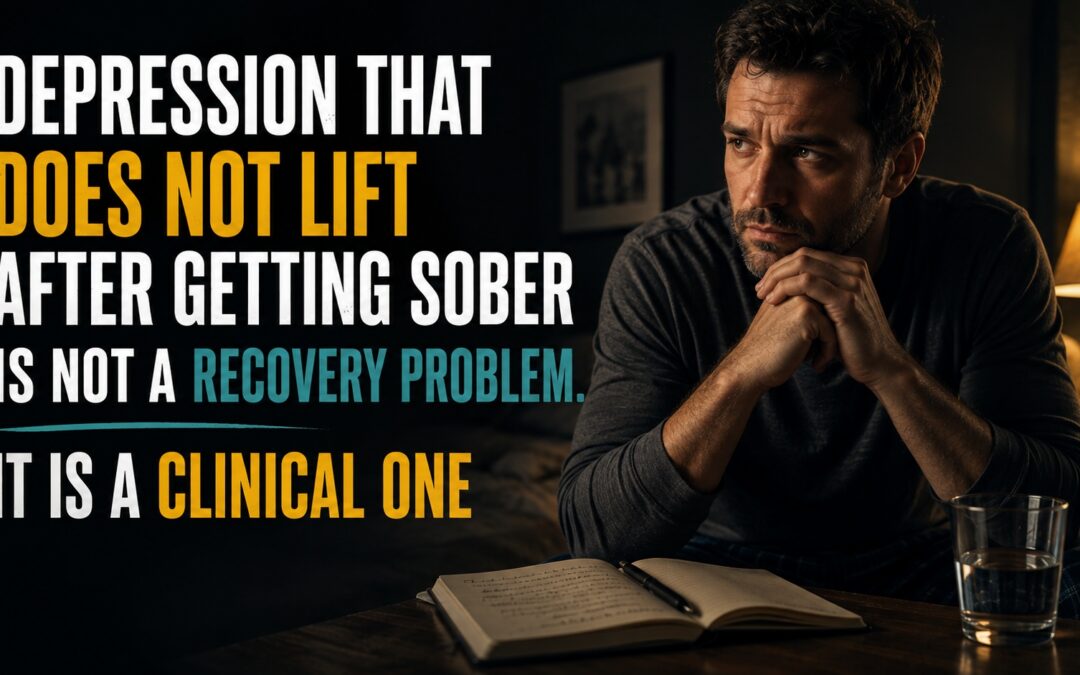
Depression after getting sober can feel confusing and disheartening, especially when you expected to feel better once substances left your life. You did the hard work. You stopped using, faced the withdrawal, and stayed committed. So why does the heaviness remain?
If you or someone you love is living through this, please know your feelings make sense. Many people quietly assume that a low mood after sobriety means they are failing at recovery. That belief adds shame to an already difficult moment, and it simply is not true.
Sometimes depression lingers because it is a separate clinical condition that needs its own care. Sobriety clears the substances, yet it does not always lift the weight underneath. Understanding this difference can bring real relief and open the door to the right support. You are not broken, and you are not alone in feeling this way.
What Does Depression After Getting Sober Actually Mean?
Depression after getting sober means a persistent low mood that continues even after substances have left your body. It is more than the temporary sadness or fatigue that often follows early recovery. This kind of depression lingers, deepens, and affects your daily life in ways that do not ease on their own.
Early sobriety naturally brings emotional ups and downs. Your brain and body are adjusting, and some difficult feelings are expected. Those feelings usually soften over a few weeks.
Clinical depression is different. When sadness, emptiness, or hopelessness sticks around for weeks or grows heavier over time, it points to something that needs clinical attention. Recognizing this is not a setback. It is an honest and important observation.
Why Doesn’t Sobriety Always Fix Depression?
Sobriety does not always fix depression because substance use and depression are often two separate conditions living side by side. Removing the substance addresses one part of the picture. It does not automatically heal a mood disorder that may have existed all along.
For many people, substance use began as a way to cope with painful feelings. Alcohol or drugs offered temporary relief from sadness, anxiety, or emptiness. When the substance is gone, those underlying feelings can surface again, sometimes more clearly than before.
Was the Depression There First?
In many cases, depression came before the substance use ever started. People sometimes turn to substances to quiet difficult emotions they could not name or manage. This is often called self-medicating.
When sobriety arrives, the original depression is still present. It was masked, not resolved. Seeing it clearly is the first step toward treating it properly.
Can Sobriety Reveal Hidden Depression?
Yes, sobriety can uncover depression that substances were hiding all along. When your mind is no longer clouded by drugs or alcohol, buried emotions become more visible. This can feel jarring, yet it is actually a sign of clarity.
That clarity gives you and your care team something real to work with. What surfaces can finally be understood and treated. Nothing about this means your recovery is failing.
How Is Depression Different From Normal Post-Sobriety Adjustment?
Depression differs from normal adjustment in how long it lasts and how deeply it affects you. Ordinary adjustment tends to improve gradually as your body heals. Clinical depression lingers or worsens, even as other parts of recovery move forward.
During healthy adjustment, you still notice moments of hope, connection, or small joys. Those bright spots slowly grow. With depression, those moments fade and feel harder to reach.
Common signs that point to clinical depression include:
- Feeling sad, empty, or hopeless most of the day for two weeks or longer
- Losing interest in activities, people, or hobbies you once enjoyed
- Struggling with sleep, either too much or too little
- Feeling constantly drained even after rest
- Having trouble concentrating or making simple decisions
- Carrying a heavy sense of guilt or worthlessness
If several of these feel familiar, gentle attention is warranted. These patterns do not define you, and they respond well to proper care.
How Is Depression After Getting Sober Treated?
Depression after getting sober is treated through comprehensive care that addresses both your mental health and your recovery at the same time. This approach is often called dual diagnosis or co-occurring care. Treating both together tends to bring steadier, more lasting relief.
At Impact Wellness Network®, care begins with understanding your unique story before any plan takes shape. Different levels of support exist so treatment can match what you actually need.
What Types of Therapy Help?
Several proven therapies help people move through depression while protecting their sobriety. Each one works to lift mood and strengthen recovery at the same time.
Cognitive Behavioral Therapy, often called CBT, helps you notice and shift the thought patterns that deepen sadness. Talk therapy offers a safe space to process difficult emotions. Group therapy connects you with others who understand, easing the loneliness depression can bring.
For some people, medication prescribed by a psychiatric provider offers meaningful relief. This choice is always personal and made together with your care team.
What Levels of Care Are Available?
Care can range from weekly outpatient sessions to more immersive support, depending on your needs. Some people do well with regular therapy while continuing daily life. Others benefit from more structure during a difficult stretch.
Outpatient care offers regular sessions around your schedule. Intensive outpatient and partial hospitalization programs provide more focused support during the week. Residential care offers a fully immersive setting when someone needs uninterrupted time to heal. A caring team can help you decide which level fits best.
How Do You Know When It Is Time to Reach Out?
It may be time to reach out when low mood after sobriety lingers beyond a few weeks or starts affecting your daily life. You do not need to be in crisis to deserve support. Reaching out early often prevents deeper struggles later.
Consider seeking help if any of the following feel true:
- Your low mood has lasted longer than two weeks without improving.
- Everyday tasks like working, sleeping, or eating have become difficult.
- You have pulled away from people and activities that once brought you comfort.
- You feel that your sobriety is at risk because the emotional weight is so heavy.
- You sense that something clinical, not just situational, is going on.
Recognizing these signs takes courage, not weakness. Support can help you protect both your mood and your recovery.
Common Questions Before Starting Treatment
Does depression after sobriety mean I am relapsing?
No, depression after sobriety does not mean you are relapsing. It usually means a separate condition needs its own care. Treating the depression can actually strengthen your recovery and lower the risk of returning to substance use.
How long does depression last after getting sober?
The length varies from person to person. Some low mood in early recovery eases within a few weeks. When depression lingers beyond that or deepens over time, it often points to a clinical condition that responds well to treatment.
Can I treat depression and stay sober at the same time?
Yes, treating depression and maintaining sobriety work best together. Care that addresses both conditions at once tends to bring steadier progress. Your team can coordinate therapy, support, and medication in ways that protect your recovery.
Will I have to take medication?
Not necessarily, since treatment is always personal. Some people benefit from medication, while others find relief through therapy and support alone. Your care team works with you to decide what fits your needs and your recovery goals.
Is it normal to feel worse before feeling better?
Yes, it can feel harder before it feels easier, especially as buried emotions surface. This is a common and understandable part of the process. With the right support, that difficult stretch becomes a turning point toward genuine healing.
Taking the Next Step Toward Feeling Like Yourself Again
Depression after getting sober is real, valid, and absolutely treatable, and it is a clinical concern rather than a sign that your recovery has failed. The heaviness you feel does not mean you did something wrong. It means there is another layer of healing that deserves care and attention.
You worked hard to get sober, and you deserve support that helps you feel whole, not just substance-free. Choosing to ask for help is one of the bravest and most hopeful steps a person can take. If you or someone you love is ready to explore compassionate, whole-person care, please reach out to Impact Wellness Network to learn how we can walk beside you toward lasting wellness.