Addiction, Guilt, and Responsibility: What Families Need to Know
We’re back. Hello, it’s Lainey and Natasha. And we are here with Impact Wellness Network to bring you hopefully some support, education, and guidance for anyone out there who struggles with substance use, mental health, or has a loved one who struggles. Our specialty is definitely for families, but we’re just here to provide support to anybody who wants to listen. So one of the things that, you know, we talked a little bit last episode about vulnerability and you know the importance of speaking up, but something that kind of came up that I want to maybe ask you. I’m not sure if this is going to come out as a question or a statement. So take it as you will. We’ll see how this goes. But, you know, a lot of times when someone does struggle with substance use or addiction, um, they may look at you and say, Well, if you hadn’t done this, I wouldn’t have used. Well, it’s your fault. You’re the reason that I used. And um, I don’t know about anybody else out there listening, but I think that sometimes without anybody even having to tell me. So you don’t need to tell me that it’s my fault because I already feel like it’s my fault. Um again, I don’t really know if that’s a question or a statement, but what would you say to that?
SPEAKER_01 1:12
Well, I think so. We hear that it’s a family disease. And a lot of times as a parent, I’ll start with parents where you’re it’s your child. My child is sick. And I, it is my duty, it’s my responsibility to make sure that they don’t stay sick. Yeah, it’s kind of like the common flu, right? Or something comes up with your child or they’re injured. The parent takes on the automatic role and belief, it is my responsibility to get them to be better, right? And I think that that’s the belief system that stays in our mind that when not your loved one has addiction. And we have to go back to the stigma a little bit, right? I don’t know that many understand that this is a disease of the mind. This is not a choice, this is not a moral failing, this is not someone just getting up one morning and deciding that I want to use drugs and alcohol and I’m going to use drugs and alcohol for the rest of my life. So I know we will talk about that in future episodes, about really understanding that this is a disease. But before we get there, I think by not having that understanding, we believe it’s a choice. So therefore, we believe if we can somehow convince our loved ones to not do this anymore, then we can help them be better. And so I believe that when we are trying everything we can do to get them to stop using drugs and alcohol, and then they don’t, we then make that it’s a reflection on us, right? Somehow I’ve done something wrong, or it’s my fault that you’re not stopping. I have tried everything in the book, from whether it’s talking to you to death, you know, giving you all the facts, giving you all the research, and guilting you into it. Some people may do that. You know, no matter what I’ve tried, or throwing money at the problem. Somehow, if I throw the money, or if maybe geographically, if we moved and it took you into a better neighborhood, we’ve tried it all. Then we get exhausted and we’re like, okay, but you’re still using. And now it’s getting worse. The individual, I know for me personally as a parent, it would be like, okay, what I’m it’s this immediate, what am I doing wrong? You know, what do I need to be doing better? Is this my fault? And then I hear in the news or in the media or in research that, you know, you’ll hear me say, this is a family disease, but without understanding what that really means, my my simple math is, okay, well, I’m a family member and I’m their family. And so if they have this, it must be because of me. And then we hold on to that being our fault and we continue to blame ourselves. And the more that we blame ourselves is the more guilt we feel. And you and I often hear parents have a lot of, you know, you hear mom say, I’ve got the mom guilt. It’s my duty, it’s my responsibility to make sure that my loved one isn’t struggling or isn’t suffering. And so that makes it really hard for them to even let go. Um, or like we talked about in earlier episodes, letting your loved one go to treatment and being hands-off, logically, that sounds great. Right. But when you’re believing that you have to be the one to make them better and then you can’t, that’s really, really difficult.
SPEAKER_00 4:19
Yeah. And I think, you know, would it be fair to say that that guilt of believing that it’s your fault leads to a lot of those unhealthy behaviors that we often engage in?
SPEAKER_01 4:30
I think so. I believe so. I believe that the more that I believe that as a mom that I should be doing better, and that if I if I don’t do X, Y, and Z, that I’m a bad mom, the more that I believe that I’m a bad mom or I’m a bad parent, or I have failed them, right? That makes me feel ashamed. I have guilt in some situations. I might be embarrassed because I don’t want other people to know that I’ve failed. So there’s all these emotions that come with it. And then if I’m not, like we talked about not, you know, dealing with my own emotions because I’m too focused on getting them better. I’m not learning on how to deal with those emotions. And I always say, well, where do those emotions go? They don’t just fly out the window, right? I don’t just put them up on a shelf. Those emotions are still within me. And if I’m not regulating, if I’m not managing those emotions, if I don’t even know what I’m feeling, right? That’s where my fix, manage, control, problem solving, enabling, and rescuing behaviors come into play. And that has a very, very negative impact on your loved one’s sobriety. And that can increase the risk of relapse.
SPEAKER_00 5:38
Absolutely. And I think you you kind of hit, you know, the nail on the head at the this idea that, you know, when we hold on to the shoulda coulda woudas, right? You know, I always say don’t should all over yourself. Um, you know, the shoulda coulda woodas will will hold us back from our own change. And not only that, but with within the family, right, it it can hold that unit back from change as well. Um, now, in saying that, I can and my ears are hearing, so you’re telling me it’s still my fault. If I don’t change and I don’t do, you know, the things that you’re telling me to do, then my loved one will never get it and they’ll never be able to be sober.
SPEAKER_01 6:19
Um, now I know that you’re not saying that, but I understand it can come across that way. What I’m saying is that if we’re not more mindful of ourselves, what we believe to be true, and we’re not regulating how we feel, we develop or we engage in unhealthy behaviors. Behavior fosters behavior. You were talking about that earlier and mirroring behavior. If you’re in an environment where you’ve been behaving a certain way for a long time, someone doesn’t just get sober, and your behaviors change, right? So if so, for instance, you go to treatment, and you come out, and you’re doing better, but I’m so used to enabling you. I’m so used to giving you whatever you want, right? Should that be what I’m doing for you when you come into sobriety? Should I just be catering to your need and everything you ask for, I should continue to enable you. Even if I know that it’s not healthy for you, should I continue to enable you?
SPEAKER_00 7:18
Right. Yeah, I mean, absolutely not, right? Because in those moments, I’m not gonna be able to learn the importance of respond, responsibility, accountability. I’m not gonna learn how to do the things that I need to do for myself. And, you know, you bring up the word enabling, and I think that’s a word that is thrown around a lot, and we can, you know, definitely dive in and like define what that looks like. But a lot of those, you know, behaviors, right, that kind of lead to those things is this idea of, you know, I believe that I’m responsible. And I want, I want everyone to listen very clear, clearly. Saying I know I’m not responsible is different than I believe I’m responsible, right? So if you are still attempting to control the outcome and the narrative of your loved one’s life, whether that be in recovery, whatever, right? Then there is a belief inside of you that says that you are responsible for that, right? You can say that you know you aren’t responsible, but that belief is what leads to those behaviors that’s driving those behaviors.
SPEAKER_01 8:21
So I can say to you, Oh, Lainey, I know that he has to live his own life, or she has to live her own life, but meanwhile, I’m still enabling.
SPEAKER_00 8:28
Correct.
SPEAKER_01 8:29
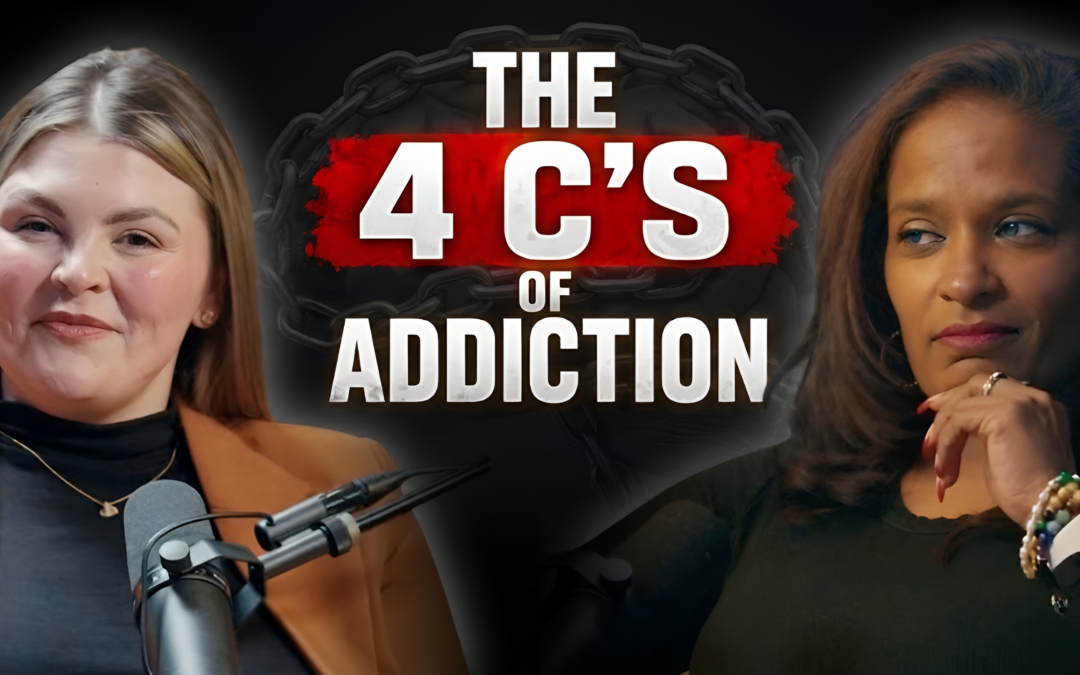
Right? So I know it. I can logically, intellectually tell you what I know. But emotionally, I am a mess. Emotionally, I’m a wreck in knowing that if I don’t help them, there’s a likelihood that they’re gonna go use again or they’re gonna relapse. And it’s the feelings that I’m having about that that makes me anxious. I worry more, and the more I get anxious, the more I worry, the more I worry, the more anxious I become. And it’s the more I enable. And so this is when you asked earlier about like what can I do when my loved one goes to treatment? And I said, we need to breathe. We need to take a breath, we need to exhale, and we need to check in with ourselves. What are you feeling? What is going on right now? Because if I’m not able to be aware of how I’m feeling, then those behaviors don’t change. Yeah. Right? So my loved one is changing, my loved one is getting better, but my behaviors aren’t changing. So you, your loved ones didn’t choose to be addicts. It is not your fault that they battled with the disease of addiction. But we do have to be mindful, and again, we will get into this in one of our other episodes, right? Where we’re gonna talk about there are a multitude of contributing factors to the progression of the disease of addiction. So you are not the cause, right? You didn’t um the three C’s of Al-Anon, right? I can’t cure it, I didn’t cause it, and I can’t change it. Right. And that’s really, really important for us to remember. But I always add a fourth C. And that C is we may contribute to it. And as we learn more about the disease of addiction, how we behave in relationship to our loved one is where we may be contributing in a way that is negatively impactful to their recovery.
SPEAKER_00 10:18
Absolutely. And I want to, you know, maybe kind of ask a question of if I’m listening to this, right? So if we have a listener listening to this right now, and they’re like, okay, I hear you, right? I didn’t cause it, I can’t cure it, I can’t change it, but I can contribute to it and I still feel guilty, what would you tell them to do?
SPEAKER_01 10:42
I think it’s important for you to ask yourself, what am I believing to be true? And again, it comes back to if I’m my guilt is because I’m believing that by not doing anything, I’m somehow not a good person or somehow I failed. And if I stay stuck in what I’m believing to be true, if I believe that narrative, right? And we talked about that in our last episode. If I believe that narrative, that guilt is always gonna be there. That guilt is not gonna go away. And then if I don’t know how to deal with that guilt or how to manage that guilt, that’s where that enabling is gonna continue. So again, pressing pause. I know you love your loved, your loved one. I know you want to help your loved one, but we’ve got to stop for a second and ask ourselves am I really a bad person because I’m setting a boundary? Am I really, have I really failed them because they’re choosing not to do what the next right thing is for their recovery? You can’t, you can’t do recovery for them. I always use the analogy of like someone who has uh cancer, right? You cannot take their chemotherapy for them in order for them to be in remission. The same is true for an addict. The concept is still the same. Their their medicine is the the recovery community, therapy, 12 steps, sponsor, all those things that we recommend for them. That is their that’s their medicine, right? To help them maintain recovery. You can’t do that for them. So if you can’t do that for them, how is that your fault?
SPEAKER_00 12:14
Right. What would you say the medicine is for someone who feels guilty? Get a therapist, bingo. Absolutely. And I want to, you know, and I want to just say, you know, kind of wrapping this up to kind of give you all some hope here, right? I want to speak hope in this. I I understand where the guilt comes from. And it is a valid feeling that you are having in this moment. Here’s where you have an opportunity. You are the one that gets to control whether or not that guilt continues to hold you down, or you get to propel forward and you get to make that decision. And so if you have found yourself feeling guilty or you feel guilty, my my encouragement to you and my hope to you is that you you can have a different life. You can do things differently. And, you know, that starts with you finding your medicine, right? Get a therapist, um, continue listening to these podcasts. If your loved one has been through an Impact Wellness Network program, go to that weekly group, attend the retreats, do the things that you need for yourself to manage that, right? And you get to be that hope, you get to be that change. And through that change, you can be a positive contributing factor to your loved one’s recovery instead of contributing in ways that may be negatively impacting them. Absolutely.
SPEAKER_01 13:33
And I want to leave the audience with this for everyone that’s listening. You are a good parent, you are a good mom, you are a good father, uncle, brother, sister, wife, husband. You are a good person. You love your loved ones. That does not change just because you’re setting boundaries or you’re stepping back to allow them to work their own recovery. It does not change the way that you love them.
SPEAKER_00 13:58
Absolutely. All right, you guys. We will see you next time. Till next time, guys.
When someone you love is struggling with addiction, it can be difficult to know where your responsibility begins and where it ends. Family members often spend years trying to understand what happened, what they could have done differently, and what they can do now to make things better. It is common to replay conversations, question past decisions, and wonder whether something you did or failed to do contributed to your loved one’s substance use.
These feelings can become especially complicated when a loved one blames family members for their addiction. Over time, hearing that blame can lead families to internalize it. They may begin believing that they are responsible for fixing the problem, preventing relapse, or somehow curing their loved one’s addiction.
At Impact Wellness Network, we believe families deserve a different message: you did not cause your loved one’s addiction, and you cannot cure it for them. You can love them, support them, and make healthy changes within your own life, but their recovery ultimately belongs to them.
Understanding Addiction as a Family Disease
Addiction is often described as a family disease because its effects extend far beyond the individual using substances. Addiction can affect relationships, communication, finances, trust, emotional health, and the overall stability of a household.
However, calling addiction a family disease does not mean the family caused the addiction.
This distinction is incredibly important.
When families hear the phrase “family disease,” they may mistakenly believe they are somehow responsible for their loved one’s substance use. They may begin looking for something they did wrong or believe that if they can change enough, their loved one will get better.
That mindset can lead to behaviors that feel loving but aren’t always healthy or helpful. Family members may begin rescuing their loved one from consequences, solving problems for them, making excuses, paying bills, or constantly trying to control their environment in hopes of preventing another crisis.
These behaviors usually come from love and fear, not bad intentions. Families are trying to help. But when guilt and fear drive every decision, it can become difficult to determine what is actually supportive and what may unintentionally enable the addiction.
The Difference Between Loving Someone and Fixing Them
One of the hardest things for families to understand is that loving someone doesn’t mean taking responsibility for their recovery.
When someone develops a medical condition, their loved ones can provide encouragement and support, but they cannot receive the treatment in their place. Addiction works in much the same way. Family members can encourage treatment, create healthier boundaries, and offer support, but the individual struggling with addiction has to participate in their own recovery.
This can be incredibly difficult for families because stepping back may feel like abandoning someone they love.
It isn’t.
There is a significant difference between stepping back from unhealthy behaviors and stepping away from a person. You can love someone deeply while allowing them to experience the natural consequences of their choices.
You can care about their recovery without taking control of it.
Sometimes, giving a loved one room to take responsibility for their own recovery is one of the healthiest forms of support you can offer.
How Guilt Can Keep Families Stuck
Guilt can be a powerful emotion. When left unaddressed, it can influence the way families respond to addiction without them even realizing it.
A parent may think, “I should have noticed sooner.”
A spouse may think, “Maybe if I had been more supportive, this wouldn’t have happened.”
A sibling may think, “I need to do more.”
These thoughts can create an endless cycle of self-blame. When families believe they are responsible for fixing addiction, they may feel compelled to constantly intervene whenever their loved one experiences difficulty.
The problem is that this can prevent family members from addressing their own emotional needs.
Guilt, shame, embarrassment, fear, anger, and resentment all deserve attention. When these emotions are ignored, they don’t simply disappear. They can influence communication, decision-making, and relationships.
Learning to process these emotions is an important part of family recovery.
Emotional Regulation Matters
Family members often live in a heightened state of emotional stress when addiction is present. They may constantly wonder whether their loved one is safe, whether they are using again, or what crisis might happen next.
Living in that state for an extended period can make it difficult to respond calmly and intentionally.
Instead of taking a moment to assess what is actually happening, family members may react immediately out of fear. They may rescue, argue, control, or try to solve the problem before their loved one has an opportunity to take responsibility.
Learning emotional regulation can help change that pattern.
This doesn’t mean families shouldn’t have strong emotions. Fear, anger, sadness, and frustration are all understandable responses to a difficult situation. The goal is to recognize those emotions without allowing them to dictate every decision.
Before responding, it can be helpful to pause and ask:
- What am I feeling right now?
- What is driving my response?
- Am I acting out of love or fear?
- Am I helping, or am I trying to control the outcome?
- Is this something that belongs to me, or is it my loved one’s responsibility?
That moment of awareness can create space for healthier choices.
Recovery Begins With Personal Change
Families sometimes wait for their loved one to change before they begin making changes themselves. But family healing doesn’t have to wait for someone else to get sober.
Change can begin with you.
Start by examining your own beliefs and behaviors. Consider the ways addiction has affected your life and identify patterns that may no longer be serving you. Ask yourself what you’ve been doing out of genuine support and what you’ve been doing because you’re afraid of what might happen if you stop.
This process isn’t about blaming yourself. It’s about becoming more aware of yourself.
Once you understand what is driving your behavior, you can begin making intentional choices instead of reacting automatically to every situation.
You Don’t Have to Navigate Guilt Alone
Working through guilt and other difficult emotions can be challenging, especially when you’ve spent a long time believing that your loved one’s addiction is somehow your responsibility.
Professional support can provide a safe place to work through these feelings. A therapist or counselor can help family members understand unhealthy patterns, establish boundaries, develop emotional regulation skills, and process the complicated emotions that often accompany addiction.
Recovery communities can also be incredibly valuable. Support groups, family programs, educational resources, residential treatment, and conversations with others who have experienced similar situations can help families realize they aren’t alone.
Sometimes, simply hearing another person say, “I’ve felt that way too,” can begin to break through years of isolation and shame.
Boundaries Don’t Mean You Love Them Less
One of the most important messages for families is that setting boundaries does not make you a bad parent, spouse, sibling, or friend.
You can say no and still love someone.
You can stop rescuing them and still care deeply about what happens to them.
You can step back and allow them to experience the responsibilities of their own recovery without abandoning them.
Healthy boundaries are not punishment. They are a way of creating healthier relationships and protecting your own well-being.
In some situations, the most loving thing a family member can do is stop trying to control the outcome and allow their loved one to take ownership of their recovery.
That doesn’t mean you stop caring.
It means you recognize that their recovery belongs to them.
You Are Not a Bad Family Member
If you have spent years feeling guilty about your loved one’s addiction, it is important to hear this clearly: you are not a bad person for not being able to fix it.
You did not cause the disease.
You cannot cure the disease.
And you do not have to carry the responsibility for someone else’s recovery.
What you can do is take responsibility for your own healing.
You can learn.
You can seek support.
You can process the emotions you’ve been carrying.
You can practice healthier communication.
You can establish boundaries.
And you can begin creating a life that isn’t completely defined by your loved one’s addiction.
Family Recovery Is About Changing the Narrative
Addiction can create a story in which everyone feels responsible for what went wrong. Family recovery creates an opportunity to change that story.
Instead of asking, “What did I do to cause this?” families can begin asking, “What can I do to become healthier?”
Instead of asking, “How can I make them change?” they can ask, “What can I change within myself?”
Instead of living in constant crisis, they can learn to respond with greater awareness, stability, and intention.
That shift doesn’t happen overnight. It takes practice, support, and often professional guidance. But it is possible.
At Impact Wellness Network, we believe recovery includes more than the person receiving treatment. Families deserve support, education, and the opportunity to heal from the impact addiction has had on their lives.
You can love your family member without taking responsibility for their addiction. You can support their recovery without controlling it. And you can take care of yourself without feeling guilty for doing so.
Your loved one’s recovery is their responsibility. Your healing is yours.
And choosing to heal yourself does not mean you love them any less. It may be one of the most important steps you take toward creating a healthier future for yourself, your loved one, and your entire family.