
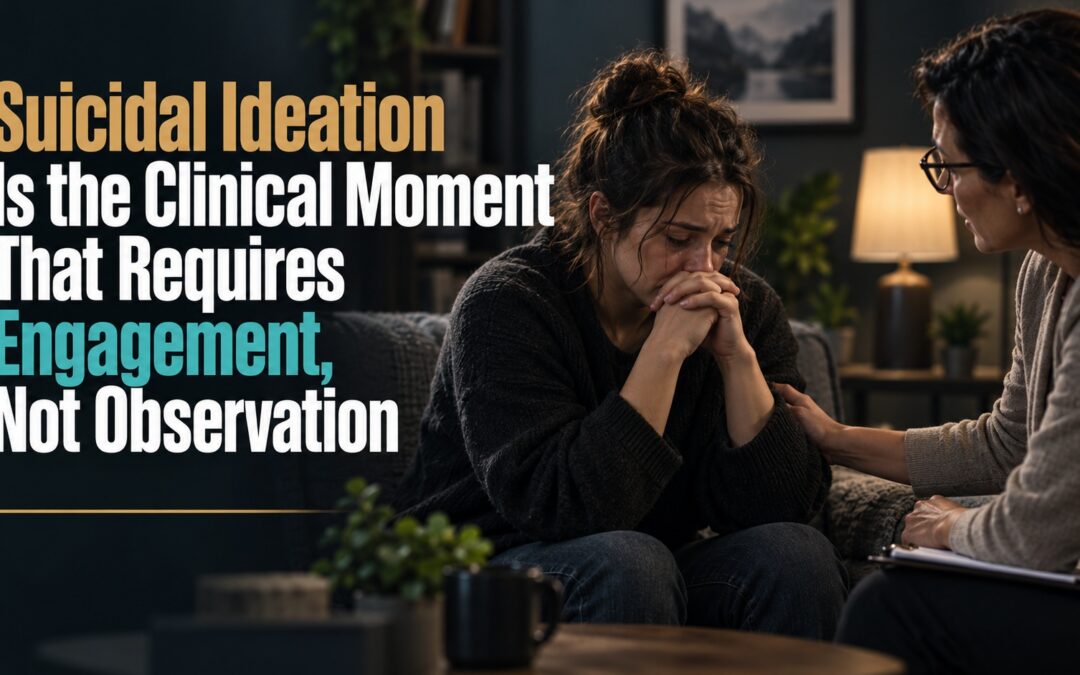
Suicidal ideation is a signal that someone needs support and connection right now, not distance or silent watching from the sidelines. If you or someone you love is having these thoughts, the fear and uncertainty can feel overwhelming. Those feelings are valid, and you are not alone in facing them.
Many people believe the safest response is to step back and simply keep an eye on things. The truth is gentler and more hopeful than that.
These moments call for reaching in, not pulling away. Compassionate engagement can make a real difference, and help is available. You do not have to carry this alone, and neither does the person you care about. Understanding what these thoughts mean, and how to respond with care, is a meaningful first step toward safety and healing.
What Is Suicidal Ideation?
Suicidal ideation refers to thoughts about ending one’s own life, ranging from fleeting ideas to detailed planning. These thoughts exist on a wide spectrum. Some people experience passing wishes to escape pain, while others develop more specific plans.
This experience is more common than many people realize. It often signals deep emotional pain rather than a true desire to die.
Understanding this distinction matters. Most people having these thoughts want their suffering to end, not their lives. That difference opens the door to hope and to help.
Why Does Suicidal Ideation Require Engagement Instead of Observation?
Suicidal ideation requires engagement because active support saves lives while passive watching often leaves a person feeling alone. When someone is struggling, silence can deepen their sense of isolation. Reaching out with care sends a powerful message that they matter.
Observation keeps a person at a distance. It watches for a crisis rather than working to prevent one.
Engagement does the opposite. It meets a person where they are, offers connection and helps them access support before things escalate. That connection can be a lifeline.
What Does Engagement Actually Look Like?
Engagement looks like honest conversation, genuine listening and gentle steps toward professional help. It means asking directly and calmly whether someone is thinking about suicide. That question does not plant the idea. It often brings relief.
Engagement also means staying present without judgment. You do not need the perfect words. You simply need to show that you care and that you are willing to listen.
From there, engagement includes connecting the person to support. This might mean helping them reach a counselor, a crisis line or a treatment center.
Who Experiences Suicidal Ideation?
People of every age, background and walk of life can experience suicidal ideation. It does not reflect weakness or a character flaw. It reflects pain that has become too heavy to carry alone.
These thoughts often appear alongside conditions like depression, anxiety, trauma or substance use. Each of these can intensify emotional distress.
For people navigating addiction recovery, the risk can rise during difficult moments. Understanding this connection helps families and individuals stay alert and offer support with compassion.
How Are Suicidal Ideation and Substance Use Connected?
Suicidal ideation and substance use are closely connected because each can deepen the other. Substances may temporarily numb emotional pain, yet they often worsen mood and lower inhibitions over time. This combination can make difficult thoughts feel more intense.
Many people carry both struggles at once. Treating only one while ignoring the other tends to leave the deeper pain untouched.
This is why integrated care matters so much. Addressing mental health and substance use together gives recovery a steadier foundation.
What Are the Warning Signs to Watch For?
The warning signs of suicidal ideation include talking about wanting to die, feeling hopeless or withdrawing from others. These signs can appear gradually or seem to come on suddenly. Learning them can help you recognize when someone needs support.
Some signs are spoken aloud, while others show up in behavior. Gentle awareness helps far more than fear.
Common warning signs to watch for include:
- Talking about wanting to die, feeling trapped or being a burden to others
- Withdrawing from friends, family or activities once enjoyed
- Sudden changes in mood, sleep or energy
- Giving away belongings or saying goodbye in unusual ways
- Increasing substance use or engaging in risky behavior
- Expressing deep hopelessness about the future
If you notice these signs, take them seriously and respond with care. Reaching out gently can open a door that someone deeply needs.
How Do You Talk to Someone About Suicidal Ideation?
You talk to someone about suicidal ideation by asking directly, listening without judgment and staying calm. Ask clearly whether they are thinking about suicide. This honest question shows you care and gives them permission to be open.
Let them share without rushing to fix everything. Sometimes the most healing thing you can offer is your steady, caring presence.
Avoid arguing, minimizing their pain or expressing shock. Instead, thank them for trusting you and remind them they are not alone.
What Should You Do After the Conversation?
After the conversation, help the person connect to professional support and stay involved in their journey. Offer to help them reach a counselor, a doctor or a treatment center. Practical support can ease the weight of taking that first step.
If there is immediate danger, contact emergency services right away. You can also reach the 988 Suicide and Crisis Lifeline, a free and confidential resource available around the clock.
Keep checking in afterward. Ongoing connection reminds the person that they matter and that support continues.
How Is Suicidal Ideation Treated?
Suicidal ideation is treated through comprehensive care that supports both emotional health and any underlying conditions. Recovery involves more than easing a single moment of crisis. It means healing the deeper pain with steady, compassionate guidance.
At Impact Wellness Network, care begins with understanding your unique story before any plan takes shape. This approach helps match each person with the right level of support.
Treatment often blends therapy, medical care and connection. Each part works together to help a person feel safer and more hopeful.
What Levels of Care Are Available?
The levels of care available range from residential support to outpatient options, depending on individual needs. Each offers a different balance of structure and flexibility.
- Residential care. People live on-site with round-the-clock support and full focus on healing.
- Partial hospitalization. This offers intensive daytime care while a person returns home in the evening.
- Intensive outpatient care. Structured sessions happen a few days a week while daily life continues.
- Standard outpatient care. Regular counseling supports those who are further along in recovery.
A caring team can help you decide which level fits your situation. There is no single right path, only the one that supports you best.
How Does Therapy Help?
Therapy helps by giving you space to understand and heal the pain behind these thoughts. Individual counseling lets you explore stress, trauma and personal goals with a trusted professional. This work builds a foundation for lasting change.
Group therapy connects you with others who understand the journey. That shared experience often eases the loneliness that pain can bring.
Over time, therapy helps you build coping skills and rediscover hope. Healing the mind supports healing the whole person.
How Do You Know When It Is Time to Reach Out?
It may be time to reach out when thoughts of suicide appear or when emotional pain feels too heavy to manage alone. You do not need to wait for a crisis to deserve support. Reaching out early often makes the path forward smoother.
Consider whether any of the following feel familiar for you or someone you love:
- Thoughts of death or suicide have entered your mind, even briefly.
- Emotional pain feels overwhelming and hard to carry alone.
- Substance use is deepening feelings of hopelessness or distress.
- You have withdrawn from people or activities that once brought comfort.
- You sense a quiet readiness to ask for help, even if it feels frightening.
Recognizing these signs is a sign of strength, not weakness. Support can meet you exactly where you are.
Common Questions Before Starting Treatment
Will talking about suicide make it worse?
No, asking about suicide does not increase the risk. Research consistently shows that open, caring conversation often brings relief. Talking about it can help a person feel understood and more willing to seek support.
What should I do in an immediate crisis?
In an immediate crisis, contact emergency services or call or text 988 to reach the Suicide and Crisis Lifeline. Stay with the person if you can, and remove access to anything dangerous. Professional help is available around the clock.
Can these thoughts really go away?
Yes, with the right support, suicidal thoughts can ease over time. Treatment addresses the pain driving these thoughts and helps rebuild hope. Many people move through this darkness and go on to live full, meaningful lives.
Is it possible to treat these thoughts and substance use together?
Yes, integrated care treats both at the same time. Because emotional pain and substance use often feed each other, addressing them together leads to steadier healing. This whole-person approach supports lasting recovery.
Will my privacy be protected?
Yes, your confidentiality is treated with great care. Treatment centers follow strict privacy laws to keep your information safe. You can seek help knowing your story stays protected.
Taking the Next Step Toward Safety and Hope
Suicidal ideation is a moment that calls for connection and compassionate action, not silent watching from a distance. Reaching in with care can change everything, and no one should face this pain alone. Help is real, and hope is possible.
You deserve support that honors your whole story and meets you with kindness. Choosing to ask for help, or to help someone you love, is one of the bravest steps a person can take. If you or someone you care about is struggling, please reach out to Impact Wellness Network to learn how we can walk beside you toward safety, healing and lasting wellness.