
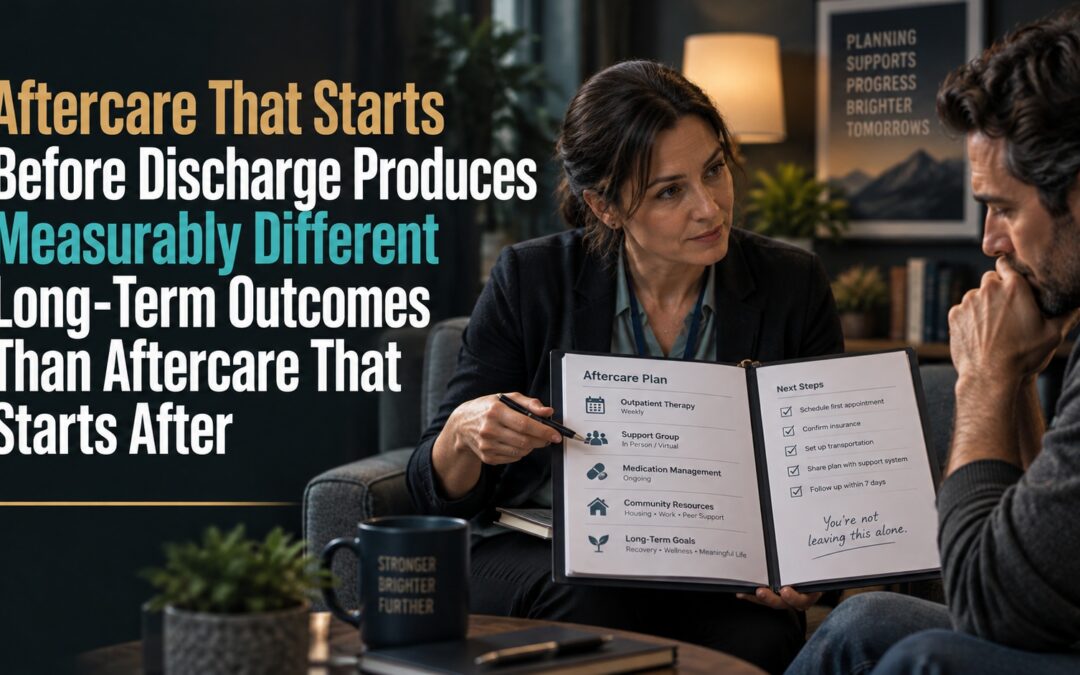
Aftercare that starts before discharge gives people a steadier, more protected path into life after treatment than aftercare arranged only once someone leaves. If you or someone you love is nearing the end of a treatment program, the mix of hope and worry makes complete sense. Finishing feels like a milestone, yet the days that follow can feel uncertain.
You might wonder what happens once the daily structure falls away. That concern is valid, and you are not alone in feeling it.
The truth is gentler than it may seem right now. The transition out of treatment does not have to be a cliff. When planning begins early, the shift becomes a bridge instead of a leap. This simple change in timing can shape how the whole next chapter unfolds.
What Does Aftercare That Starts Before Discharge Mean?
Aftercare that starts before discharge means building your continuing recovery plan while you are still in treatment, not after you walk out the door. It turns the final phase of care into active preparation for real life. Everything from follow-up appointments to support connections gets arranged in advance.
This approach treats the transition as part of treatment itself. Your care team helps map the next steps while support is still close by.
The goal is simple. When you leave, you already know where to go, who to call and what your first days will look like.
Why Does Aftercare That Starts Before Discharge Lead to Better Outcomes?
Aftercare that starts before discharge leads to better outcomes because it removes the risky gap between leaving treatment and finding ongoing support. The first weeks after discharge are often the most vulnerable. When a plan is already in place, that fragile window is protected.
Without early planning, people frequently leave with good intentions but no clear structure. Old triggers and stress return before new support is arranged.
Early planning closes that gap. You step out with appointments booked, contacts saved and a rhythm ready to follow, so momentum carries forward instead of stalling.
Why Are the First Weeks After Treatment So Important?
The first weeks after treatment matter because this is when routines, triggers and stress all return at once. You move from a supportive setting back into daily life, and that shift can feel overwhelming. Steady support during this time makes a real difference.
When a plan already exists, you do not have to build one while adjusting to everything else. The path forward is clear before the pressure arrives.
This protection often shapes the entire recovery journey. A strong start builds confidence that carries into the months ahead.
What Does Aftercare That Starts Before Discharge Include?
Aftercare that starts before discharge includes a coordinated plan of ongoing support tailored to your needs, arranged while you are still in care. It blends continued therapy, community connection and practical planning into one clear roadmap. Each piece is chosen with your situation in mind.
At Impact Wellness Network, care begins with understanding your unique story before any plan takes shape. That same understanding guides how your continuing support is built.
A thoughtful plan reaches beyond appointments. It considers your home life, your relationships and the daily habits that support lasting wellness.
What Support Options Are Commonly Part of the Plan?
The support options commonly part of the plan range from continued therapy to peer connection and step-down levels of care. Each offers a different kind of steadiness as you move forward.
- Ongoing therapy or counseling. Regular sessions help you keep exploring what supports your recovery.
- Step-down levels of care. Options like intensive outpatient or standard outpatient care ease the transition gradually.
- Peer support and community. Connection with others who understand the journey eases loneliness.
- Medication management. Coordinated care keeps any needed medications working alongside therapy.
- Practical planning. Support around housing, work or daily routines helps steady everyday life.
A caring team can help you decide which pieces fit best. There is no single right plan, only the one that supports you well.
Who Benefits Most From Planning Aftercare Early?
Everyone leaving treatment benefits from planning aftercare early, though it matters most for people facing big transitions. This includes those returning to stressful environments, managing co-occurring mental health needs or stepping down from a higher level of care. Early planning gives each of them a steadier footing.
Families benefit too. When the plan is clear, loved ones understand how to offer meaningful support instead of guessing.
If this feels familiar, that recognition is a meaningful first step. Knowing what you need helps guide you toward the right kind of continuing care.
How Does Early Planning Compare to Waiting Until After Discharge?
Early planning compares to waiting like following a map versus finding your way in the dark. When aftercare is arranged in advance, you leave with clear direction and support already in place. Waiting until after discharge often means scrambling during a fragile time.
Arranging care after you leave can create delays, missed appointments and long gaps without support. Those gaps are exactly where progress can slip.
Neither approach reflects effort or willpower. The difference lies in timing, and timing is something a good team can plan for together.
What Warning Signs Suggest Aftercare Needs More Attention?
Warning signs that aftercare needs more attention include feeling unsure about your next steps as discharge approaches. These signals are easy to overlook when finishing treatment feels exciting. Gentle awareness helps far more than worry.
Some common signs to notice include:
- You do not yet have follow-up appointments scheduled after treatment.
- You feel uncertain about who to call if you struggle in the first weeks.
- You are returning to an environment filled with stress or triggers.
- No clear plan exists for continued therapy or community support.
- You feel anxious about leaving the structure treatment provided.
If several of these feel familiar, that is worth a caring conversation with your team. A stronger plan can bring real peace of mind.
How Do You Know When It Is Time to Build an Aftercare Plan?
It may be time to build an aftercare plan the moment treatment begins, not just as discharge nears. Early planning gives you the most protection and the least stress. Starting sooner always makes the transition smoother.
Consider whether any of the following feel familiar for you or someone you love:
- Treatment is underway and discharge will arrive within a few weeks.
- You want a clear plan in place before you leave, not after.
- Past transitions out of care felt sudden or left you without support.
- You are returning to responsibilities, relationships or stress that need steady footing.
- You feel a quiet readiness to protect the progress you have already made.
Recognizing these signs is a sign of strength, not weakness. A thoughtful plan can meet you exactly where you are.
Common Questions Before Starting Treatment
When should aftercare planning actually begin?
Aftercare planning works best when it begins early in treatment rather than at the end. Starting sooner gives your team time to build a plan that truly fits your life. It also means you leave with support already in place.
What happens if I leave treatment without a plan?
Leaving without a plan can create a gap during a vulnerable time. Old stress and triggers often return before new support is arranged. The good news is that it is never too late to reach out and build one, even after discharge.
Will my aftercare plan be personalized to me?
Yes, a strong aftercare plan is shaped around your specific needs and situation. Your team considers your home life, your health and your goals. This personalized approach helps the plan feel realistic and supportive.
Does aftercare include support for mental health needs?
Yes, quality aftercare addresses mental health alongside substance use. Continued therapy and coordinated care help both work together. This whole-person approach supports steadier, more complete healing.
Can my family be involved in the plan?
Yes, family involvement is often an important part of aftercare. Many programs include family education and support so loved ones know how to help. That shared understanding strengthens the whole recovery journey.
Taking the Next Step Toward Lasting Support
Aftercare that starts before discharge turns the end of treatment into a steady bridge rather than an uncertain leap, and that timing can shape everything that follows. Planning early is not a sign of doubt. It is a way of honoring the progress you have worked so hard to build.
You deserve support that reaches beyond your final day in treatment. Choosing to plan ahead is a brave and hopeful step, and lasting recovery is possible with the right support around you. If you or someone you love is preparing for this transition, please reach out to Impact Wellness Network to learn how we can walk beside you toward lasting wellness.